The post How to Boost Spanish Vocabulary with Apple Learning Games was originally published on Spanish4Kiddos - Educational Resources and Bilingual Content.
Boost Spanish vocabulary learning for kids with fun apple-theme activities. Learning a new language is always an adventure, especially for kids. But what if you could make it even sweeter—and more interactive—using something as simple as an apple?
Create a fun learning experience when you combine Spanish vocabulary lessons and math games. After all, these activities are perfect cross-curricular learning experience for bilingual learners.
Through vocabulary apple learning games and apple-themed activities, children can improve their Spanish vocabulary while building critical math skills. Let’s dive into a harvest of learning ideas!
Apple Spanish Vocabulary Games
Using apples as the central theme in vocabulary apple learning games, these hands-on activities will engage children while enriching their Spanish vocabularies.
Apples in the Basket
Objective: Teach basic apple-related vocabulary in Spanish, such as manzana (apple), roja (red), dulce (sweet), árbol (tree), and semillas (seeds).
Instructions:
- Gather a basket and some apples (real or paper cutouts).
- Write a Spanish word on each apple.
- Give prompts like, “Encuentra la manzana roja” (Find the red apple) or “Recoge la manzana dulce”(Pick up the sweet apple).
- Students pick the correct apple and say the word aloud as they do so.
Tip: You can use this with pairs or groups to make it more interactive!
You can also use slides of apples and adjectives to describe them. Then, you can project them onto a whiteboard or screen in your classroom.
Apple Slice Matching
Objective: Match Spanish words to their English meanings or pictures.
Instructions:
- Cut out paper apple slices and write Spanish vocabulary terms on one side.
- On the other side, include pictures or English translations.
- Lay the slices on a table, mix them up, and challenge the kids to match the sides correctly.
Extension Idea: Challenge older students to create their own apple slices with new words to reinforce learning. Use creative words such as juicy (jugosa), delicious (deliciosa), colorful (colorido), soft (suave).
Apple Word Hunt Vocabulary Apple Learning Games
- Turn your classroom or homeschool room into a fun scavenger hunt!
- Write Spanish vocabulary words related to apples on pieces of paper shaped like apples (such as semillas for seeds, hojas for leaves).
- Use a checklist with hints in English or images to help children find the correct apple.
Find fun FREE apple templates and checklists here.
These vocabulary apple learning games allow bilingual learners to learn vocabulary in an engaging, hands-on way. By associating Spanish words with tangible objects, students will better remember what they learn.
Incorporating Fun Math Games with Apples
Why stop at language? You can also use these apple-themed activities in fun math lessons, perfect for bilingual or dual-language learners.
Apple Counting in Spanish
- Help young learners practice numbers in Spanish while counting apples.
- Activity: Line up or draw apples and let kids count aloud using Spanish numbers (uno, dos, tres…).
- Bonus: Sing an apple-themed counting song in Spanish to make it stick (e.g., “Uno, Dos, Tres, Manzanas”).
Addition and Subtraction Using Apple-Theme Learning Activities
- Use apples or apple cutouts to solve math equations. For example:
- Start with six apples: “Hay seis manzanas” (There are six apples).
- Remove two: “Si quitas dos manzanas, ¿cuántas hay ahora?” (If you take away two apples, how many are there now?).
- Encourage learners to answer in Spanish!
Apple Sorting by Colors and Shapes
- Provide a mix of apples (or images of them) in different colors and shapes.
- Activity Goals:
- Have students sort apples into categories while saying the colors and shapes in Spanish (rojo, verde, amarillo, redonda).
- Extend the lesson by having kids record their findings on a simple graph: e.g., “5 apples are red, 3 are green.”
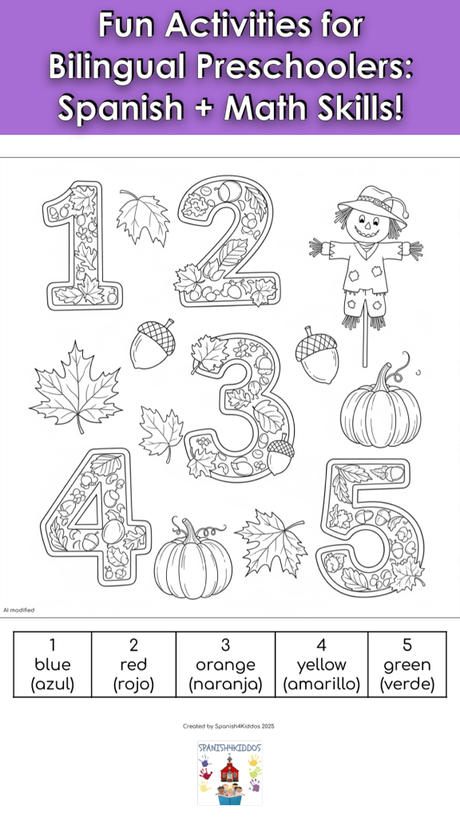
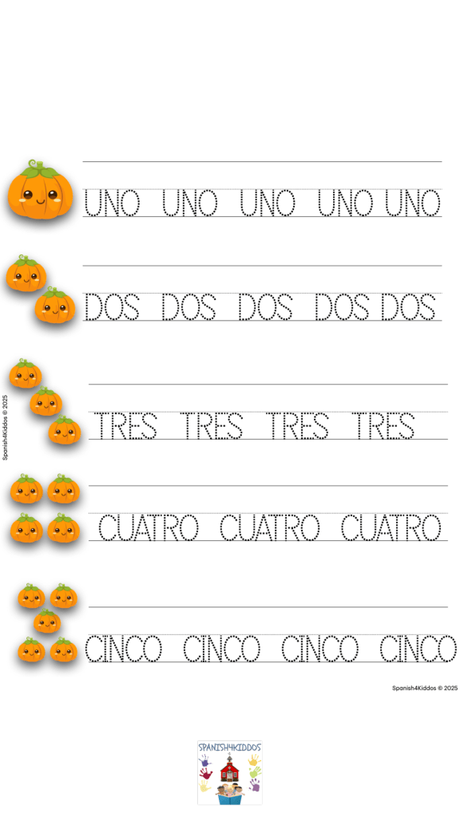
Download the FREE Math printables and start learning Spanish in a new way.

Apple Fractions
- Perfect for older students, this activity uses real apples to teach fractions.
- Begin by slicing an apple into halves, quarters, and eighths.
- Teach the Spanish terms: medio/a (half), cuarto (quarter), and octavo (eighth).
- Example: Ask, “¿Cuántos cuartos hacen una manzana?” (How many quarters make an apple?).
This hands-on activity connects math concepts with visual and tactile learning, making fractions easier—and more fun—to understand.
Why This Approach Is Perfect for Bilingual Learners
Combining language and math into vocabulary apple learning games not only fosters a love for learning but also strengthens cross-curricular connections:
- Language Learning: Vocabulary retention increases when children engage in hands-on, real-life problem-solving.
- Math Skills: Concrete objects like apples allow learners to “see” abstract math concepts, reducing confusion and increasing understanding.
- Brain Development: Combining Spanish and math challenges students to think critically, develop problem-solving skills, and expand their creativity—all in one lesson!
Inspire bilingual learners with more exciting ways to learn Spanish with the 52-Weeks Spanish Math Curriculum. Try it for FREE here!
Tips for Success
- Use Visuals and Props: Apples, baskets, or visual aids will help younger students connect with the material.
- Encourage Conversation: Have students speak their answers in Spanish and form simple sentences like, “Hay dos manzanas verdes.”
- Make Activities Age-Friendly: Younger learners may enjoy simpler counting games, while older students can explore fractions, sorting, and word creation.
- Celebrate Mistakes: Language learning can be intimidating, so be patient and keep the atmosphere fun and encouraging.
Conclusion
By incorporating vocabulary apple learning games and apple-themed activities into your bilingual teaching routine, you can spark excitement in learning Spanish vocabulary and math simultaneously. Whether you’re counting in Spanish, graphing apple colors, or cutting a real apple into eighths to discuss fractions, your students will love the hands-on, engaging approach.
So, grab some apples and start exploring how a simple fruit can create a world of learning!
What’s your favorite bilingual teaching activity? Share your thoughts in the comments below!