


A wild west of urban wonders
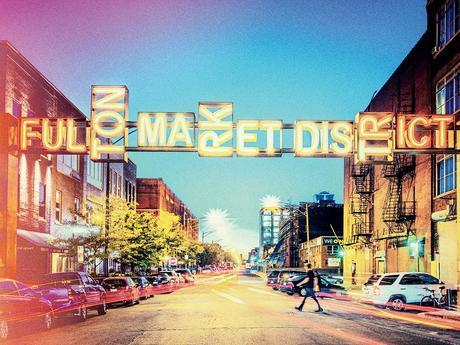
Photo Credit: Michigan Avenue Magazine
The city as a whole has seen great opportunity and expansion in the past couple decades, but perhaps the most remarkable transformation as of late has been that of the West Loop.
What was once a section of Chicago that lay on the fringes of the bustling Loop, is now a center of major economic growth that with each passing day gains more demand from developers, business owners, and residents alike.
Humble beginnings

Photo Credit: New City
Cross the River heading up to Canal Street and you’ve now passed through the West Loop Gate. Before the West Loop became what it is today, it was known as the city’s meatpacking district, lined with warehouses and factories manufacturing wholesale meats and produce. The area had heavy Greek and Italian influences due to its proximity to Greektown and Little Italy. The majority of the population were factory employees and owners, distinguishing it from the tourism of the Loop.
Later on through the 1990s and 2000s, more consumer-facing businesses began to move into the area and homeowners took up residence in condos along main streets like Madison, Halsted, and Washington. Today, when you pass through the West Loop Gate, the view looks quite different than it did twenty years ago. Even ten years ago. Not entirely different from New York City’s own Meatpacking District, it embraces the grittiness that comes from its working class roots and blends it with contemporary elements.
Business hub

Photo Credit: Fashion Retail News

Photo Credit: See Chicago Real Estate
The West Loop has undoubtedly become a playground for the real estate industry. As opposed to the two to three-flat brownstones and greystones that are traditional to most Chicago neighborhoods, the West Loop is filled with sprawling loft spaces, many of which have been converted from old factories and warehouses and are now desirable home, office, and event locations. Part of what makes these modern spaces so attractive is that they maintain the industrial feel of a warehouse and the purpose it formerly served.
The neighborhood, particularly the Fulton Market District, has become a hotspot for tech and creative industries. From startups to more established companies to major corporations, the area has lured in many pioneers. Easily the most high-profile development has been the Google headquarters, which will surely shift the dynamic of the entire neighborhood as the surrounding properties jump in value.
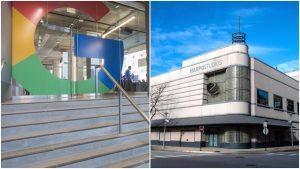
Other notable companies like Uber, Fieldglass, Rise Interactive, and Threadless call the neighborhood home, attracting more and more eyes. Being host to middle-class twenty and thirty-something singles and couples that typically choose the area for its commute to jobs in the Loop, the surrounding businesses cater to demographic, offering a wealth of pet care, health and wellness, and grocery facilities.
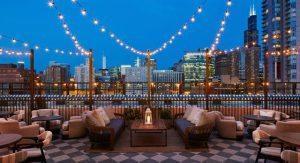
Photo Credit: Soho House
Tourism has spiked in a serious way, and hotel developers have quickly responded. The global private membership club Soho House erected its largest house on Green Street in a converted belt factory, finding inspiration in the West Loop’s beginnings and incorporating it into their design with leather and wood furnishings and iron accents. Serving celebrities and VIPs in the creative fields, the club has brought a new crowd into the West Loop that wouldn’t have arrived otherwise. Additionally, the upcoming Nobu hotel and restaurant concept, co-owned by actor Robert De Niro, is slated to open on Randolph Street in 2017 and is gaining a lot of anticipation. Seemingly overnight, the neighborhood has risen to international recognition.
Food mecca
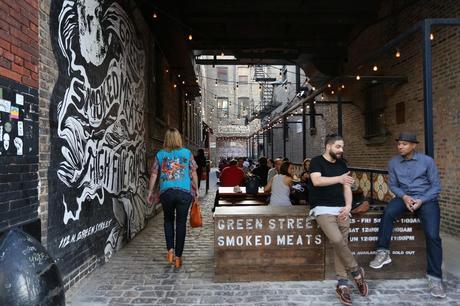
Photo Credit: WSJ
As home to a portion of Randolph Street that’s known by locals as “Restaurant Row,” the West Loop is heaven for foodies. Lined with establishments like Haymarket Brewery, Nellcôte, a famous Girl and the Goat, there is always foot traffic by anyone looking for a delicious bite. Dining favorites like Glazed and Infused, the Aviary, Sepia, and Parlor Pizza are seen throughout the neighborhood. Many restaurants don’t forget where the West Loop started. Places like the Publican and Green Street Smoked Meats are inspired by the meat and produce manufacturers that the area is known for. The options are truly endless. Pass the intersection where Grand and Halsted meet, and once you smell the aroma from Blommer Chocolate Factory in the air, you’ll be sold forever.
What’s a neighborhood without its nightlife? Some veteran late-night spots like The Mid and Cobra Lounge staked claim to the area a long time ago, but others like Lone Wolf and Brass Monkey are newer additions that invite the city out for lounging and cocktails.
Cultural explosion

Walking through the West Loop is just as pleasant as any other Chicago neighborhood, as its streets are decorated by sculptures, murals, and galleries by world-class artists who’ve found inspiration there. Mars Gallery, Andrew Rafacz Gallery, and Chicago Artists Coalition all operate in the area.
Although the neighborhood has become a destination for the hip and trendy, it still houses many of the businesses that brought it up. Students, families, artists, tourists, and others from all walks of life can be seen roaming the streets, giving it an edge that other parts of the city don’t have.
“The Best Loop”

Photo Credit: NY Times
And that is how the West Loop was won, and why the West Loop is indeed the “best Loop.” It’s living proof of how our city with Big Shoulders constantly evolves and succeeds.






