Regularly changing bedding is an act of great importance. However, many people rarely do this, thus exposing themselves to many adverse effects for their health and comfort.
Sheets, duvets and pillows come into contact with our bodies every day. Good hygiene during sleep is just as important as changing your underwear. So how often should bedding be changed? What are the consequences if we don’t wash them at the right frequency? We will explain everything to you.
Changing the sheets – Source: spm
Why should you wash your bedding regularly? What the experts say
Even if we take a bath daily, our bedding loses its freshness. And sleeping in sheets that haven’t been washed can lead to health problems.
On bedding are deposited: dead skin cells, dirt and impurities, human hair and animal hair. Germs, fungi and dust mites can also multiply in bedding.
“Skin cells that daily shed from your body and settle in your sheets can support the growth of certain bacteria and mites,” explains Oma N. Agbai , MD, dermatologist and assistant clinical professor at the University of California Davis School of Medicine. This collection of germs and tiny creatures can increase your risk of infection, especially if you have pre-existing skin conditions, or have chronic sores or ulcers. It can even affect your breathing.
Here are the risks to your skin and your health if you do not change your bedding regularly:
How often should bedding be changed?
The frequency of changing bedding depends on several factors. You should take into consideration your state of health, the presence of pets, the temperature of the room in which you sleep, changes in the seasons, if you sweat more than normal, as well as the usual quality of your sleep.
Dr. Browning, a licensed psychologist, neuroscientist and sleep expert at Radio 1 Newsbeat, says we should change our sheets once a week, or every two weeks at most.
“We can be slightly more forgiving in the winter months,” says Dr. Browning, but once a week would be ideal. Beyond two weeks, harmful consequences on the skin can appear, as well as the quality of our sleep which can deteriorate. “Even though we sweat less in the winter, we’re still shedding dead skin cells,” she says.
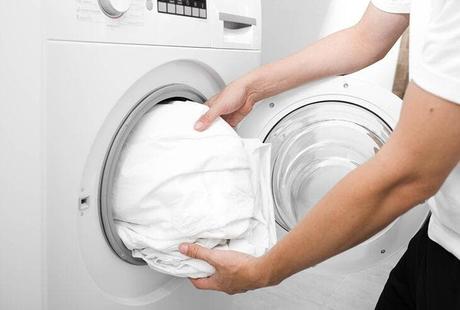
Wash bedding – Source: spm
Tips for washing bedding properly
Here are our tips for effectively disinfecting bedding, washing stained sheets and preventing the appearance of dust mites or germs.
Heat is a great ally for disinfecting and keeping bedding healthy. A great option for washing sheets, pillowcases, and comforters is to use hot water.
This method removes bacteria, viruses and even kills dust mites lodged in your bedding. Although it is an effective alternative, it must be avoided that the temperature is too high so as not to suffer burns during cleaning.
Another advice is to wash the bedding separately: When washing, it is necessary not to mix the bedding with other clothes, even if it means spending more time washing them. This is to prevent the sheets from becoming impregnated with fluff and causing allergies. In addition, excess laundry can overload the washer and shorten its life.
Read also What are the differences between powder detergent and liquid detergent? What is best for your washing machine
Via SPM