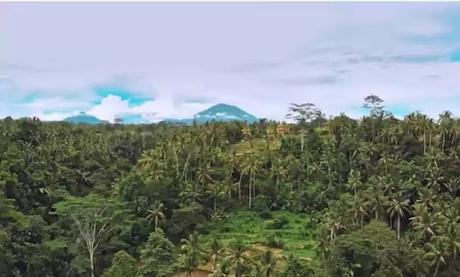
Climate change has several significant effects on ecosystems. Warming, for example, may compel species to relocate to higher latitudes or elevations, where temperatures are more suitable for their existence.
Similarly, as sea levels rise, saltwater intrusion into freshwater systems may force certain vital species to relocate or die, removing predators and prey that are important in the existing food chain. Climate change also has an indirect impact on ecosystems and species, and it interacts with other human stressors like development.
Transition of ecosystems
According to a NASA and university computer modeling study conducted in 2011, global climate change will alter plant communities covering nearly half of the Earth's land surface by 2100, driving the conversion of nearly 40% of land-based ecosystems from one major ecological community type, such as forest, grassland, or tundra, to another.
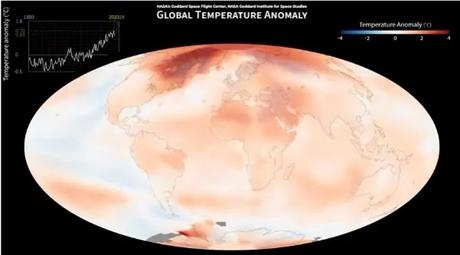
Researchers from NASA's Jet Propulsion Laboratory and the California Institute of Technology in Pasadena, California, analyzed how Earth'splant life will respond over the next three centuries as the planet's climate changes due to rising levels of human-produced greenhouse gases.
The findings of the study were presented on model projections. According to the model projections, many plant and animal species face increased competition for survival and high species turnover, as some species occupy regions occupied by other species.
Plant cover is expected to shift by at least 30% on most of the Earth's area that isn't covered by ice or desert, requiring humans and animals to adapt and frequently relocate.
Also Read: Are Human Burial Practices Messing Up Earth’s Ecosystems?
In addition to altering plant communities, the study predicted climate change would upset the biological balance between interdependent and frequently endangered plant and animal species, lose biodiversity, and negatively affect Earth's water, energy, carbon, and other element cycles.
The study introduced a new view of climate change, exploring the ecological consequences of a few degrees of global warming, giving a new perspective on climate change. While warnings about melting glaciers, rising sea levels, and other environmental changes are illustrative and vital, the ecological impacts are ultimately what matters.
Plant species must often "migrate" over multiple generations in response to climate change, as they can only survive, compete, and reproduce within the range of conditions to which they are evolutionarily and physiologically adapted.
While plants and animals have evolved to move in response to seasonal environmental changes and even greater transitions, such as the end of the last ice age, they are often unprepared to keep up with the speed with which modern climate change is occurring.
Human activities such as agriculture and urbanization are destroying Earth's natural ecosystems at an increasing rate, preventing plants and animals from migrating successfully. Climate change has increased insects outbreaks through a combination of elevated plant drought stress, greater insect overwinters survival, and shortened insect development and reproduction cycles.
These variables have resulted in the most widespread insect outbreaks in western woodlands in the past 125 years over the last decade. Warmer and drier weather conditions have also resulted in more widespread and destructive wildfires.
There is no one-size-fits-all solution to addressing climate change. Nonetheless, nearly all of this solutions are already in place, and many of them rely on humans changing their behavior and shifting how they produce and consume energy.
CO2 levels
Changes in technology, behavior, and policies are needed to encourage less waste and better resource management. Improved energy efficiency and vehicle fuel economy and increased wind and solar power, biofuels from organic waste, carbon pricing, and forest protection are all effective strategies to lower the quantity of carbon dioxide and other gases trapping heat on the planet.
Scientists are also researching ways to manufacture hydrogen, which is now derived primarily from natural gas in a sustainable manner to fuel zero-emission fuel cells for mobility and electricity.
Other initiatives include developing better batteries to store renewable energy, designing a more intelligent electric system, and capturing carbon dioxide from power plants and other sources with the objective of storing it underground.
Despite worries about safety, water use, and toxic waste, others say nuclear power should be part of the answer because nuclear reactors do not emit any direct air pollution.
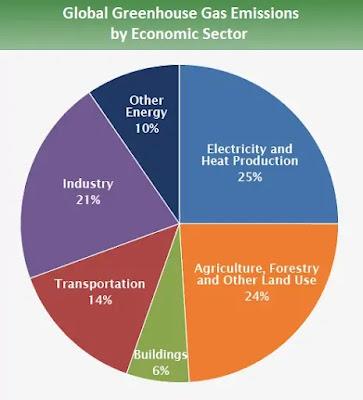
While it is vital to reduce new greenhouse gas emissions, scientists have also stressed the importance of removing existing carbon dioxide from the atmosphere.
More fantastical proposals for cooling the world, such as spraying sunlight-reflecting particles into the air or blocking the sun with a big space mirror, have been mostly ignored since they may entail more environmental risks than benefits.
Many of the tools required to combat climate change already exist. Some of the proposals are big and requires governments and corporations to execute them, but many others entail simple changes that anybody can do, such as eating less meat or rethinking your modes of transportation.