How an Alice costume made me feel historybounding (piecing is period!) | #LRCrafts - DIY Passion: if you can think it, you can make it
This is a project I didn’t even think about making myself. For an Irish dance freestyle competition, I needed an Alice in Wonderland costume. Since I was already working on improvements on my solo dress for the same competition plus other work-in-progress sewing and embroidery projects, I thought I could skip making this one.
I told my husband I wanted to go to a local shop to see if I could find something suitable for the occasion, but he told me “You should make it yourself instead“. I was caught by surprise, since he usually doesn’t like when I have multiple WIPs going on at the same time. Why proposing me to start even a new one?
Well, I was easily convinced… In no time, I made room on the table for even another work-in-progress.
And now you’d start thinking “why an Alice in Wonderland costume is historybounding to you?“.
Embroidery and sewingLucet
Click for the finished project detailed photos
“Historybounding” should mean integrating historical clothing into our everyday wardrobe, even mixing different periods together. But is Alice in Wonderland historical?
The tale itself is more than 150 years old, written in 1865 by Charles Dodgson under the pseudonym Lewis Carroll.
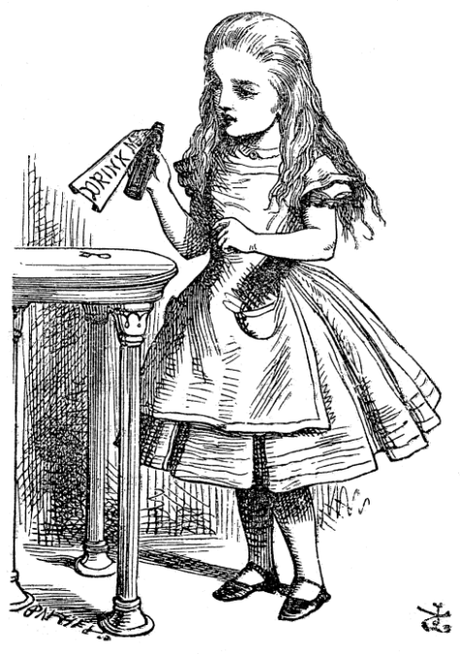
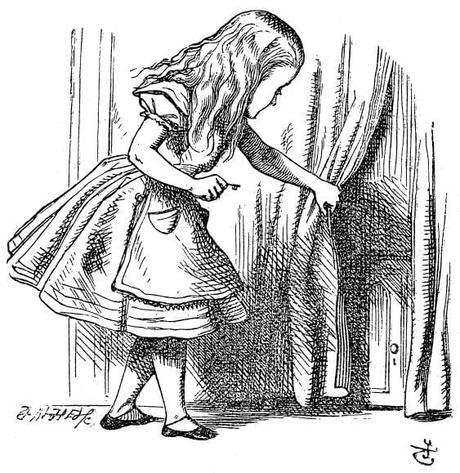
The original illustrations by John Tenniel have become iconic very soon. Those black-and-white illustrations for Alice’s Adventures in Wonderland depict Alice wearing a knee-length puffed sleeve dress with a pinafore worn over the top like an apron, and ankle-strap shoes.
Lewis Carroll himself gave directions to the illustrator over some aspects of the dress, for example not to give it “so much crinoline”, a common component of women’s dresses at the time.
In the second book, Through the Looking Glass, Alice’s look changed slightly, with the addition of striped horizontal stockings and a black headband. This headband depicted by Tenniel became so deeply linked to Alice that from it originated the term “Alice band”!
As for the color of the dress, in subsequent stage versions or colorised publications it changed from white to yellow to even red, orange and chartreuse greenish yellow. It was thanks to Macmillan’s editions at the beginning of the 20th century that the dress retained its now iconic blue scheme.
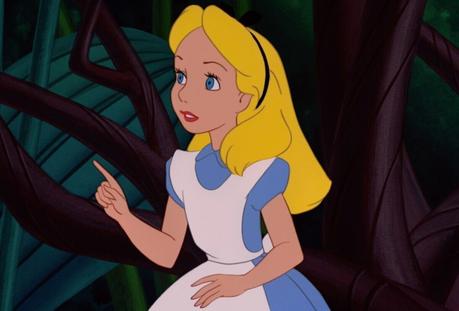
Well, that about my own version? I didn’t plan to make it “historical” or “historybounding” in any way. It just happened. I wanted to recall the famous 1951 Disney’s Alice, just to be easily recognisable on stage.
So I rummaged around my fabric stash to see if I had something to use. I found a stretchy pale blue fabric that seemed good for this project, a leftover handed to me by my husband’s aunt. It seemed big enough, but I wasn’t so sure. The original rectangle had served for many different projects, but it seemed still big enough for me.
And that’s when I started thinking historybounding.
I heard many times that “piecing is period“. 18th century dressmakers and patrons weren’t as choosy as we are now and pieced stuff all the time. You can find extant gowns with several examples of this. Sometimes your fabric just can’t be big enough and you have to become creative, cutting and adding shapes here and there like in a puzzle. And that’s exactly what I had to do here: dip into my cabbage box to make it work, even using scraps of different fabric. When I saw the only way to finish the dress was to do piecing, I suddenly thought about historybounding.
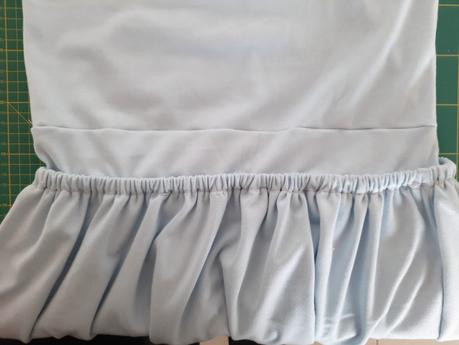
First I cut and sewed the skirt, following (more or less) this lovely tutorial. I then had to cut the bodice, and things started to get complicated. One side of the fabric had a semicircular and the only way to have enough fabric for my back and front bodice pieces was to use this cut as my neckline. Even this way, I had to add a piece at the bottom of the back bodice to make it the right lenght.
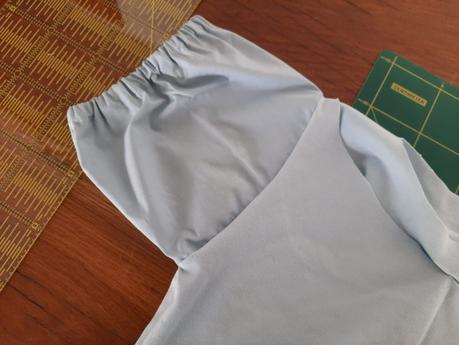
As I made the skirt and bodice and attached them together, I had to do more piecing: the neckline was too wide. If I used the leftover fabric for the neckline, though, I would end without sleeves. Browsing my stash, I found a piece of old bedsheets, the perfect matching pale blue. Not a stretchy fabric, but I decided it coul work nonetheless for the puffy sleeves. Adding an elastic band to the cuffs would make the puffy sleeves and account for the non-stretchiness of the fabric.
Sleeves problem solved.
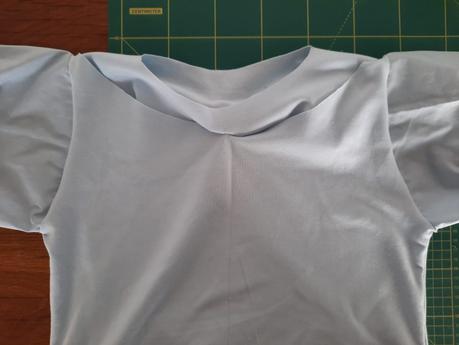
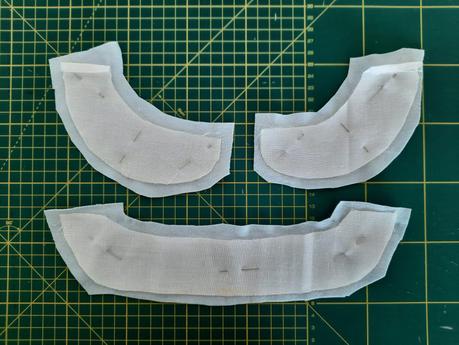
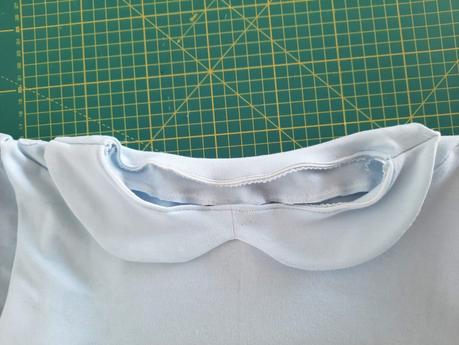
The neckline was a trickier challenge, though. I wanted to add fabric to make the neckline smaller to accomodate a collar. To make the pattern and see if it would work with my running-out fabric, I used an olf piece of polyester white curtains. I put it inside the dress and traced out where I wanted to sew and cut. Well, it worked: it gave me a perfect pattern to use, and my fabric was even enough for that.
I used the same curtains leftover to cut a collar pattern. To make it, I just had a strip of pale blue fabric a few centimeters tall, but I didn’t want to use the non-stretchy fabric on this, just to avoid breaking the seams while wearing the dress. Well, I was lucky here, too: with careful piecing, just enough! I just had to be creative with the cutting of the pattern. Also, since I needed to cut two collar pieces, I used a white stretchy fabric I had in my stash for the non-visible side.
After that latest addition, I could consider the dress ready!
Time now to think about the apron. And I thought it was indeed easier to make, not just for the construction method but because in this case I had plenty of white bedsheets to use for the project.
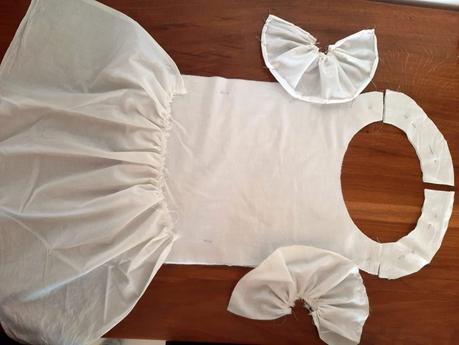
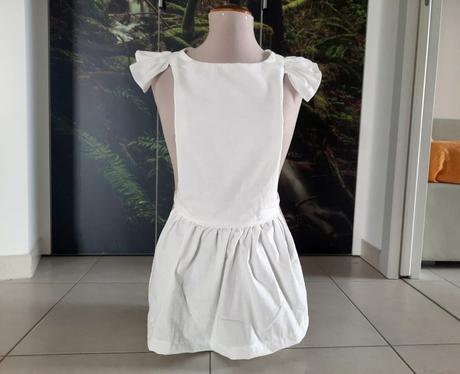
To make it, I found another lovely tutorial to follow. I didn’t really download and use the suggested pattern: I just measured the fabric on my own dress.
I then cut two pieces for the bodice, two rectangles for the sleeves, one for the skirt, four pieces for the back of the bodice (two for the left and two for the right one), plus two long strips to make the back closing strips. After the crazy piecing of the dress, making the apron was relaxing.
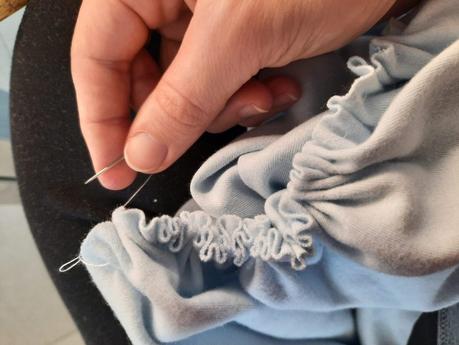
I also had fun with the gathering of the sleeves and skirt: I loved how the rectangles got their final shapes with some thread pulling.
Having two bodice pieces was good for the final assembly: I could simply inclose the other pieces in between the two bodice layers.
Well, in the end I’m glad my husband pushed me into sewing this costume!
I had fun along the way, I felt proud while wearing it during the competition and learned some new sewing skills that I’ll for sure treasure for the next projects. Moreover, I had my personal close-up grasp of what piecing means.
I have to say I am more and more going towards a personal historybounding journey, started with Bernadette Banner’s videos and book and my first thrifted clothing readaptation.
What will the future of my own wardrobe be? Only time will tell. And if you’d like to find out, stay tuned and follow me on my personal historybounding adventures.
by Rici86.