


If you've ever heard the news that scientists have discovered that "everyday items contain more bacteria than a toilet seat," you're probably familiar with the work of Dr Charles Gerba - whether you realize it or not. He is a microbiologist at the University of Arizona, but his friends and colleagues call him "Dr Germ". Why? He has devoted his life to publishing countless studies on the germs that infiltrate our daily lives and is one of America's key experts on the subject.
And he's been studying for decades Toilet spray, Kitchen sponge germs, like Viruses, can spread quickly Around an office and more, we had to ask: how does he clean his own house and generally keep bugs at bay? Here's what we found out.
He is more worried about the kitchen than the bathroom.
Dr Gerba says that since we are conditioned to want to clean our bathroom regularly (it just seems to be the roughest point, don't we?), We do not overlook how we do it in the kitchen. "Americans are afraid of their toilet seats," he says, "so the sink, faucet, and floor are usually cleaner than the kitchen. Also, children usually enter the kitchen after playing."
Which jobs deserve a little more attention? Well, Dr Gerba calls it half-joking trustworthy sponge "a bad object" - and So he changes his at least once a month.
"Cutting boards would also be high on my list," he says. "When testing, we found that they seem to be neglected - and you should also remember to do so dedicated to vegetables and others for meat. The fridge door handle can also get pretty bad as it is used a lot, and people tend to hang towels there. The same applies to kitchen fittings. "
He pays special attention to the bottom of the refrigerator."Everything drips and falls there," he says. "Everything stored on the bottom of the fridge is more likely to be contaminated. And it's the first place that will get mould. "
And he flinches when he sees wallets on countertops.
We are sure that Dr Gerba doesn't follow his wife with a disinfectant wipe (or we hope he isn't), but we have to point out his aversion to something many of us women are likely to do every day. " A quarter of the purses have E-Coli "He claims." And we found that people put them right next to the place they're making a sandwich! "
But he no longer worries about floors.
When it comes to space under our feet, Dr Gerba's logical side is bright: "I don't have any more children crawling around - and I don't crawl around on the floor either - so it's one of the things I'm cleaning the least now," he says. "But then my wife doesn't like it when we start to stay on the ground!"
He makes sure to wash reusable shopping bags regularly.
"This should involve warnings," says Dr Gerba. "Fifty per cent of people never wash them, and they have more bacteria than their underwear - and your car is like an incubator."
Because people consider these bags to be "environmentally friendly" or otherwise generally virtuous, they often forget that bags also get dirty and contain bacteria - like everything else you use frequently. But these bags hold your food, which makes the situation all the more worrying. The family of Dr Gerba selects shopping bags that are easy to wash and have a variety of Limit cross-contamination between foods. "My wife got us reusable bags in different colours - some for meat, others for cans and others for products," he says.
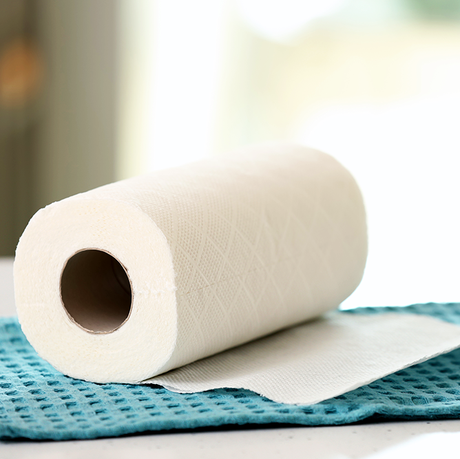
He suggests that you wash towels about once a week - but he generally switches to paper towels.
"I used to wipe my face with a towel in the morning, but now I can't do it anymore," says Dr Gerba. "I know that there is E coli on it! "He thinks you should change your face and towels at least once a week - and more often if you have young children.
"I tend to use paper towels now often" he continues." Some people say this is not environmentally friendly, but you will surely use lots of toilet paper if you get diarrhoea! "
He prefers disinfectant wipes over sprays.
"If you use a spray, you should wet the area and let it sit for 10 minutes, which nobody does," says Dr Gerba. "I like to use the wipes, and our research has shown that they are as good as bleach for disinfection."
But he also reminds us of that You cannot rely on a wipe to disinfect your entire kitchen - if you wipe one in multiple places, you may only be able to spread bacteria. "You can clean about a square meter of space - I usually need about three of them to clean the kitchen."
He's probably using hand sanitizers a lot more often than you.
"Strategically, I use hand sanitizers about 4 or 5 times a day," says Dr Gerba. It recognizes what you might have heard about the stuff in recent years - these antimicrobial disinfectants and Soaps are not as effective as hand washing. While health experts say you can't rely on hand sanitizers alone ( you have to wash your hands!) seem to be the more worrying products those that contain triclosan What hand sanitizer doesn't do. In essence, it generally relies on alcohol to kill germs. And hand sanitizers can help keep your hands as clean as possible when you don't have access to clean water and soap.
"My personal opinion is that it is better than straight Wash your hands, "says Dr Gerba, citing his belief that washing your hands properly is more difficult than most people think." You have to wash your hands for 15 to 20 seconds and then touch them again to contaminate the doorknob in the bathroom - and worse, if it is a public toilet. Most of the bacteria are on your hands and tests show that you are less likely to get sick if you use hand disinfectants.
He'll even pull out the hand sanitizer after doing laundry.
"We tested people's hands after they took wet laundry and put it in the dryer, and there was E coli on them," says Dr Gerba. Why? Because the bacteria in your laundry (including the worst offenders like underwear and bath towels) don't wash down the drain. They accumulate in the washing machine drum, and the detergent isn't enough to kill them . " the bacteria (you need hot water and bleach).
And after his grandchildren played in playgrounds - that is, if he even let them go near a stadium.
"I'm not going to let my grandchildren go to playgrounds, even though some of them have hand sanitizers these days," says Dr Gerba. "Playgrounds are essentially public toilets for birds, and without them, you will never see a football, for example, E coli thereon. Every time we have young children, we let them use hand sanitizers - we have tested children's hands, and we have them all E coli on them."






