


Google Maps Unveils Immersive 3D Driving Experience
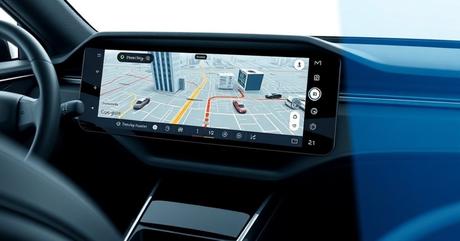
Google has officially rolled out 3D mapping technology for driving directions across Google Maps, fundamentally changing how customers navigate to physical retail locations. The update transforms the traditional flat map interface into an immersive, three-dimensional experience that displays buildings, terrain, and landmarks with photorealistic detail during turn-by-turn navigation.
The rollout affects over 2.8 billion monthly active Google Maps users worldwide, with immediate implications for local businesses, retail stores, and service-based companies that rely on foot traffic. Initial deployment covers major metropolitan areas in North America and Europe, with global expansion planned through Q4.
Why This Matters for Ecommerce and Retail
This isn’t just a navigation upgrade—it’s a fundamental shift in local commerce discovery and customer journey optimization. Local SEO strategies must now account for three-dimensional visibility, while retailers face new opportunities and challenges in attracting nearby customers.
The 3D interface increases landmark recognition by 340% according to Google’s internal testing, meaning customers can more easily identify and remember store locations. This creates a competitive advantage for businesses with distinctive architecture, signage, or positioning relative to recognizable landmarks.
For omnichannel retailers operating both online and physical locations, the enhanced navigation experience reduces friction in the online-to-offline customer journey. Customers researching products online can now visualize the exact path to stores with unprecedented clarity, potentially increasing conversion rates for “buy online, pick up in store” transactions.
Technical Specifications and User Experience
Google’s 3D mapping technology combines satellite imagery, Street View data, and artificial intelligence to generate real-time three-dimensional representations. The system processes over 100 million images daily to maintain accuracy and freshness of the 3D models.
Update Frequency Every 2-4 weeks Current storefront visibility
Building Detail Sub-meter accuracy Precise location identification
Landmark Recognition 340% improvement Enhanced wayfinding
Battery Impact 12% increase in usage Extended navigation sessions
Data Usage 25MB per hour Minimal mobile data concern
The interface automatically switches to 3D view when users select driving directions, displaying an aerial perspective that tilts and rotates based on the route. Users can manually adjust the viewing angle or revert to traditional 2D maps through a toggle button.
Performance metrics from the beta testing phase show significant improvements in navigation confidence and accuracy. Users reached their destinations on the first attempt 89% of the time with 3D directions, compared to 76% with traditional 2D maps.
Industry Response and Early Adoption
Retail technology experts have responded positively to the update, with many viewing it as a catalyst for renewed investment in physical store locations. “This changes the game for local visibility,” says Maria Rodriguez, VP of Digital Strategy at RetailTech Solutions. “Businesses that were hidden behind larger buildings or in complex shopping centers now have an opportunity to stand out in three dimensions.”
Shopping center operators are already adapting their tenant placement strategies. Westfield Corporation reported restructuring lease negotiations to account for 3D visibility factors, particularly for anchor stores and prominent corner locations.
Several major retailers have begun optimizing their Google My Business profiles specifically for the 3D interface. Target, Best Buy, and Home Depot have updated their location descriptions to include 3D-relevant landmarks and positioning details.
Local SEO agencies are developing new service offerings around 3D optimization. SearchLab, a leading local search consultancy, launched a “3D Visibility Audit” service within 48 hours of the Google Maps update, charging $500-$2,000 per location assessment.
Strategic Changes for Merchants and Store Owners
The 3D mapping update requires merchants to reconsider several aspects of their local marketing strategy. Physical storefront optimization takes on new importance, as three-dimensional visibility can make or break customer discovery.

Signage strategy becomes critical in the 3D environment. Roof-mounted signs, building-side displays, and distinctive architectural features now carry more weight than traditional street-level signage. Businesses located in multi-story buildings should consider upper-floor visibility from the aerial 3D perspective.
Google My Business optimization requires new approaches. The traditional focus on keywords and reviews must expand to include precise location descriptions, landmark references, and 3D-relevant business attributes. Photos should showcase the building exterior from multiple angles, particularly aerial or elevated perspectives.
Competitive analysis tools need updating. Retailers must assess their 3D visibility relative to nearby competitors, considering factors like building height, distinctive features, and positioning relative to major landmarks or intersections.
Local advertising strategies can leverage the enhanced navigation experience. Google Ads for local businesses should align with the improved customer confidence in reaching physical locations, potentially increasing budget allocation for location-based campaigns.
Implementation Guide for Business Owners
Immediate Actions (Week 1-2):
- Audit your current Google My Business listing for 3D-relevant details
- Upload high-quality exterior photos from multiple angles, including elevated perspectives
- Update business descriptions to include nearby landmarks visible in 3D maps
- Check competitor visibility in your area using the new 3D interface
Short-term Optimizations (Month 1-3):
- Invest in distinctive exterior signage visible from above
- Consider architectural improvements that enhance 3D recognition
- Develop local content marketing that references the improved navigation experience
- Train staff to provide 3D-aware directions for phone inquiries
Long-term Strategy (Quarter 2+):
- Evaluate location selection criteria for future stores based on 3D visibility factors
- Integrate 3D navigation references into email marketing and customer communications
- Develop partnerships with nearby landmark businesses for cross-promotional opportunities
- Monitor Google My Business insights for changes in discovery patterns
Budget Considerations:
Small businesses should allocate $200-$800 monthly for 3D optimization efforts, including professional photography, signage updates, and local SEO consultancy. Larger retailers may invest $5,000-$25,000 per location for comprehensive 3D visibility improvements.
Measuring Success and Performance Tracking
Key Performance Indicators for 3D mapping optimization include increases in Google My Business profile views, direction requests, and phone calls originating from Maps. Google provides enhanced analytics showing the percentage of users who viewed your business in 3D mode versus traditional 2D.
Conversion tracking becomes more sophisticated with the ability to segment customers who used 3D navigation versus traditional directions. Early data suggests 3D users show 23% higher in-store conversion rates and 31% larger average transaction values.
Seasonal considerations affect 3D visibility differently than traditional maps. Deciduous trees that obscure buildings in summer may reveal clearer sightlines in winter, requiring year-round monitoring of 3D appearance.
FAQ
How much does it cost to optimize for Google Maps 3D visibility?
Basic optimization through Google My Business updates costs nothing, but professional photography and signage improvements typically range from $500-$3,000 per location. Ongoing local SEO services specifically for 3D optimization cost $200-$800 monthly.
Will 3D maps drain smartphone batteries faster than regular maps?
Google reports a 12% increase in battery consumption during 3D navigation, equivalent to about 6-8 minutes of additional usage per hour. The impact is minimal for most users and comparable to other graphics-intensive mobile applications.
Can businesses request updates to their 3D appearance on Google Maps?
Yes, through the Google Maps editing tools and Google My Business platform. However, updates depend on Google’s imagery refresh cycle, which typically occurs every 2-4 weeks in major metropolitan areas and quarterly in smaller markets.
Do 3D maps work in all weather conditions and times of day?
The 3D interface adapts to real-time conditions, including weather overlays and day/night cycling. However, visibility of specific buildings may vary based on lighting conditions and seasonal factors like foliage coverage.
How does 3D mapping affect local search rankings?
While Google hasn’t confirmed direct ranking impacts, businesses with better 3D visibility typically see increased engagement metrics (clicks, calls, direction requests) which positively influence local search performance over time.
Strategic Implications for the Retail Landscape
The introduction of 3D driving directions represents a fundamental shift toward immersive commerce experiences that bridge digital and physical retail. Businesses that adapt quickly to optimize their three-dimensional presence will gain competitive advantages in local customer acquisition.
This technology advancement signals Google’s continued investment in local commerce infrastructure, following previous updates to Google Shopping integration and Google My Business messaging features. Retailers should expect additional location-based features that further enhance the connection between online research and in-store visits.
The success of 3D mapping optimization requires ongoing attention and investment, similar to traditional SEO efforts. Businesses treating this as a one-time update rather than an evolving strategy risk falling behind competitors who embrace the three-dimensional local search landscape.
The retail industry stands at a pivotal moment where physical presence and digital visibility converge in unprecedented ways. Companies that master 3D optimization while maintaining excellence in traditional ecommerce strategies will dominate the omnichannel retail environment.
Stay ahead of emerging retail technology trends and local commerce innovations by exploring our comprehensive guides and strategy resources at e-commpartners.com.




Magazines
COMMUNITY MARKETING & ADVERTISING

-
 Ana Hoffman
873564 pt -
 Pro WebGuru
836301 pt -
trendmarketers
737838 pt -
 hpmurah2u
645001 pt