


Last Updated on 12 May, 2026
Welcome to the definitive manual for mastering temperature dynamics and subterranean architecture within your medieval colony. Navigating the completely overhauled temperature mechanics introduced in the 1.0 version of Going Medieval makes preserving your hard earned harvests quite a complex puzzle. While you can no longer expect your stockpiled food to last indefinitely in a simple dirt hole, you possess the power to vastly extend the lifespan of your provisions by utilizing proven preservation methods. By relying strictly on exhaustive testing data and verified game mechanics, we proudly present a uniquely captivating spin on constructing the ultimate refrigeration chamber. We detail every vital strategy you require to maximize your thermal efficiency, alongside a highly coveted tutorial for unlocking the powerful developer interface.
 Did You Know? Despite the alternate history premise, the Serbia-based developers at Foxy Voxel hired actual historical consultants. They brought in UK-based historical writer Helen Carmichael to help ensure the language, fashion, and cultural details felt entirely authentic to the time period.
Table of Contents
- Introduction to Subterranean Preservation
- The Genesis of Food Hoarding
- Preventing Catastrophic Cave Ins
- Mastering Ambient Heat Signatures
- The Law of Diminishing Depths
- The Great Subterranean Flooring Dispute
- Constructing Impenetrable Thermal Boundaries
- Expanding the Chilling Voids
- Forging the Perfect Refrigeration Chamber
- Combating the Aqueous Menace
- Exploiting Seasonal Shifts and Animal Behaviors
- Unleashing the Developer Toolset
- Conclusion
Introduction to Subterranean Preservation
This comprehensive guide remains absolutely current for the official 1.0 release of the game. If you count yourself as a complete newcomer to the game or find the concept of thermal management entirely baffling, this introductory segment establishes your foundation. Players who already grasp the foundational mechanics should feel completely free to skip ahead to our advanced architectural sections using the provided table of contents above.
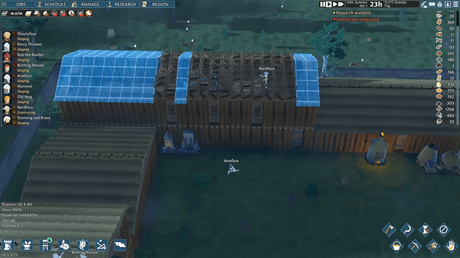
Creating a dedicated cold storage facility essentially functions as building a primitive freezer for your hungry settlers. The fundamental strategy requires you to excavate straight down into the earth or carve a deep cavern directly into the side of a massive mountain. Executing this massive excavation allows the thick surrounding layers of natural dirt to insulate your chamber. This earthy insulation actively keeps the subterranean room significantly cooler during the brutal summer months, mimicking the exact function of a historical root cellar.
The Genesis of Food Hoarding
Before you command your villagers to start moving mountains of dirt, you must prepare the proper furniture to hold your bountiful harvests. Simply dumping raw cabbage on the floor will not suffice for a prosperous settlement.
Discovering Essential Technologies
You must proactively unlock wooden shelves by accessing your Research Panel interface. You’ll easily locate this specific technology nestled under the dedicated section labeled Preserving Food. You must dedicate your scholars to researching this technology as early as possible in your playthrough to guarantee your survival.
Navigating the Build Interface
Once your brilliant scholars finish their research, you can access your newly discovered shelves by opening the build catalogue and clicking on the furniture section. Building these sturdy shelves serves as the absolute best method to organize your raw ingredients and cooked meals. Utilizing vertical shelf space drastically decreases the total physical square footage you need to dedicate to your stockpile.

 Survival Tip: Press the F3 key on your keyboard to instantly open the furniture build catalogue the moment your scholars finish researching your storage units!
Preventing Catastrophic Cave Ins
The advanced physics engine operating behind the scenes heavily punishes sloppy engineering. You cannot simply hollow out a massive underground cavern without planning for the crushing weight of the earth above.
The Threat of Gravity
Structural integrity dictates the survival of your architects! This unforgiving mechanic means you must continuously construct sturdy wooden beams and solid support posts whenever you carve out vast underground pantries. If you recklessly order your miners to hollow out a room measuring seven by seven tiles, the ceiling lacks the required physical support. Consequently, the center tile will violently cave in. This terrifying disaster essentially deletes all the carefully preserved layers of insulating soil sitting above your room, completely ruining your temperature control.
Strategic Pillar Placement
To prevent this architectural tragedy, you must intentionally place support posts at regular intervals throughout your massive rooms to stop the heavy roof from crushing your supplies. For example, if you decide you absolutely need a giant seven by seven room, you must deliberately leave the exact center tile completely untouched by your miners. For players who demand a more visual explanation regarding these complex stability physics, the brilliant user perafilozof on Youtube offers an exceptional video tutorial that clarifies everything you need to know.
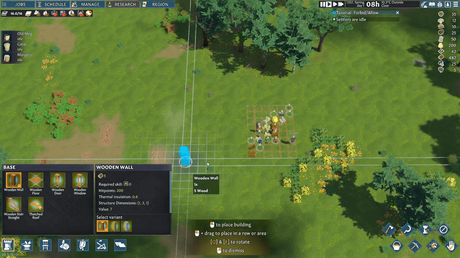
 Architectural Trick: When carving out sprawling subterranean caverns, intentionally leave occasional columns of raw dirt completely unmined to act as natural support beams that cost zero timber to construct!
Mastering Ambient Heat Signatures
With the simple fundamentals firmly established, we must delve into the invisible thermal dynamics that separate a mediocre basement from a masterful refrigerator.
Identifying Fiery Culprits
The most basic rule of thermal management demands that you banish all objects that produce literal fire from your food sanctuary. You must ruthlessly exile blazing braziers, flickering torches, and roaring firepits far away from your precious root vegetables.
The Hidden Warmth of Life and Matter
However, you must also combat numerous hidden heat emitters. The official Update 9 Patch Notes clearly state that almost everything functions as a heat source now. The physics engine tracks the body heat radiating from human settlers, wandering animals, towering resource piles, living trees, and even the bare ground itself. Certain objects radiate significantly more heat than others. Packing too many of these elements tightly together inside an enclosed space easily leads to sustained warm temperatures.
This massive mechanical shift means you must worry about every single entity that enters or exits your carefully crafted vault. On a standard day to day basis, allowing your settlers or hauling hounds to briefly grab a meal and leave will not cause significant thermal disruption. However, permitting them to loiter inside the room creates severe spikes in the ambient temperature. Therefore, you must relocate all active production stations out of the cellar immediately. Furthermore, you must aggressively remove any miscellaneous items that you do not actively need to keep chilled.
Directing Thermal Airflow
Another crucial concept involves understanding exactly how warmth physically travels through your settlement. Heat naturally radiates outward from an object and actively warms the immediate air surrounding it. This warm air flows freely through any objects containing physical openings. For instance, hot summer air easily penetrates open windows, grated wooden doors, and grated floors. You can successfully halt this unwanted heat transfer by building completely solid objects. Always seal your pantries using solid walls, solid doors, and non grated flooring to successfully lock the freezing air inside.
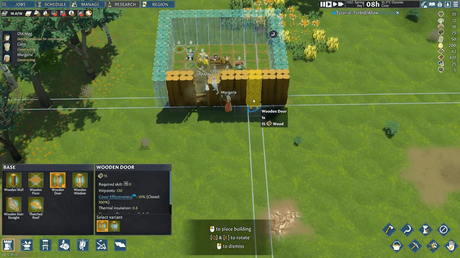
 Thermal Trick: Always seal the entrance to your underground pantries using completely solid wooden doors rather than grated ones to block warm summer air currents from creeping inside!
The Law of Diminishing Depths
Now that we understand exactly how the game generates and distributes heat, we must examine the most effective strategies for trapping the cold air inside a specific room.
Breaking Ground
In older versions of the game, the total volume of dirt stacked above your ceiling mattered immensely. However, the developers adjusted this dynamic. While maintaining extra layers of dirt above your ceiling still helps your insulation, the overall cooling effect provides significantly less impact than it did previously.
Analyzing the Temperature Plateau
Let us examine the precise temperature differences based on excavation depth. If you leave exactly one level of dirt above your ceiling, the ambient temperature reaches 5.8 degrees Celsius. If you order your miners to dig deeper and leave two levels of dirt above the room, the temperature drops slightly to 5.6 degrees Celsius. And if you commit massive resources to an extreme excavation and leave three complete levels of dirt above the room, the temperature stubbornly plateaus at 5.5 degrees Celsius.
Therefore, forcing your miners to continually dig deeper into the earth does not represent an optimal use of your precious early game time. When you desperately scramble to get your basic storage operational before your initial cabbages rot away, stick to a shallow hole. You will only find digging deeper slightly beneficial when you finally start constructing a massive, permanent fortress vault much later in your campaign.
 Excavation Tip: Save your precious time during the early game rush by only digging one level down, as digging three full levels deep only yields a measly 0.3 degree Celsius improvement!
The Great Subterranean Flooring Dispute
Players constantly debate whether they should install crafted floors inside their muddy cellars. The newest update completely fixes flooring mechanics.
Dispelling Heat Generation Myths
Constructed flooring now acts correctly as a thermal insulation barrier rather than functioning as a bizarre heat source. This incredible change means you can safely install beautiful stonework inside your pantries without accidentally baking your winter supplies.
Comparing Insulation Materials
We can observe a stark comparison between various flooring types. The brand new wicker grated floor provides a minimal thermal insulation value of 0.05. Meanwhile, standard wood flooring provides a vastly superior thermal insulation value of 0.75. For this specific experiment, we built both test rooms with exactly three levels of dirt above them.
The collected data speaks for itself. The room containing the wicker grated flooring sat exactly at the default temperature for that specific subterranean depth, measuring precisely 5.5 degrees Celsius. Conversely, installing the solid wood flooring actively lowered the room temperature to a brisk 5.2 degrees Celsius. While you might consider this a tiny difference, every fraction of a degree heavily influences food preservation times. If you desire even greater results, you should install premium limestone tile floors or clay tile floors. Both of these premium materials boast a phenomenal 0.8 thermal insulation value!
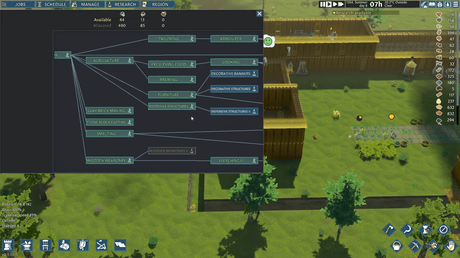
 Flooring Trick: Prioritize gathering limestone or clay materials for your cellar floors, as their massive 0.8 thermal insulation rating provides the absolute best defense against ground heat!
Constructing Impenetrable Thermal Boundaries
Because the thermal engine relies specifically on insulation values to trap temperatures, you naturally want to maximize this stat by any means necessary.
Enhancing Natural Soil
Raw dirt walls provide a highly respectable insulation point value of 0.95 right from the start. However, a fascinating mechanical interaction occurs when you begin building constructed walls against the raw earth.
If you build constructed walls entirely around the interior of an excavated room, a tiny three by three space suddenly plummets to an icy temperature of 3.8 degrees Celsius! Extensive community testing led players to a very specific conclusion regarding this mechanic. We discovered that building multiple layers of walls using the exact same material source creates severely diminishing returns.
Stacking Diverse Resources
The true secret lies in mixing your construction materials. Because building materials of a completely different type can stack their values together to further multiply the total insulation, adding a second unique material source makes the chamber substantially colder!
Naturally, your immediate impulse might involve adding a third unique material to the wall sandwich. While the game certainly allows you to execute this, the resulting temperature drops represent mere fractions of a degree. We determined that a third layer completely fails to justify the massive extra mining time and heavy resource expenditure. You should only utilize a third layer if you absolutely hate the visual appearance of clay walls and wish to hide them behind something prettier. Furthermore, a direct comparison between a standard room surrounded by raw dirt versus a room surrounded by constructed clay yields roughly a 2 degrees Celsius difference. You remain completely welcome to test this experiment yourself to witness the dramatic chilling effect firsthand!
 Insulation Trick: Sandwich your cellar boundaries by building a constructed clay wall directly against the natural dirt earth to perfectly combine their unique thermal properties!
Expanding the Chilling Voids
We must now address the final critical layout factor. Does the physical size of the room truly impact the refrigeration mechanics?
Escaping the Confines of Small Pantries
In terms of pure storage efficiency, size absolutely impacts the final outcome. In fact, the larger you design the room, the colder it eventually becomes.
Achieving Optimal Volume
The game’s thermal engine causes heat to become trapped very easily inside smaller confined spaces. This trapped ambient heat forces the tiny room to stay much warmer over an extended period. Conversely, massive rooms disperse the ambient heat much more effectively. In a highly controlled testing environment, we excavated a giant room containing exactly 28 free squares of empty space. This massive chamber achieved a brilliantly cold temperature of 3.7 degrees Celsius before adding any additional modifiers.
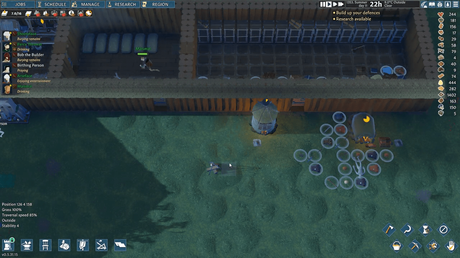
 Spatial Tip: Always design your food hoards to encompass a massive footprint, as sprawling 28 square underground rooms consistently outperform cramped closets in ambient cooling!
Forging the Perfect Refrigeration Chamber
Combining all these meticulously researched architectural features should yield the absolute best storage room possible, correct? Absolutely!
Combining Proven Strategies
By synthesizing deep excavation, solid wood flooring, dual layered mixed walls, and a massive sprawling floor plan, the ambient temperature dramatically plummets down to a freezing 2.2 degrees Celsius. Victory belongs to the architects!
Embracing the Cycle of Decay
While this incredibly impressive setup does not completely freeze the cycle of time to stop your food from slowly decaying, this specific temperature will keep your provisions as perfectly preserved as the game mechanics allow. And let us embrace reality for a moment. Food rarely survives sitting inside our real life kitchen freezers for over an entire calendar year without suffering freezer burn anyway.
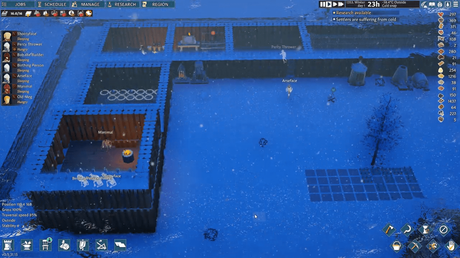
 Synergy Trick: Combine double layered walls, premium flooring, and a massive floor plan to successfully force your room temperature down to a freezing 2.2 degrees Celsius!
Combating the Aqueous Menace
With the massive 1.0 release, the developers unleashed a terrifying new dynamic weather event upon the player base. You must now vigorously defend your subterranean vaults against devastating Cellar Floods!
Surviving the Spring Torrents
Cellar flooding specifically strikes your colony when you fail to completely enclose an underground space with constructed walls. This disastrous weather event features a significantly higher chance of triggering during the wet rainy seasons. When the event activates, the game instantly fills your precious cellar with a thick layer of standing water. This brutal new mechanic makes building constructed walls incredibly vital. Walls no longer serve merely as a tool for reducing temperatures, they act as your sole physical defense against total aquatic ruin.
Evaporation and Displacement Countermeasures
If a sudden flood overwhelms your cellar before you manage to erect your protective walls, do not panic. You can execute several distinct methods to successfully eradicate the standing water.
- You can manually command your miners to expand the size of the room by digging out the adjacent dirt. This action helps dissipate the standing water across a significantly larger surface area. Once the water becomes shallow enough from this forced expansion, it will naturally evaporate into the air.
- Similarly, you can strategically fill the flooded hole with constructed walls, provided the flooded area remains reasonably small. After you build the solid walls to violently displace the liquid, you simply order your settlers to destroy those exact same walls. This brilliant architectural trick completely deletes the water from existence.
- Using the displacement trick mentioned above, you can intentionally divert the raging water into a much smaller, dedicated space located on a lower elevation layer. You then fill that smaller lower pit with solid walls to avoid the tedious task of filling your entire primary storage room with temporary structures.
Designing a Functional Extraction Well
Alternatively, you can build a working well to physically siphon the water directly out of the flooded chamber.
If you choose the siphoning method, you must follow these highly specific construction steps:
- You must place your new well on an elevation layer that sits physically higher than the actual flood water level.
- You must provide the well with a central, entirely uninterrupted vertical shaft leading straight down to the liquid source.
- You must actively clear away all dirt, dismantle all walls, delete all floors, and remove all wooden beams blocking the vertical path of the well!
- You should angle your game camera to look directly down into the completed well to visually confirm the physical water sitting at the very bottom.
- If you spot a
 sign hovering over your well, you built something incorrectly and must check your shaft clearance!
Overcoming Barrel Hauling Limitations
Once you secure a perfectly working well, you must acquire wooden barrels to transport the liquid. You should prioritize crafting large barrels immediately. Large barrels operate incredibly efficiently because they hold a massive 180 units of water. Conversely, smaller barrels only hold a pathetic 36 units of water per trip.
You must remain aware of a critical bug present in the 1.0 release. Currently, you completely lack the ability to empty a flooded room directly using just barrels alone. A functional well absolutely must exist to extract the liquid. The developers officially confirmed this specific interaction functions as an unintended bug. They promised they will deploy an official patch to fix this annoying issue sometime after the initial 1.0 update drops. Additionally, this future patch will mercifully reduce the total volume of water that spawns during the event, and it will increase the amount of water your settlers scoop per hauling trip to make this entire siphoning system significantly less painful. However, until the developers actually release this patch, relying on wells and barrels remains an incredibly time consuming method to empty a flooded room.
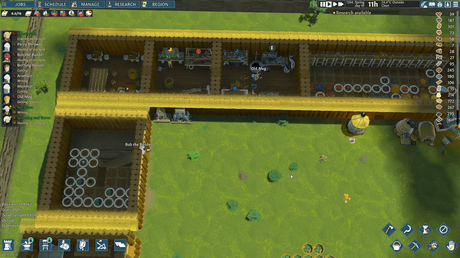
 Drainage Trick: Always instruct your carpenters to craft large barrels instead of small ones when hauling water from your well, as they extract a massive 180 liquid units per trip!
Exploiting Seasonal Shifts and Animal Behaviors
Here we provide an elite collection of advanced environmental tricks and crucial mechanical disclaimers to truly perfect your settlement strategy.
Manufacturing Artificial Frost
Harvesting ice blocks acts as an incredibly helpful strategy for aggressively pushing your cellar temperatures down during the sweltering summer months. Because the underground areas absolutely never drop below 0 degrees Celsius on their own anymore, manufacturing ice strictly operates as a limited time seasonal endeavor. You must proactively manufacture your ice entirely above ground during the freezing winter months. Keep in mind that stockpiled ice cannot magically lower a room below 0 degrees Celsius. However, hoarding ice will significantly guarantee your cellar temperatures remain as low as mechanically possible when the summer heat waves strike.
You can utilize exactly two different methods to manufacture ice:
- You can assign ice making as a dedicated production task at the specific Ice Box workstation. The game oddly categorizes this as a construction task, but it requires absolutely zero skill requirement from your villagers. Your settlers will gather liquid water, add it to the wooden box, and wait. After a specific amount of time passes, provided the outdoor ambient temperature stays low enough, the box will successfully generate ice.
- Alternatively, you can simply place wooden barrels outside in the freezing elements. Your settlers can manually fill these empty barrels with water gathered from natural sources like sprawling lakes or rushing rivers.
Harvesting Freezing Rainwater
To automate the barrel method, you can cleverly place empty barrels directly at the corners of your building roofs to naturally catch falling rainwater. If the outdoor temperatures grow bitterly cold enough, the liquid rainwater trapped inside the barrels will freeze entirely solid. You can then command your settlers to completely destroy the barrel. Make sure you do not simply select the empty command! Destroying the frozen barrel instantly spawns harvestable ice blocks directly onto the ground. Players consider this clever trick much faster than using the traditional ice box, but it heavily requires constant micromanagement of your villagers and barrel supplies.
Inviting the Winter Chill
When winter finally descends upon your map, you gain a massive environmental advantage. During winter, you can purposefully prop open your cellar doors to let the freezing outdoor air rush inside, actively forcing the temperature of your storage facility well below freezing.
If you design your cellar entrance utilizing vertical ladders instead of traditional stone stairs, you completely protect your food from scavenging wildlife. The only wild animal that possesses the physical ability to climb up or down ladders to access your stockpiles is the pesky polecat. Alternatively, you can build an outer protective wall to block off all walking access to your descending stairs while purposefully leaving that stairwell area completely unroofed. You can also achieve this chilling effect by strategically opening glass windows.
Navigating Pet Access Restrictions
While ladders offer phenomenal protection from hungry wildlife, you must remember that most of your domesticated pets cannot navigate ladders either. While installing a vertical ladder serves as an incredibly easy way to save valuable floor space while digging down into the earth, it heavily restricts your hauling animals. You absolutely must set out dedicated food troughs for your hauling pets in alternative, easily accessible locations so they can properly eat and survive the winter.
Analyzing the Valley Test Environment
We must clarify the specific parameters under which we conducted this exhaustive temperature testing. We performed all rigorous testing on a standard valley map while playing strictly on the normal difficulty settings, and captured all statistical data during the in game spring time. When the ambient temperatures eventually spiked during the sweltering summer months, peaking at a brutal 32 degrees Celsius, we saw the final optimal storage room maintain a crisp 2 degrees Celsius. Sadly, we did not manage to test a proper heat wave event before running out of patience while speed running the game waiting for the random event to trigger.
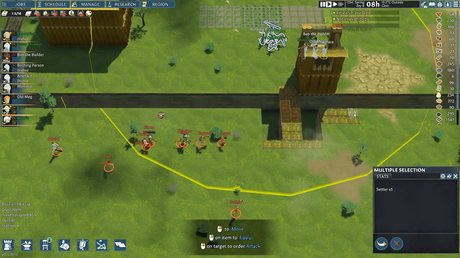
 Winter Tip: Place empty wooden barrels directly beneath the corners of your roofs to automatically collect rainwater, which freezes into harvestable ice blocks when the temperature plummets!
Unleashing the Developer Toolset
If you desire to test these complex architectural concepts yourself without risking the survival of your main settlement, you absolutely need access to the game’s hidden developer tools. We provide this up to date guide detailing exactly how to enable the developer interface and thoroughly test things out for yourself. You require absolutely no external mods to achieve this feat.
Accessing the Experimental Test Branch
To successfully enable Dev Mode, the very first action you must take involves switching your game installation over to the Experimental branch. This specific branch serves as the chaotic testing ground where the developer pushes brand new updates to be aggressively play tested by the community before they officially release them into the stable main version.
Here are the exact steps you must follow to execute this switch:
- Launch your Steam application.
- Right click directly on Going Medieval inside your game library and click on Properties.
- Navigate directly to the tab labeled Game Version.
- Select the specific option titled “experimental” from the drop down menu.
You must remain incredibly mindful that game saves you generate while playing in the Experimental branch sometimes become completely incompatible with the main stable branch. Always verify the latest official patch notes to see whether your saves remain safe. If they lose compatibility, you must either stick exclusively with the Experimental branch or patiently wait until the developers deploy another patch that restores full compatibility.
Manipulating the Internal Configuration Files
After you successfully transition your game over to the Experimental branch, you must manually edit two highly specific game files to properly activate the hidden developer tools within the user interface.
First, you must edit the GameSettings.json file by meticulously following these instructions:
- Open your computer’s file explorer and navigate to the deep folder path located at:
Program Files(x86)\SteamLibrary\steamapps\common\Going Medieval\Going Medieval_Data\StreamingAssets\Settings\ - Alternatively, you can right click on Going Medieval inside Steam, click on Manage, select Browse local files, and then manually open the folders leading to
Going Medieval_Data\StreamingAssets\Settings - Locate a file specifically named
GameSettings.jsonand pry it open using the Notepad application. - Scour through the text for the specific line labeled
devToolsand manually change the wordfalsetotrue. - Save the modified text file and safely close Notepad.
Next, you must edit the global.config file by following these exact instructions:
- Open your computer’s file explorer again and navigate to the hidden folder path located at:
%userprofile%\appdata\locallow\Foxy Voxel\Going Medieval\ - Locate a file specifically named
global.configand open it using the Notepad application. - Search the document for the specific line labeled
devtoolsand manually alter the wordfalselocated directly next to it totrue. - Save the document and safely close Notepad.
You successfully hacked the matrix! Now simply launch your game. You can either start a brand new sandbox save file or load an existing campaign. The highly coveted dev tool button will now permanently grace your game interface directly next to the region button.
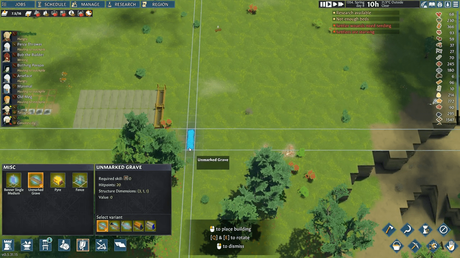
 Developer Tip: Always review the latest patch notes before swapping to the Experimental branch, as you might permanently ruin the compatibility of your main village save file!
Conclusion
Conquering the brutal elements in Going Medieval demands immense patience, meticulous architectural planning, and a profound understanding of subterranean physics. So, by aggressively restricting ambient heat sources, utilizing the perfect mathematical combination of insulated flooring and stacked composite walls, excavating massive cavernous chambers, and masterfully managing disastrous aquatic events, you absolutely guarantee your colony’s survival through the harshest simulated seasons. Whether you brave the unforgiving blizzards to harvest precious ice blocks or dive deep into the hidden developer settings to freely test bold new fortress designs, you now possess the definitive knowledge required to construct the ultimate cold cellar. Keep your provisions frozen solid, keep your hardworking villagers well fed, and aggressively expand your sprawling medieval empire!

 Fun Fact: Going Medieval takes place in an alternate timeline in the year 1346. A devastating plague has wiped out 95% of the global population. Your settlers are not just building a town; they are reclaiming the wilderness in a post-apocalyptic medieval world.






