


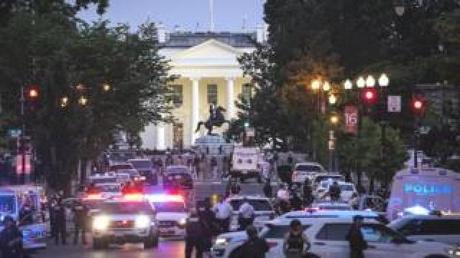
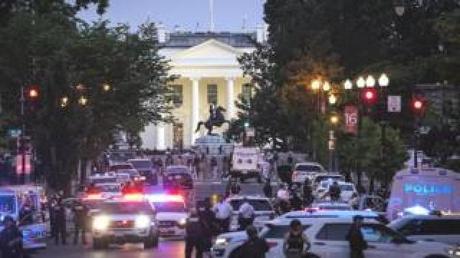
Twitter has suspended hundreds of accounts for issuing statements about a Washington DC "blackout" that never happened.
Among the civil unrest spread in the United States, thousands of tweets using the hashtag #DCBlackout said that communications had been blocked in the capital to paralyze protests.
But there was no evidence of this.
Twitter also claimed to have banned an account for inciting violence while impersonating a protest group.
The hashtag #DCBlackout trended on Twitter on Monday, with millions of tweets and retweets stating that internet and telephone communications were cut off late at night as protests continued.
But the journalists dealing with the protests did not have such problems and Twitter collected many of their tweets in an important link in the sidebar of the main Twitter website. An Internet monitoring service also claimed that there was no indication of widespread outages.
A Twitter spokesman said the social media site "suspended hundreds of spam accounts" using the #DCBlackout hashtag, citing platform manipulation and spam policies.
- Trump threatens to send army to end the unrest
- US protests: separate facts from online fiction
Directly from the disinformation booklet
By Shayan Sardarizadeh and Olga Robinson, BBC NewsThe DC blackout hoax is a classic example of an Internet voice going out of control.
The hashtag started to go viral on Twitter in the early hours of Monday. Panic messages about a blackout also spread to Facebook, Reddit and later also to Instagram.
Some of the most shared posts were sent by users who were not residing in Washington DC or the United States.
Despite the lack of evidence of a blackout, the hashtag has collected more than 500,000 tweets from 35,000 unique accounts in a matter of hours and has become a global trend.
Concerned residents in and around Washington DC saw the trend on their social media feeds and started posting messages to find out what was going on.
So when Twitter removed him from his list of "trending topics", the complaint may have been seen by millions of people around the world.
This is a playbook that we have seen many times.
When an important event is developing, rumors and statements about an emotional topic can go viral without any supporting evidence.
Twitter also suspended another account that claimed to represent the left-wing antifa group, calling for violence.
But the antifa_us account turned out to be run by a well-known white nationalist group operating under an alleged name, Twitter told the US media.
Before being suspended, he tweeted messages including: "Tonight ... we move to the residential areas ... the white hoods ... and take what is ours".
"Antifa", a contraction of the anti-fascist, refers to the unorganized far-left protest group that gained new relevance in the United States after the controversial gathering of white supremacists in Charlottesville in 2017. Anti-fascists regularly organized counter-demonstrations - of events in the following months - sometimes causing violent clashes.
The use of the label is controversial because, as the Anti-Defamation League writes, it is sometimes used "to include all counter-demonstrators, rather than limiting it to those who proactively seek physical confrontations with their perceived fascist opponents" .
Since the outbreak of violent civil unrest, President Trump has blamed Antifa for the riots and said he would designate him as a terrorist group, although it is not clear that he has the power to do so.
A Twitter spokesman said the company noticed the account after it sent tweets that incite violence and was eventually suspended for violating fake account policies.
The professor. Philip Howard of the Oxford Internet Institute said that while Twitter is taking action, conspiracy theories and polarizing stories keep coming back.
"It's difficult to know how much impact misinformation has on a particular topic. But people continue to spread it," he said.
"Platforms are doing more and more to keep fake news in check. But each platform is different and a large number of junk news stories returns in new forms, with new links and on new channels, very soon after they have been removed. ".






