


The Fujifilm X-Pro3 and X-T4 both have features that set them apart from their predecessors. When Fujifilm released both cameras, some design changes were very much welcomed - and some were not. Both cameras are flagship models in Fujifilm's popular X series. Both take equally good pictures, but are aimed at slightly different customers. The X-Pro3 is all about street photography and is certainly the niche model - some might call it controversial.
Here's what you need to know about these two high-end mirrorless cameras before you pull the trigger.
At a glance:
Fujifilm X-T4
- 5-axis stabilization
- Fully articulated touch screen
- 600-round battery
- 26MP sensor / X processor 4
- Mechanical shutter with 15 frames per second
- 3.69 million point EVF
Fujifilm X-Pro3
- Hidden, tiltable touchscreen
- ~ 370-round battery life
- 26MP sensor / X processor 4
- Hybrid OVF / 3.69 million point EVF
design
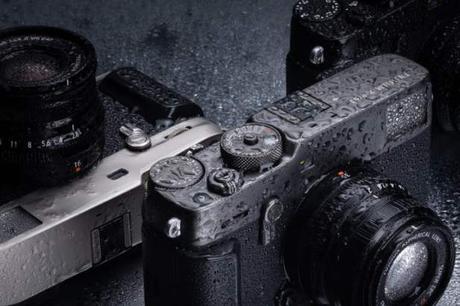
The most polarizing difference between the cameras is the design. While the X-T4 has stayed true to the design of earlier XT cameras, Fujifilm was more radical with the design update of the X-Pro3.
In a forced relapse into movie time, the X-Pro3's LCD screen is hidden by default. It's still there, you just can't see it until you fold it down. Fujifilm purposely made it awkward to use while shooting to encourage people to use the viewfinder and focus on the scene ahead rather than reviewing each photo. It was a bold, if somewhat confusing, move that not every photographer appreciated. That one choice makes the X-Pro3 an extreme niche, and suggests that Fujifilm built the camera specifically for street photographers.
The X-T4 wasn't without its own design upgrade. It is the first model in the range to feature a full articulating screen, a generally welcomed change. This further solidifies the camera's position as a still-video hybrid, making it more useful for YouTubers and vloggers in addition to traditional photographers.
Another striking difference in design is the placement of the viewfinder. The X-T4 follows a traditional SLR design and places the viewfinder in the center of the camera body, while the X-Pro3 is more like a range finder with a viewfinder mounted in the left corner. From an electronic viewfinder perspective, this is largely an aesthetic difference - both EVFs offer the same resolution of 3.69 million dots.
However, the X-Pro3 uses a hybrid viewfinder that also has an all-optical mode - basically a window. This is a parallax viewfinder, meaning you won't be looking straight through the lens, but the frame lines overlaid in the viewfinder will give you an approximate frame. This isn't something that every photographer needs - or wants - but it's an experience only found in the X-Pro line. Using the optical viewfinder also saves battery life.
If weight is an important factor for you, the X-T4 weighs just under 19 ounces, thanks in part to a new, larger battery. That's a little more than the X-Pro3 at 17 ounces. Neither is absolutely absolutely heavy, and both are far less strenuous than most DSLRs.
For the outdoor shooter, both cameras offer security when you take photos in harsher conditions, as both are weatherproof. Remember, that doesn't mean they're waterproof - they can't survive being submerged.
Image quality and performance
Both cameras are equipped with the same 26 megapixel APS-CX-Trans-Sensor and X-Processor 4 image processor. Therefore the image quality should be identical and all other values should remain the same.
However, the X-T4 is characterized by image stabilization in the body (IBIS). The stabilization allows longer shutter speeds without blurring from holding the camera. This can result in lower ISO values being recorded in some situations, resulting in better image quality compared to the X-Pro3. It also helps to stabilize the preview image while recording. This is especially useful when using long lenses, making the X-T4 the first choice for bird watchers and sports photographers.
The X-4 is also the faster camera that can continuously take up to 15 frames per second. The X-Pro3 is not bad with 11 fps.
While this doesn't affect the RAW image quality, the X-T4 also features a new film simulation called Eterna Bleach Bypass, which isn't present on the X-Pro3 (at least not yet). This creates a muted, low saturation look that works well for some scenes. We'd hardly call it a deal-making feature, but it's something to be aware of.
Another area in which both systems work together is autofocus. The X-T4 and the X-Pro 3 have the same 425-point autofocus system with contrast and phase detection. Focus tracking works well in both models, although not quite the best in class, and face and eye detection offer better accuracy for portraits.
A key difference, however, is that the X-T4 enables focus bracketing, which makes it easier to achieve perfect focus or to enable focusing afterwards. The X-Pro3 does not have this feature, which is rather disappointing for a camera for street and travel photographers.
Video
Both cameras record 4K videos. However, if you are a multidisciplinary content creator and video is an important part of your job, you have to say the X-T4 is your best choice. In fact, it's one of the best video cameras, period.
In addition to the full motion screen, it offers excellent internal and external video quality. It offers internal 10-bit 4: 2: 0 recording or external 10-bit 4: 2: 2 recording via HDMI, with the X-Pro3 limited to 8-bit in both cases. It can also record 4K at up to 60 fps, compared to 30 on the X-Pro3, and it records at a higher bitrate of 400 megabits per second - twice as much as the X-Pro3. Neither of these things matter much to the casual videographer, but they make all the difference to the serious client.
For fans of slow motion, the X-T4 is able to record up to 240 fps in cropped 1080p resolution for up to 10x slow motion playback.
Both cameras have two memory card slots that support UHS-II SD cards for high speed performance.
Battery life
Compared to other cameras in the XT and X-Pro series, Fujifilm has significantly improved the battery life of the X-T4 thanks to a battery with a higher capacity. It promises 600 shots per charge in economy mode, although in our tests we found that this number should still be achievable in boost mode (which improves viewfinder and autofocus response).
The X-Pro 3, which shares the same lower capacity battery as the X-T3, is expected to charge 370 frames, but you can get quite a bit more out of it if you don't mind sticking to the optical viewfinder. Nevertheless, the X-T4 certainly has the edge here.
It's an easy choice
Overall, the XT4 is easier to use, has a wider audience, and is effectively applicable to a wider range of photography genres. Compared to the X-Pro 3, it leads the way in terms of recording speed and video recording.
That doesn't mean the X-Pro 3 isn't a high quality camera. However, it only serves a select number of photographers. If you fall in this pile you will love it.
The Fujifilm X-T4 is suitable for every type of photographer. It is that The closest to the perfect camera .
Editor's recommendations







