The world of the early 19th century brought with it; war, revolution, and fast-paced scientific advancement. It is in this world that an 18 year old girl would come up with an idea which would influence the world and change it forever. In 1816, Mary Wollstonecraft Shelley (nee Goodwin) was in Geneva, Switzerland with her lovers, Percy Shelley and Lord Byron. Whenever there was downtime, the three of them would pass  the time by sharing stories with each other. It was here where Shelley crafted the story of a young scientist who used science to challenge God and create life himself. In 1818 this gothic tale was crafted into the 1818 novel published as Frankenstein; or The Modern Prometheus.
Told from the perspective of Captain Walton. a sailor in the Arctic who has discovered a nearly dead man named, Victor Frankenstein. From there Walton recounts through a letter to his sister the tale, Frankenstein shares with him. Victor Frankenstein had decided to use science to solve the mysteries of life, he stitched together parts from cadavers and imbued his grotesque creation with life. From there Frankenstein tries to return to his normal life to marry his beloved Elizabeth, but his creation learns a sense of self. With a library consisting of the and Paradise Lost, Frankenstein's monster grows mentally and spiritually and decides to turn his attention to his creator. Victor Frankenstein is terrorizes by the creature who longs for the scientist to build another monster, a woman to be his companion and cure his loneliness. Frankenstein refuses and everything leads to the Arctic where he has a final confrontation with the monster he gave life to.
With her most well known literary work Mary Shelley completely changed the landscape was not a massive seller upon its release, it did become a critical success of sorts. The book gained wider notoriety throughout the years with various adaptations of the books which brought Dr. Frankenstein and his monster to the masses, originally on the stage and later on film. During the
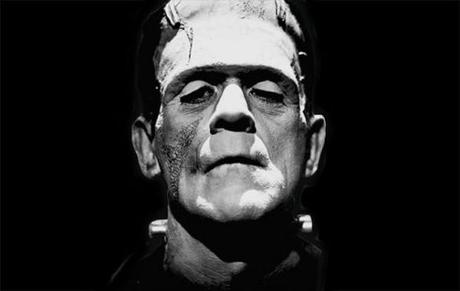
While Frankenstein is hitting it's bicentennial, the themes of this story are just as relevant as ever. Humanity is still eager to press forward in any number of endeavors, rarely stopping to contemplate the consequences. Just like Victor Frankenstein we create monsters in our arrogance and learn too late we can not control them. With each advancement we make as a society there is always an inevitable downside which comes back to bite us. The Second World War ended with the creation of the most powerful bomb ever seen on this planet, but once that Pandora's Box was opened it led directly to a decades long stand off between two world superpowers. Even now with tablet's and iPhones pervading our society we never stop to consider how they are used by nefarious parties against us in a world where over-the-top surveillance is becoming the norm.
One of the greatest aspects of Mary Shelley's legacy is her role as a feminist icon. She held then radical beliefs about the role women played in society no doubt inspired by her mother Mary Wollstonecraft, the writer behind a Vindication of the Rights of Woman.
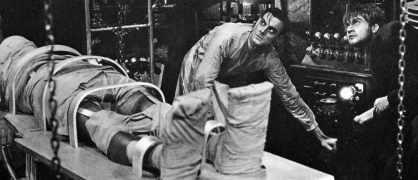
After 200 years of being on the bookshelves Frankenstein still holds its place as a literary masterpiece. It is hard to believe that when Mary Shelley was trying to scare her lovers on a dark stormy night she herself would create a monster so to speak which would never die but would continue on frightening and challenging readers to consider the consequences of their actions.