


Ford's Smart Mobility Series
A lot has changed over the last 50 years. But parking? It's still the same. Drivers head into cities, hunt for open spots and hope for the best.
But what if your car could tell you where there was an open parking spot in real time and help you book it? What if the technology to do this already existed? Ford is reimagining mobility solutions for today and the future, and our researchers are working to make convenient, stress-free parking a reality using existing semi-autonomous vehicle technology.
Ford's Parking Spotter, Remote Repositioning and Painless Parking experiments can give city drivers real time data on where to park and options to book a parking space, as well as provide them with on-demand repositioning services wherever they go, especially if they arrive in cities in shared vehicles.
With smarter parking, drivers can spend less time hunting for parking spots, use less energy, cut down on emissions and help fight congestion around the world. Ford's Smart Mobility experiments could make it a reality.
Sensing Your Growing Frustration: Ford and Georgia Tech developing technology to help locate parking and reposition vehicles in increasingly crowded urban areas.
Right now, drivers in large metropolitan communities spend up to 20 minutes searching for parking spaces every single day, which translates into nearly three and a half days every year. Imagine the time lost with family members or the reduced productivity at work that results from simply searching for an open spot. Moreover, the endless search for that elusive spot wastes fuel and increases emissions. In short, this is very much a quality of life issue for thousands of residents of the greater New York City area.
Our city not only remains the most populous in the nation but also the one with the greatest urban growth, according to the U.S. Census Bureau. Moreover, with limited budgets, it's virtually impossible to count on municipal, county or state dollars being allocated toward expanding parking options in the area.
As a result, it is critical for public agencies, private companies, and research facilities to look for ways to address what is growing beyond a simple annoyance and morphing into a real economic and lifestyle barrier. To that end, Ford Motor Company and Georgia Tech are partnering on two new initiatives that use semi-autonomous technologies and sensors to help solve major parking and mobility issues affecting cities around the world.
With Parking Spotter, drivers will be able to locate open spots in real time, reserve them and navigate to them more efficiently. The process works like this:

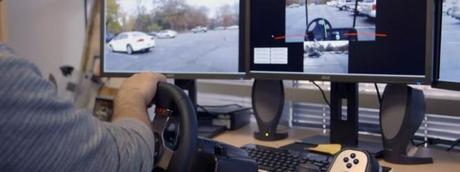
And, for shared vehicles or drivers who are new to the city, Ford's Remote Repositioning project will help reposition cars remotely, like returning shared vehicles to their original spots during off-peak hours. Remote Repositioning could help cut down on congestion and time required to return shared cars to their original parking spaces, often on the other side of a city.
You can see the projects in action here:
MOBILITY EXPERIMENT: PARKING SPOTTER
MOBILITY EXPERIMENT: REMOTE REPOSITIONING







