It was with some sadness that I began re-reading Glinda of Oz, knowing that it was L. Frank Baum’s last work. For various reasons, this month (today in particular, Inauguration Day) feels like a fitting time for a farewell to Oz.
Baum died in May, 1919, after a prolonged illness (heart and kidney failure) during which he wrote Magic of Oz and Glinda of Oz. Both were written and edited from his bed and published posthumously. Glinda of Oz is dedicated to his son, and instead of his usual letter to his readers, there is instead a note from the publishers:
Mr. Baum did his best to answer all the letters from his small earth-friends before he had to leave them, but he couldn’t answer quite all, for there were very many. In May, 1919, he went away to take his stories to the little child-souls who had live here too long ago to read the Oz books for themselves.
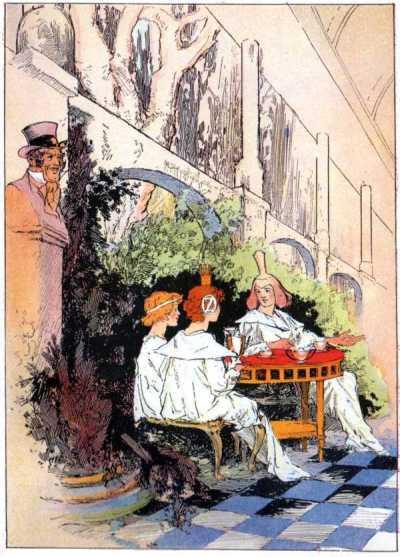
In this story, Ozma discovers that two groups in the Gillikin Country are going to war, and since she doesn’t know anything about them, she decides to go to them and mediate their conflicts. The Flatheads live on a mountain and are ruled by a cruel “Supreme Dictator”. They are at war with the Skeezers, who live in a dome on a nearby lake, because the Skeezers turned the Supreme Dictator’s wife into a Golden Pig. The Flatheads are trying to poison all the fishes in the lake, because three of those fishes are transformed sorceresses (“Adepts”), and if they are killed, the Skeezer Queen, Coo-ee-oh, will lose all of her power.
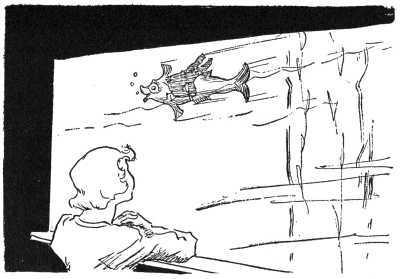
Glinda of Oz was always one of my favorite Oz books. I love that Baum presents a scenario where Ozma and Dorothy and the Skeezers are in very real danger. Queen Coo-ee-oh submerges the dome of the Skeezers so it’s under the lake. The people, with Ozma and Dorothy, become trapped underwater, though in no danger of actual physical harm.
This book is a puzzle, and more cohesive than many of the Oz books (I’d liken it to Lost Princess of Oz). There’s a little less road trip, though there is some (Baum loves a road trip). Instead, there’s more of a focus on magic and problem-solving. This book, more than some of the others, explores the differences in fairy magic, sorceress magic, and wizardry. And in the Flatheads, the Skeezers, the Mist Maidens, and Reera the Red, Baum creates some of his most interesting characters.
It’s a tighter story than most of the Oz books, with less of the hoopla and extra stuff that fills many of the books (like birthday parties, etc). Of course that is because Baum was struggling to get this one out. But because it’s one of this best stories, I’d like to think this book wasn’t just a struggle but also a book that he poured all of his love into. It’s his farewell to his readers and these characters (who I hope he came to love over the years).
Baum’s books are full of moments where you wonder, why don’t they just use the Magic Belt or wave a wand to fix this? In this book, Baum seems to anticipate most of these problems. They can’t just transform Coo-ee-oh back because she’s forgotten her magic. They can’t drain the lake because the fishes will die. They can’t transport all the Skeezers because then they will lose their home, and they can’t transport Dorothy and Ozma because they won’t leave the Skeezers. They can’t enter the dome without flooding it. And so on. I expect some readers found all this discussion tiresome, compared to the usual adventures in Oz books, but I liked that Baum doesn’t present easy resolutions.
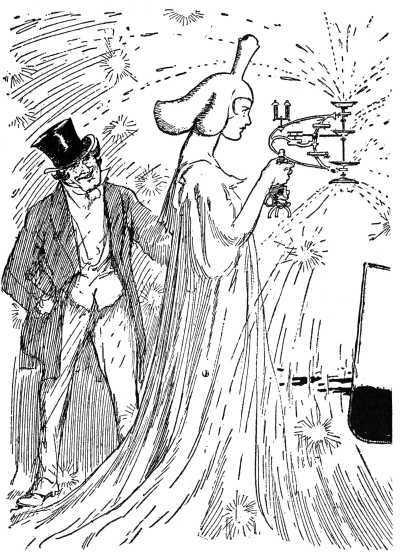
In Baum’s typical fashion, while Glinda is the titular hero of this book, she in fact does very little besides coordinate and experiment. Many of the actual solutions come from Dorothy and the Patchwork Girl (who actually suggests the solution initially and no one listens to her, although later she is taken seriously).
One thing bothered me in the ending of the book. The Flatheads don’t have a place for brains because their heads are flat, so they carry them around in cans instead. This resulted in the Supreme Dictator and his wife stealing cans of brains to become more powerful. The resolution of this problem is that each Flathead is given a round head to enclose their brains. Thus, they are no longer Flatheads and now look like everyone else. It’s a small thing and it does resolve the conflict, but it doesn’t seem consistent with Baum’s philosophy that every group in Oz is unique and their differences should be appreciated. If the Skeezers can’t be moved from their dome, certainly the Flatheads shouldn’t all be changed physically to the extent that even their name no longer applies.
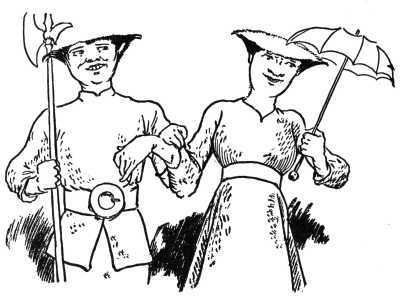
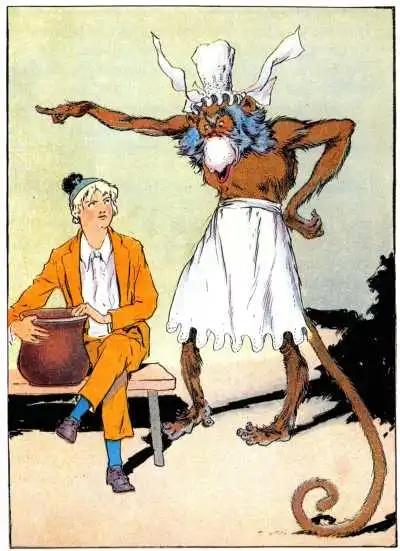
There were so many wonderful illustrations in this book, I had trouble picking just a few to share. If you’re curious about the Oz series, I think this book would work well as a standalone. As this closes out the Ozathon with Lory at Entering the Enchanted Castle, I hope to revisit some of the other non-Oz books by Baum, like The Magical Monarch of Mo, Sky Island, and Queen Zixi of Ix. Thanks for following our journey, and I hope this has inspired some of you to learn more about Baum and the wonderful Oz series.