


The latest from “The Strangers” director Bryan Bertino would pair neatly in a double feature with this year’s horror movie “Relic,” in how it too talks about the horror of taking care of sick parents, and facing their dwindling mortality head-on. But world premiere title “The Dark and the Wicked” is even bleaker, slathered in grief and pain as it depicts a sister (a slowly tormented Marin Ireland) and brother (Michael Abbott Jr.) who look after their mother and their dying father. While they spend time on the family farm, they learn more about what comforts their parents have found in such isolation, especially when it comes to hardcore Christianity. Something else is in this house on the prairie, as metaphors go, and Bertino’s story gradually reveals a more sinister force that has these sad characters becoming even more distraught. This is an unsettling movie that is more admirably brutal than it is outright scary, though it’s certainly the work of a horror filmmaker who is ripping out their heart so that we can relate.
The mood of “The Dark and the Wicked” makes for one of the slowest burns I’ve experienced throughout the festival this year, and that austerity that can work for it, or against it. On the plus side, the movie effectively corresponds its complete seriousness, and makes its shocking violence (including images of suicide) all the grim when it does arrive. But Bertino also uses some corny horror choices (like how he visualizes the dark force, or builds up a jump scare in a shower) that show the movie’s clumsiness in mixing horror that’s meditative and then abrasive. And there’s something to be said that if the film felt tighter, it might have made an even deeper impact. Instead, Bertino wants you to sit with it, and wallow.
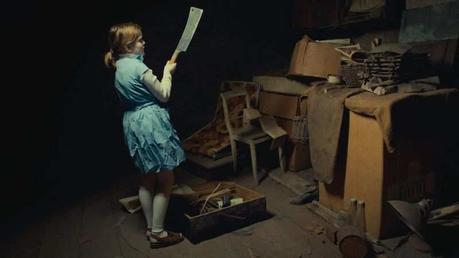
As part of the festival’s slightly art-house Camera Lucida collection, Fantasia had the North American premiere of a nightmarish film from debut writer/director Sabrina Mertens, called “Time of Moulting.” It announces a compelling, creepy vision from the writer/director, who often stages this story as if we were the fourth wall of a dollhouse, looking in on an exceptionally cluttered 1980s German home, and spending extended time with youngStephanie (Zelda Espenscheid) and her two glum parents. It’s a coming-of-age story for Stephanie, in part, as she realizes her isolation but also her disinterest of people. The movie is far more atmospheric than it is plot driven, largely comprised of extended scenes where the camera doesn’t move, and the characters also barely move, but the production design and the lighting stand out. It’s the kind of movie that is so calibrated, and in turn engrossing, that you start to notice each and every piece of clothing, or knick-knack, that’s scattered on the frame.






