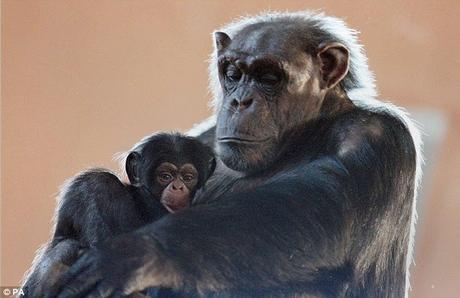
 Away from
this Tommy is a chimpanzee, at the center of one of America's
more curious legal battles filed by Nonhuman Rights Project (NhRP) seeks to
have Tommy recognised as a person under law. A 79-page legal brief submitted by the NhRP
claimed that the chimp is kept in a "small, dank, cement cage in a
cavernous dark shed". Three years
ago, according to the the NhRP, there were four chimpanzees on the site, and
not long before that there were six. They "were primarily used in
entertainment", but in a short
span, Tommy is reduced to be a loner though
Patrick Lavery, Tommy's owner, insisted
that the chimp is comfortable in this environment. Mr Laverty, stated that he
and his wife Diane had kept chimps for decades, adding that Tommy had access to
TV, cable and a stereo, and that he enjoyed watching cartoons.
Whatever
the facts of Tommy's living conditions were, he became the focal point of
the distinct case at a mid-level state
appeals court in Albany.
A panel of five appellate judges heard Mr Wise's petition for a writ of habeas
corpus – a request for a custodian to prove he or she has lawful authority to
detain a prisoner. The NhRP's campaign fought for extending rights to non-human entities. The lawsuit refers to an English case from
1772 that dealt with an American
slave named James Somerset, who escaped from his owner in London. After a plea
of habeas corpus was filed, the court ruled that Mr Somerset was a person rather
than a thing and set him free.
Person
is not a synonym for ‘human being’,” the brief explained, “but designates an
entity with the capacity for legal rights. ....... now comes the news that NY
judge has ruled that wo primates held at
research lab are covered by same laws that govern detention of people. A New York judge has granted two
chimpanzees held at a research lab the same rights as human prisoners, after a
two year legal battle by an animal rights organization.
Away from
this Tommy is a chimpanzee, at the center of one of America's
more curious legal battles filed by Nonhuman Rights Project (NhRP) seeks to
have Tommy recognised as a person under law. A 79-page legal brief submitted by the NhRP
claimed that the chimp is kept in a "small, dank, cement cage in a
cavernous dark shed". Three years
ago, according to the the NhRP, there were four chimpanzees on the site, and
not long before that there were six. They "were primarily used in
entertainment", but in a short
span, Tommy is reduced to be a loner though
Patrick Lavery, Tommy's owner, insisted
that the chimp is comfortable in this environment. Mr Laverty, stated that he
and his wife Diane had kept chimps for decades, adding that Tommy had access to
TV, cable and a stereo, and that he enjoyed watching cartoons.
Whatever
the facts of Tommy's living conditions were, he became the focal point of
the distinct case at a mid-level state
appeals court in Albany.
A panel of five appellate judges heard Mr Wise's petition for a writ of habeas
corpus – a request for a custodian to prove he or she has lawful authority to
detain a prisoner. The NhRP's campaign fought for extending rights to non-human entities. The lawsuit refers to an English case from
1772 that dealt with an American
slave named James Somerset, who escaped from his owner in London. After a plea
of habeas corpus was filed, the court ruled that Mr Somerset was a person rather
than a thing and set him free.
Person
is not a synonym for ‘human being’,” the brief explained, “but designates an
entity with the capacity for legal rights. ....... now comes the news that NY
judge has ruled that wo primates held at
research lab are covered by same laws that govern detention of people. A New York judge has granted two
chimpanzees held at a research lab the same rights as human prisoners, after a
two year legal battle by an animal rights organization.
news.sciencemag.org reports that the two primates, currently living in a lab at Stony Brook University, are the first animals in history to be covered by a writ of habeas corpus, allowing their detention to be challenged. A representative of the Long Island university have been ordered to appear in court to respond to a petition by the Nonhuman Rights Project that chimps Hercules and Leo are 'unlawfully detained.' The decision by New York Supreme Court Justice Barbara Jaffe effectively recognises the chimpanzees as legal humans, the American Association for the Advancement of Science reports. The lawsuits were originally filed by the Nonhuman Rights Project in December 2013, in an attempt to free Hercules and Leo and two other chimpanzees living on private property. Although the courts threw out the suits, the animal rights' group has been appealing ever since, and have now been granted the writ of habeas corpus on behalf of the Stony Brook chimpanzees. A Stony Brook representative have been ordered to appear in court next month to respond the petition which argues that the chimps should be set free and moved to a sanctuary in Florida. The 2013 lawsuits include affidavits from scientists who say chimpanzees have complex cognitive abilities, such as awareness of the past and the ability to make choices, and display complex emotions such as empathy. 'That is, being able to self-determine, be self-aware, and be able to choose how to live their own lives.' Although Judge Jaffe's ruling only requires a Stony Brook University representative to attend a hearing regarding Hercules and Leo next month, it can be used to set precedent for further legal action. According to NhRP – it is all about getting foot in the door ~ no matter what happens, the door can never be completely shut again ! A favourable verdict here could lead to broader rights not only for chimps and their fellow primates, but also for other intelligent animals such as elephants, orcas and dolphins. A fair verdict for non-humans, by humans ? With regards – S. Sampathkumar
23rd Apr 2015.