The history of the camera can be traced much further back than the introduction of photography. Cameras evolved from the camera obscura, and continued to change through many generations of photographic technology, including daguerreotypes, calotypes, dry plates, film, and to the modern day with digital cameras. Life has changed much as we moved away from Eastman, Kodak, Sekura, Konica and more of film rolls – the birth of digital camera changed the life, the skillset required in photography. Digital cameras differ from their analog predecessors primarily in that they do not use film, but capture and save photographs on digital memory cards or internal storage instead. Their low operating costs have relegated chemical cameras to niche markets. This is no post on photography or cameras but on pictures, more so on the research of Durham University on studied the impact of photos on menus !! often in high end restaurants we are stumped to relate what the dish could be by reading its name on the menu ?
 The findings of the
research in this interesting article on Daily Mail states that pictures will put off diners if accompanying a
complicate dish name; and if menu item is simple then images will make a diner
more likely to order it !!!
There are
many distinctions to be made between high end restaurant and cheaper eateries
but one of the easiest ways to tell the difference is to see if there are
pictures on the menu or not. Posh establishments tend not to embellish their
menus with images of the fancy food on offer, while high street chains and
cheap cafes will tend to advertise their wares visually.
It turns out
there's a very good reason for this, researchers from Durham University have
discovered - and it's because images will put us off unless promoting a very
simple dish. The study by Durham University Business School found that if the
name of a menu item is straightforward, such as 'burger and chips,' a picture
next to it will make a diner more likely to buy the dish.
Most high
end restaurant menus don't include pictures, and that's because the complicated
and often obscure descriptions would put off diners if accompanied by photos, the
study has found. But if a meal has an ambiguous or complicated name, such as
'Midnight Madness Cake' to describe a simple chocolate cake, pictures can have
the opposite effect and put diners off the meal, the study found. Having a
picture next to a menu item that doesn't reveal much about the dish could make
the diner feel disappointed if the description doesn't live up to what the meal
actually looks like, the findings revealed.
It goes some
way to explain why top restaurants, which often feature dishes with vague
descriptions or obscure ingredients, hardly ever have pictures on the menu. The
findings also confirm why many high street chains, diners and cafes have
pictures on the menu as their dishes tend to be simpler and more familiar to a
larger audience.
It's not
very common to find images on restaurant menus anymore - and marketing
professor Dr Yusani Hou explained that it's because it can be a risk as it can
put off diners. The study of 671 people, conducted by assistant professor in
marketing at Durham University Business School, Dr Yuansi Hou, explored how
restaurant menus can provoke very different reactions from customers. She also
found that the use of descriptive words, such as a 'tender' chicken salad, is a
growing trend restaurants use to boost sales. But as Dr Hou's research
uncovered, accompanying such a dish with an image is a risk as the customer
will judge if the dish is really 'tender' based on that picture.
Dr Hou
explained how restaurants can use images on menus effectively. She said: 'Our
research revealed that if a restaurant wants to make use of imagery and visual
prompts on their menu, this needs to be combined with commonly used and
"accurate" food names to increase marketing power. 'While it may seem a basic approach, photos
can act as a positive reinforcement for customers who have made a visual
connection that reflects the name of that dish. 'However, pairing extravagant
food names with pictures that are too far from reality have the opposite effect
and will be a turn off for customers.
'So, while
you may think you know what you want to choose, the next time you ponder over a
restaurant menu, there is likely to be a very calculated internal response
before you give your order to the waiter.' ~ and the next
time you go to a hotel after reading this post, you are more likely to check
whether the menu card has photos of the dishes !!
With regards
– S. Sampathkumar.
17th
June 2017
The findings of the
research in this interesting article on Daily Mail states that pictures will put off diners if accompanying a
complicate dish name; and if menu item is simple then images will make a diner
more likely to order it !!!
There are
many distinctions to be made between high end restaurant and cheaper eateries
but one of the easiest ways to tell the difference is to see if there are
pictures on the menu or not. Posh establishments tend not to embellish their
menus with images of the fancy food on offer, while high street chains and
cheap cafes will tend to advertise their wares visually.
It turns out
there's a very good reason for this, researchers from Durham University have
discovered - and it's because images will put us off unless promoting a very
simple dish. The study by Durham University Business School found that if the
name of a menu item is straightforward, such as 'burger and chips,' a picture
next to it will make a diner more likely to buy the dish.
Most high
end restaurant menus don't include pictures, and that's because the complicated
and often obscure descriptions would put off diners if accompanied by photos, the
study has found. But if a meal has an ambiguous or complicated name, such as
'Midnight Madness Cake' to describe a simple chocolate cake, pictures can have
the opposite effect and put diners off the meal, the study found. Having a
picture next to a menu item that doesn't reveal much about the dish could make
the diner feel disappointed if the description doesn't live up to what the meal
actually looks like, the findings revealed.
It goes some
way to explain why top restaurants, which often feature dishes with vague
descriptions or obscure ingredients, hardly ever have pictures on the menu. The
findings also confirm why many high street chains, diners and cafes have
pictures on the menu as their dishes tend to be simpler and more familiar to a
larger audience.
It's not
very common to find images on restaurant menus anymore - and marketing
professor Dr Yusani Hou explained that it's because it can be a risk as it can
put off diners. The study of 671 people, conducted by assistant professor in
marketing at Durham University Business School, Dr Yuansi Hou, explored how
restaurant menus can provoke very different reactions from customers. She also
found that the use of descriptive words, such as a 'tender' chicken salad, is a
growing trend restaurants use to boost sales. But as Dr Hou's research
uncovered, accompanying such a dish with an image is a risk as the customer
will judge if the dish is really 'tender' based on that picture.
Dr Hou
explained how restaurants can use images on menus effectively. She said: 'Our
research revealed that if a restaurant wants to make use of imagery and visual
prompts on their menu, this needs to be combined with commonly used and
"accurate" food names to increase marketing power. 'While it may seem a basic approach, photos
can act as a positive reinforcement for customers who have made a visual
connection that reflects the name of that dish. 'However, pairing extravagant
food names with pictures that are too far from reality have the opposite effect
and will be a turn off for customers.
'So, while
you may think you know what you want to choose, the next time you ponder over a
restaurant menu, there is likely to be a very calculated internal response
before you give your order to the waiter.' ~ and the next
time you go to a hotel after reading this post, you are more likely to check
whether the menu card has photos of the dishes !!
With regards
– S. Sampathkumar.
17th
June 2017
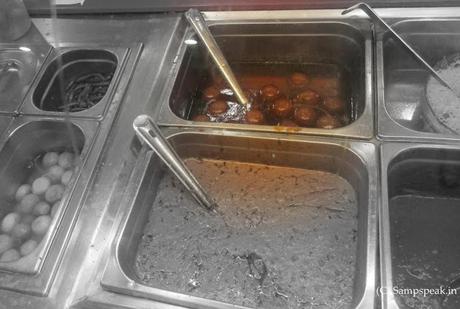
Pic of real foodie in a famous restaurant – not on the menu card.