Essential acrylic pouring techniques to try | #LRCrafts - DIY Passion: if you can think it, you can make it
One of the most exciting things about acrylic pouring is that, no matter how hard you try, there’s no way to fully predict the outcome of your project. You always get some level of unexpected. You can layer your colors in countless ways, adjust their flow in endless directions, and yet, every piece will surprise you. The possibilities to combine colors and move them across the canvas seem infinite, and that unpredictability is part of the fun.
That’s what first attracted us to acrylic pouring. Over time, we’ve explored a variety of techniques – the funnel pour quickly becoming our favorite – but we’ve never run out of new ways to experiment with color. Every pour feels fresh, and the endless variety is what keeps us coming back to this mesmerizing art form.
Whether you’re a beginner or an experienced artist, it’s inspiring to explore different techniques, and discover what suits your style. Here we’d like to share a glance into some of the main acrylic pour techniques. Find inspiration and spark your next pour!
Acrylic pouring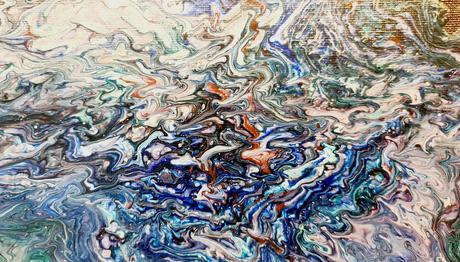
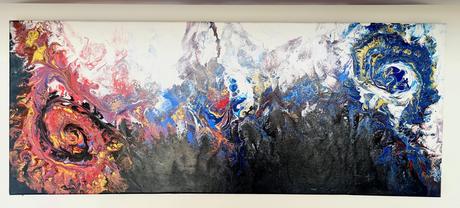
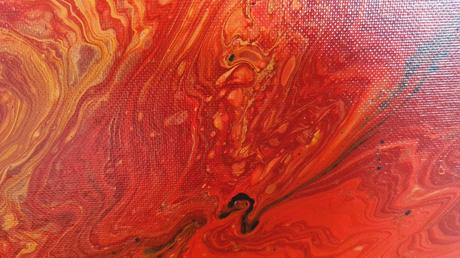
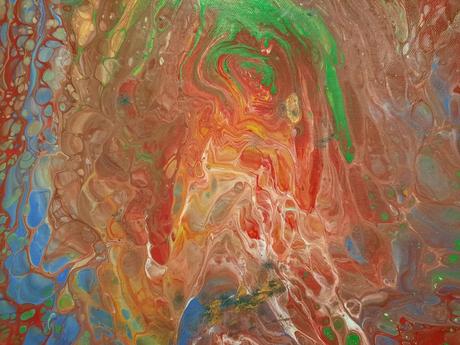
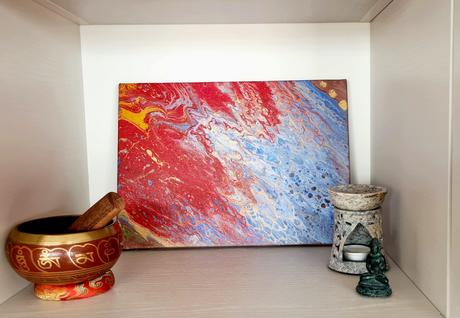
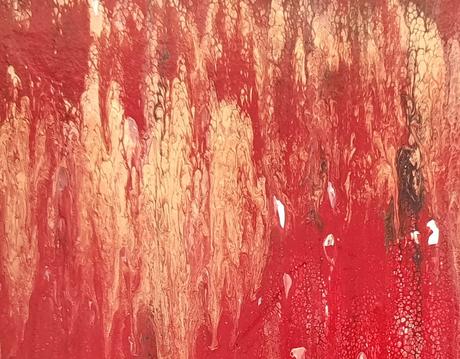


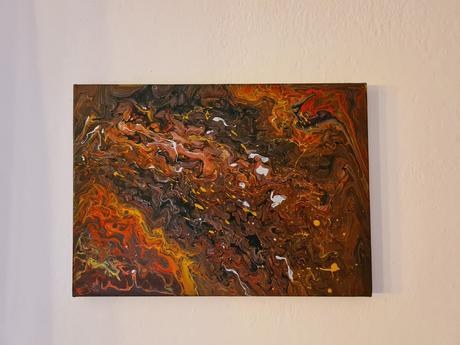
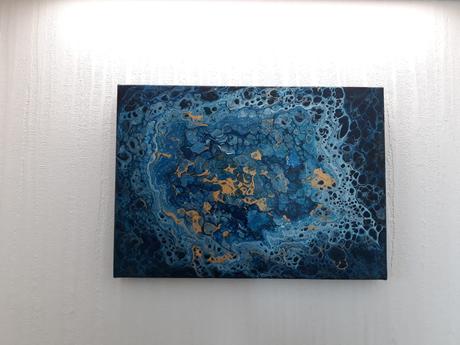
Explore our acrylic pours
Table of contents
Before beginning: the basics of acrylic pouring
Acrylic pouring is a captivating fluid painting technique that transforms the act of painting into a dynamic and mesmerizing experience.
Instead of brushes, you mix your acrylic paints with a pouring medium to achieve the right consistency, then pour the mixture directly onto your canvas.
By layering, tilting, or manipulating the flow of paint, you create unique designs with stunning textures and color interactions.
With just a few essential tools (canvas, acrylic paints, pouring medium, and some protective gear) you’re ready to explore an art form that’s as enjoyable as it is unpredictable.
The beauty of acrylic pouring lies in its versatility. With endless ways to combine colors and techniques, every piece is a unique exploration of color, movement, and texture. Whether you’re layering paints in a cup, pouring directly onto the canvas, or using specialized tools, the process is as enjoyable as the finished artwork itself.
Some basic tools
- Canvas or painting surface: Pre-stretched canvases, wooden panels, or even tiles work well.
- Acrylic paints: Choose a range of colors that inspire you.
- Pouring medium: Essential for thinning the paint to the perfect consistency without losing vibrancy.
- Cups and stir sticks: Used to mix your paints and medium.
- Silicone oil (optional): Helps create fascinating “cells,” the circular patterns beloved in acrylic pours.
- Plastic sheet or drop cloth: Protect your workspace, as paint will flow off the edges.
- Heat source (optional): A small torch or heat gun can enhance cell formation.
- Gloves and aprons: Keep your hands and clothes clean while enjoying the creative process.
Basic techniques
These techniques are perfect for beginners because they require minimal tools and preparation while offering striking results. They are simple to execute, making them a great starting point for those new to acrylic pouring.

The Dirty Pour
By far the most common acrylic pouring technique and often the first one people experiment with.
The dirty pour involves layering all your paint colors in one cup, creating a “dirty” mix before pouring them onto the canvas in one fluid motion. This method allows the colors to blend and interact naturally, producing spontaneous and abstract designs.
Pros:
- Simple and fast to prepare.
- Offers rich blending of colors.
- Great for achieving spontaneous, abstract results.
Cons:
- Colors can easily overblend and turn muddy.
- Limited control over how individual colors interact.

Traditional Pour
In the traditional pour, each color is poured separately onto the canvas from its own cup. The artist typically follows a planned pattern or design, with more control over the interaction of colors and creating cleaner lines between sections.
Pros:
- Greater control over the placement and interaction of colors.
- Clean, distinct sections of color.
Cons:
- Requires more preparation time.
- Can sometimes lack the spontaneous feel of other techniques.
Puddle Pour
This technique involves pouring each color onto the canvas in individual puddles. The artist usually pours in a circular motion, allowing the puddles to overlap and interact, creating beautiful effects where the colors meet.
Pros:
- Easy to control placement and size of color puddles.
- Beautiful when using contrasting or complementary colors.
Cons:
- Can require a lot of paint to cover the canvas.
- Colors may not mix as fluidly as in other techniques.
Flip Cup
A dynamic and exciting technique where the paint is layered in a cup, which is then flipped upside down onto the canvas. The cup is carefully lifted to release the paint, which spreads out across the canvas to create fascinating patterns and textures.
Pros:
- Dramatic and fun to watch!
- Creates strong cells and fascinating patterns.
- Easy for beginners to try.
Cons:
- Difficult to control where the paint flows.
- The flip can sometimes cause air bubbles that affect the finish.
An open cup pour by Olga Soby, one of our favorite acrylic pouring artists.
Open Cup
The Open Cup technique involves using an open container, such as a paper or plastic cup without a bottom, or even a reusable cookie cutter. For reusable tools, be sure to clean them immediately after use. To start, place the open cup on the canvas and pour your chosen colors inside. When you’re ready, carefully and gently lift the cup along the center of the canvas. This allows the colors to flow steadily, creating stunning nuances that spread beautifully across the surface.
Pros:
- Excellent for creating intricate cells and layered effects.
- Provides control over the release and spread of paint.
- Reusable tools, like cookie cutters, make it sustainable.
Cons:
- Requires careful handling to avoid disrupting the paint flow.
- Can be messy; tools must be cleaned immediately for reuse.
- May take practice to achieve the desired level of control.
Tool-based techniques
While still beginner-friendly, these techniques require additional tools to create distinct effects.
Whether it’s a funnel, hair dryer, or colander, the extra tools make it easier to produce controlled designs while adding a creative twist.
Funnel Pour
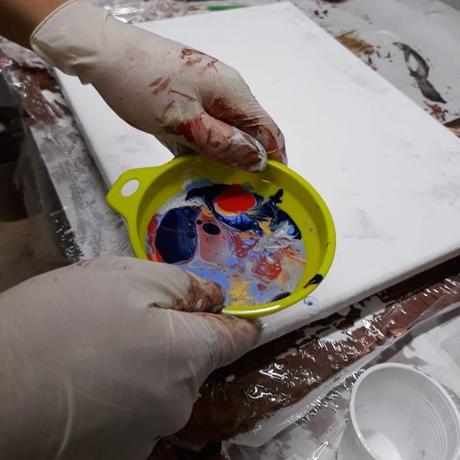
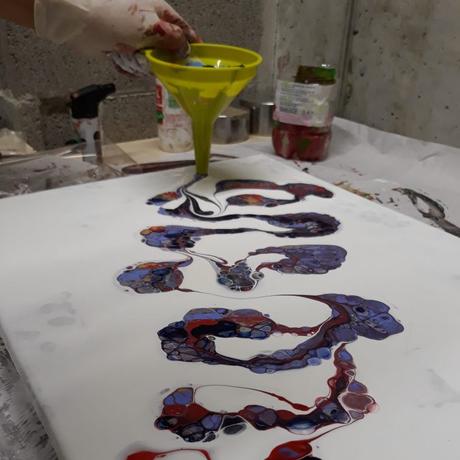
A funnel is used to hold and release paint onto the canvas in a controlled manner. By tilting or moving the funnel as the paint is released, the artist can create intricate designs with flowing patterns and gradients.
Pros:
- Excellent control over how paint spreads.
- Allows for delicate manipulation and beautiful fractal patterns.
Cons:
- Requires precision to avoid overblending.
- Can take more time to get right compared to other techniques.

Dutch Pour
This elegant technique involves pouring paint onto the canvas and using a hair dryer, blower, or even a straw to push the paint across the surface. The result is soft, flowing designs with beautiful color transitions.
Pros:
- Produces airy, delicate designs with beautiful color blends.
- Ideal for creating larger, sweeping effects with minimal effort.
Cons:
- Requires practice with the hair dryer to control airflow and avoid over-mixing.
- Can be messy if not done carefully.
A colander pour by Olga Soby, one of our favorite acrylic pouring artists.
Colander Pour
Paint is poured through a colander onto the canvas, creating striking symmetrical designs.
Artists can choose to layer their paints in a single cup or pour them individually through the colander. Painting the background beforehand can add depth to the final result.
Pros:
- Unique and striking symmetrical designs.
- Fun experiment with circular shapes and color mixing.
Cons:
- May require extra care to avoid over-mixing colors.
- Cleaning the colander promptly is necessary for reuse.
Split Cup
A split cup is a special divided container that allows multiple colors to pour simultaneously while staying distinct.
Artists can buy split cups or create DIY versions using nested cups.
Pros:
- Great for achieving distinct color bands and gradients.
- Allows for easy control of multiple colors at once.
Cons:
- Requires a special divided cup, which may not be readily available.
- The split cup (especially DIY ones) can be hard to master for beginners.
- Too many colors can lead to overwhelming or muddy results.
Swipe
In this method, paint is poured onto the canvas, and a tool (such as a palette knife, paper towel, or card) is used to swipe across the paint. This blending action often creates cells and gradients.
Pros:
- Great for creating cells and interesting gradients.
- Perfect for dramatic, large-scale effects.
Cons:
- Requires careful control to avoid muddying colors.
- Swiping too much can distort patterns or lose the desired effect.
Manipulation and playful techniques
These techniques focus on physically moving or manipulating the paint in fun and experimental ways. They’re ideal for creating organic and unexpected designs while letting your creativity run wild.
Balloon Dip Pour
Paint is applied to the canvas, and a balloon (or similar object) is dipped into the paint, creating bubble or flower-like patterns.
This technique is playful and perfect for beginners who want to explore texture and shapes.
Pros:
- Creates fun, organic shapes and textures.
- Easy and playful, perfect for beginners.
Cons:
- Limited control over the final design.
- Can easily become messy if overused.
String Pull
A string or chain is dipped in paint and then dragged across the canvas. The motion creates delicate, flowing designs resembling flowers, waves, or other intricate patterns.
Pros:
- Ideal for creating detailed and unique patterns, like flowers or waves.
- Gives the artist significant control over design.
Cons:
- Requires practice to get the desired effect.
- Can be time-consuming depending on the complexity of the pattern.
Bottle Bottom Puddle Pour
This technique uses the base of a plastic bottle to create stunning floral patterns. Paint is poured over the bottle bottom, and the raised sections guide the flow of paint to create layered flower-like effects.
Pros:
- Creates beautiful, detailed floral designs.
- Easy to achieve striking results, even for beginners.
- Multiple bottle bottoms can be used for complex designs.
Cons:
- Requires careful cleanup of the bottle and surrounding area.
- Accents may need to be added with a brush for a polished look.
Dip Pour
Instead of pouring paint onto the canvas, the canvas is dipped into a layer of paint.
This technique is quick and great for creating unique textures.
Pros:
- Quick and effective for creating unique textures.
- Simple technique with a high success rate for beginners.
Cons:
- Can be difficult to control exactly how the paint interacts with the canvas.
- Larger canvases may be challenging to dip evenly.
Spin Pour
This energetic technique involves placing the canvas on a spinning surface like a Lazy Susan. Paint is poured onto the canvas, and then the canvas is spun to spread the paint outward in dynamic radial patterns.
Pros:
- Quick way to cover the canvas and achieve dramatic effects.
- Produces bold, abstract designs with a sense of motion.
- Can be used with a variety of pouring methods for added creativity.
Cons:
- Very messy, and requires thorough preparation of the workspace.
- Hard to control the final outcome, as the spin force is unpredictable.
Acrylic pouring offers a world of possibilities, from vibrant explosions of color to delicate, flowing designs. The beauty of this art form lies not only in the stunning results but also in the freedom to experiment and make every piece your own. Each pour is a new opportunity to explore, create, and surprise yourself.
And here we just listed a few possibilities. Each technique comes with variations, and you can for sure test your own personal techniques!
We’d love to hear from you! What techniques do you enjoy the most? Have you discovered any unique tricks or developed a signature style? We’d love to hear about your experiences and see your unique creations. Share your tips, stories, and creations with us in the comments: let’s inspire one another!
by Rici86.