


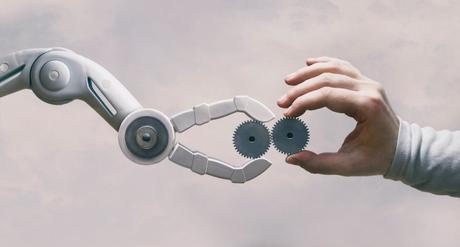
For more than two decades, comments on the robotics market have predicted a change, particularly in manufacturing, from traditional industrial manipulators to a new generation of mobile and sensitive robots, called "cobots". Cobots are agile assistants that use internal sensors and AI processing to operate tools or manipulate components in a shared workspace, while maintaining security.
It didn't happen. Companies have successfully implemented cobots, but the adoption rate is lagging behind expectations.
According to the International Federation of Robotics (IFR), cobots sold in 2019 represented only 3% of the total installed industrial robots. A report published by Statista predicts that in 2022 the cobot market share will rise to 8.5%. This is a fraction of a February 2018 study cited by the Robotic Industries Association that predicted by 2025, 34% of new robots sold in the United States will be cobots.
To see a cobot in action, here's the Kuka LBR iiwa. To ensure safe operation, cobots have built-in constraints, such as limited force and speed. These limitations have also limited their adoption.
As the market share of cobots languishes, standard industrial robots are upgraded with machine vision technology, enabling collaborative work that combines the speed and strength of industrial robots with the problem-solving skills and finesse of humans.
This article will document the waning interest in cobots, the reasons and the technology that is replacing it. We report two companies developing computer vision technology for standard robots and describe how developments in 3D vision and so-called "robots as a service" (yes, RaaS) are defining this second generation of fastest growing robots that can work together with beings. humans.






