


Elon Musk demonstrated his startup with a device that was surgically implanted into the skull of a pig named Gertrude Neuralinks technology to create a digital connection between the brain and the computer. A wireless connection from the Neuralink computing device showed the pig's brain activity as it sniffed at a pen on stage on Friday night.
The demonstration shows that the technology is much closer to Musk's radical ambitions than it did on a product debut in 2019 when Neuralink only showed photos of a rat whose Neuralink was plugged in through a USB-C port. It's still far from reality, but Musk said the US Food and Drug Administration approved "groundbreaking device testing" in July.
Musk also showed a second generation implant that is more compact and fits into a small cavity hollowed out of the skull. Tiny electrode "threads" penetrate the outer surface of the brain and capture an electrical impulse from nerve cells that shows that the brain is at work. In keeping with Neuralink's longer-term plans, the threads are designed to communicate back using their own computer-generated signals.
"It's like a Fitbit in your skull with tiny wires," Musk said of the device.
It communicates with brain cells using 1,024 thin electrodes that penetrate the outer layer of the brain. Then there's a bluetooth connection to an external computing device, although the company is considering other wireless technologies that it can use to dramatically increase the number of data connections.

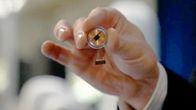
Although the pig demonstration showed that neural activity was being transmitted wirelessly to a computer, it didn't reveal any of Neuralink's long-term ambitions, like a computer that communicates meaningfully with a brain or a computer that understands what the peaks of neural activity actually mean .
Medical start, sci-fi finish for Neuralink
Neuralink initially has a medical focus, e.g. B. the support of people with injuries of the brain and the spinal cord or with congenital defects. For example, the technology could help paraplegics who have lost the ability to move or feel due to a spinal cord injury. The first use in humans aims to improve diseases such as paraplegia or tetraplegia.
"If you can sense what people are trying to do with their limbs, you can get a second implant where the spinal injury occurred and create a neural shunt," Musk said. "I am confident that in the long term it will be possible to restore a person's whole body movement."
But Musk's vision is far more radical, including ideas like "conceptual telepathy," where two people can communicate electronically by thinking of each other instead of writing or speaking. The long-term goal is to pursue a future in which Artificial intelligence, which is far smarter than humans, is killing us.
Musk envisions people using Neuralink to connect to their own digital AI Incarnations, so "the future is controlled by the combined will of the people on earth," said Musk. "From an existential threat perspective, it will be important to achieve a good AI symbiosis."
Back up your memories and restore them
"The future is going to be strange," Musk said, discussing Neuralink's sci-fi usage. "You can save and play memories in the future," he said. "You can basically back up your memories and restore them. You can potentially download them to a new body or a robotic body."
He is aware that some people will have problems in Neuralink too. "That sounds increasingly like a Black Mirror episode," Musk said, referring to the dystopian TV series.
Musk also discussed infrared, ultraviolet, or X-ray vision using digital camera data. "In time we could give someone super vision," said Musk.
Neuralink builds a robotic installer who is ultimately designed to handle the entire surgical installation process. This involves opening the scalp, removing part of the skull, inserting the hundreds of "thread" electrodes along with an associated computer chip, and closing the incision. The plumber is supposed to avoid blood vessels to avoid bleeding, Musk said.
As with Fitbit, Apple Watch and other wearable technologies, Musk sees a health benefit for Neuralink in addition to the direct communication between the brain and the computer. Neuralink chips can measure temperature, pressure, and movement, data that could warn you of a heart attack or stroke, Musk said.
Computers need power, and Neuralink's in-skull chip is charged by wireless charging through the skin, Musk said.
Neuralink's previous work
Since the Neuralink Launch Event Last year, Musk and Neuralink published a scientific paper in the Journal of Medical Internet Research in October. The paper described the development of their robotic device, an arm capable of carefully inserting hundreds of thin threads, about a tenth the width of a human hair, into the brain. Sometimes referred to as a "sewing machine," it can feed about six threads per minute, each made of flexible plastics and having 192 electrodes.
The company's early research focused on the interface with the rodent brain. In their October paper, Musk and Neuralink described two Neuralink systems A and B tested on rats in detail. The former can insert more than 1,500 electrodes and the latter 3,000. The paper describes a freely moving rat connected to system B with a USB-C slot protruding from its head. However, there is no clear evidence that Neuralink has settled in the best spot for electrodes.
In the article, Musk and Neuralink acknowledge that "significant technological challenges must be addressed before a high bandwidth device is suitable for clinical use".
Working with rodents is impressive, but what caught people's attention over the past year was Musk's claim that a monkey "could control a computer with its brain." The JMIR paper contained no evidence to support this claim, and Musk did not mention it on Friday.
Neuralink problems?
On Tuesday, the news website Stat reported the medical industry about the turbulence at Neuralink. Five former employees came forward to describe "a chaotic internal culture" and "pressure cooker" environment.
The report also listed accelerated schedules, noting that the push to advance the technology resulted in errors in animal testing. A former employee said Neuralink had moved from rodent experiments to primates faster than medicine expected.
Neuralink responded to Stat's claims in the article, suggesting that some of them were "either partially or completely wrong".
Holes in your skull? "Really?"
Neuralink's success depends on convincing us to build chips into our brains and manipulate the nerve impulses that make us who we are. That's a tough sell - especially given Neuralink competitors who prefer non-invasive headsets.
"There is a group of people who are excited about invasive BMI," said Max Newlon, CEO of BrainCo, referring to the brain-machine interface. "The non-invasive BMI technology could be a bridge to the future that people will accept today."
"The safety and health risks associated with invasive implants are significant," added Sid Kouider, founder and CEO of NextMind, a competitor to Neuralink. Problems include infection, inflammation, and re-surgery to adjust electrode positioning, he said. However, he attributes Neuralink's interest in neural interfaces.
In addition to leading Neuralink, Musk is the managing director of Tesla, which is building a global electric vehicle business. SpaceX, which launches spacecraft and directs the launchers back to Earth for reuse; and the Boring Company, which is supposed to direct vehicle traffic through tunnels.
Musk is stretched thin, but he's also delivered on important promises like making compelling electric vehicles and reducing the cost of satellite launch. Musk has a knack for picking out business problems that are difficult but achievable. However, to be successful, Neuralink must convince scientists and doctors together with the rest of us.






