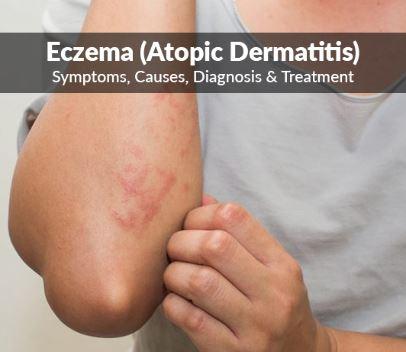
(Eczema) Symptoms treatment and causes of Eczema
Eczema: The skin is reddened and itches, Bibles are formed. Many people in Switzerland know eczema.
Eczema is a collective term for many different skin diseases. All eczema are inflammatory changes of the skin, but they are not contagious. Dry skin, sweat, and environmental substances can cause eczema. Well-known examples are allergic contact dermatitis or atopic dermatitis.
Eczema is very common, almost every person gets eczema once in a lifetime. Eczema can be either temporary or cause permanent discomfort. The determining feature is the itching.
Also Read:
- Eczema: About, Causes, Treatments, and Home Remedies
- Skin Rash: Pictures, Causes, Types, and Treatments info
- Home remedy kidney pain
- Kombucha health benefits
Eczema Symptoms
It starts with a reddening of the skin, itching comes along. These symptoms are typical of eczema. All other complaints depend on which parts of the body the lesions are. They also differ depending on the age of the persons who are ill. So there is not one appearance, but many.Eczema can be temporary (acute) and permanent (chronic). The acute phase begins with a reddened skin, which can disappear after a few days with very mild eczema. If eczema remains, small, pinhead-sized bubbles are added, which are filled with a clear liquid. The bubbles burst and wet then crusts form. The acute phase lasts up to three days.
Does not heal eczema, it goes into a chronic state. Redness, pustules, crusts, and scales appear simultaneously. There are also complaints that trigger and intensifies the scratching against the itching: The uppermost layer of skin thickened and furrows grow coarsened. Deep tears and lighter, as well as darker skin layers, form. The chronic stage does not necessarily follow the acute, both periods can occur simultaneously. At the same time, the symptoms are superimposed.
Complications include infections caused by bacteria, viruses or fungi. They penetrate through the torn or scratched skin in the body. There they can lead to infections.
Eczema Treatment
The correct treatment of eczema depends on the cause of the skin disease. Usually, successful therapy is on several legs: basic therapy with optimal care products, avoiding possible triggers, drug treatment.If the eczema is a contact allergy, the doctor can determine this with a skin test (epicutaneous test). If the trigger, such as nickel, known, garments or jewelry can be avoided with the metal. Afterward, the complaints usually resolve themselves after a few days. Frequent and constant contact with allergy-causing substances, possibly in everyday working life, can lead to chronic eczema. Inflammatory thickening, keratinization and coarsening are characteristic of this. Even in these cases, the best protection is to avoid the allergen. Hairdressers with an allergy to toiletries or dyes are advised to wear gloves. In the worst cases, maybe only a career change will help. Cortisone-containing creams are temporary solutions, as the skin no longer regenerates and becomes thin after prolonged use.
The treatment of atopic dermatitis depends on the severity in different stages. In mild eczema, basic therapy with moisturizing care products can be very effective. Special ingredients such as urea (urea) cause the skin to store more moisture and less to dry out. For recurrent eczema and itching, skin areas are treated with cortisone-containing ointments and creams. Calcineurin inhibitors may be more suitable for problem areas such as face and skin folds. Sometimes antihistamines in tablet form additionally help against the itching. The UV light can relieve severe, acute and chronic stages. Only in cases of severe eczema, a systemic, ie internal therapy, for example, with cortisone preparations that affect the immune system.
The right skin care
The basis of every eczema treatment is basic therapy. Dry skin in particular needs help, as it can no longer fulfill its barrier function.
- Too much washing dries out the skin and stresses it. A quick cool shower is better than a long and hot bath. Take a shower at most once a day, do not bathe more than three times a week. Foam additives dry out additionally.
- Mild, pH-neutral detergents are better than perfumed soaps. The more sparingly they are used, the more the skin rejoices.
- Rubbing dry also decrease the skin and irritates it, dab it better dry.
- After cleansing, it is recommended to rub the skin with greasy creams or lotions. These not only give the skin back the lost fats but "seal" the moisture absorbed by the skin during the shower or bath.
Eczema Causes, risk factors, and frequency
As a trigger for eczema, both internal (endogenous) and external (exogenous) factors come into question. An essential, internal factor is the atopy called, hereditary predisposition to certain diseases (atopic form, see allergies ). These include hay fever, asthma, and eczema (atopic dermatitis, atopic dermatitis). Often there is atopy associated with dry skin. It increases the likelihood of getting eczema because its barrier function is disturbed. Strong perspiration on the feet and hands (hyperhidrosis) can also cause eczema. The sweat may dissolve allergenic substances from socks, shoes or gloves. In addition, excessive sebum can cause eczema (seborrheic dermatitis ). The scalp, breast, back and genital areas are the body parts where this type of eczema occurs.External factors that irritate the skin and cause eczema are manifold. This includes many different substances and circumstances. Allergic contact dermatitis is caused by contact with metals such as nickel (in buttons, jewelry or glasses), fragrances in perfumes, creams or other care products and also latex rubber gloves. If the skin is overloaded or too much strained, irritative-toxic eczema can develop. They are mainly on hands, which are exposed to a lot of moisture and moisture. Leaching substances such as soaps and disinfectants or activities with frequent hand washing are responsible for or exacerbate eczema. Occupational groups such as hairdressers, cleaning specialists, nursing staff and workers in the metal or construction industry are particularly at risk, especially from irritant-toxic eczema may develop chronic hand eczema.
The use of some medications such as antibiotics can also cause eczema while staying in the sun.