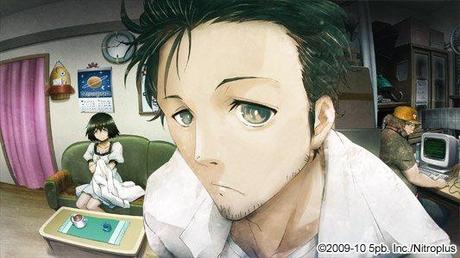
It appears that I will be doing a monthly column on games I’ve been playing, so let’s get to it. For the past month I’ve been mainly playing visual novels, thanks to the offerings on the Japanese PS+ service, which is currently giving out Chaos;Head and Steins;Gate for free to subscribers. I jumped on the 15-day trial, and then found myself subscribing to PS+ for the next three months.
Chaos;Head and Steins;Gate are apart of the Science Adventure Series, which encompass those two plus a third visual novel Robotics;Notes which I have not yet touched.

Chaos;Head Noah is the console port of the PC visual novel Chaos;Head, which got an anime adaptation some years ago but fans of the VN try to pretend it doesn’t exist. Kinda like the Fate/Stay Night ani-oh, nothing, there was never one, right? It is a mystery/horror VN with sci-fi elements, but with more focus on the mystery at the beginning and then the sci-fi starts popping up halfway into the plot. Then in the last chapter or so, the story direction goes full-on chuuni with the main character swinging around this VN’s version of a magical sword for the chosen ones. They tried to stick in some scientific theories like the Sea of Dirac and antimatters to explain what the swords do, but at the end it’s easier to pretend it’s magic because they are so far-fetched. The VN tried to do too much at once, and the concluding chapter was underwhelming with a forgettable ultimate villain. For how long the story is, it sure feels unfinished.
What defines Chaos;Head is the protagonist, Nishijou Takumi. Takumi is probably one of the most pathetic protagonists I’ve ever seen the world from the eyes of, yet he is also the most frustratingly relatable, with his fear and paranoia of human contact and the outside world to his tendencies of escaping into his own delusions rather than facing the real world. His nearly insanity-filled narration is a delight to read, and he is the complete opposite of a rational, composed human being. In contrary to everyone’s beloved proactive protagonists, Takumi is paranoid and unassertive, preferring to pretend that none of the events have anything to do with him, even when they clearly do. He always tries to blame his misfortunes on someone else, constantly clings onto something or someone for salvation, and loves to go into self-victimization lines of thoughts. Fearing and detesting real people, he is pathetic for an extremely long time, but when his development finally comes around, it feels incredibly satisfying.
With that said, outside of the protagonist, the other characters are largely unremarkable. Even though every heroine comes with her own tragic past, they don’t spend much time developing on-screen, and all the heroine routes are additions to the console port so they split from the latter half of the main path and are around one hour each. The heroines all end up falling flat, to the point where it would be better to think of them as female side characters in Takumi’s story rather than galge heroines.
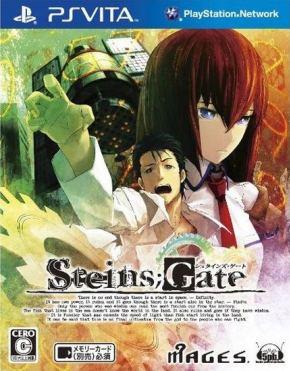
Steins;Gate - Unlike Chaos;Head, which went in a bunch of different directions, Steins;Gate’s strength lies in consistency. It never strays from its theme of time travel, and every piece of information you encounter will eventually come back (to bite you in the ass, usually). Although it is set in the same universe as Chaos;Head, the atmosphere and approach to its sci-fi elements are different enough that one who did not like C;H could like S;G, and vice versa. The story was very solid, and the characters felt less irritating on a whole than the ones presented in C;H, even when it came to archetypes I don’t normally like.
While the delusion-ridden Takumi is gone, in S;G we have Okabe Rintaro–sorry, HOUOUIN KYOUMA, who brings forth the chuunibyou kind of delusion. Calling himself a mad scientist with 170 IQ since birth and pretending to be targeted by a secret agency, Okabe spends his days with his hacker friend Daru and childhood friend Mayuri in his “lab” in Akihabara, where they invent odd gadgets that usually end up pretty useless in normal circumstances. Everything changes when he witnesses the murder of genius scientist Makise Kurisu, and frantically sends Daru a text only to find the crowded street empty and that the event at which the murder happened was cancelled in the first place. Suddenly, the murder never happened, his text message was sent to a week ago, and Kurisu is alive and ends up joining the lab. From then on, they discover that their modified microwave that was meant to receive microwaving commands from long-distance is actually capable of sending text messages to the past, and unable to suppress their curiosity, they decide to continue with their experiments.
The characters in S;G have a good synergy, Okabe’s chuunibyou narrations were highly entertaining, and the pacing of his character development was very natural. It helps that the main heroine, Kurisu, was great and hit almost all my moe points (hail the tsundere boom!). Her interactions with the protagonist were enjoyable with strong chemistry, and boy, are things wonderful when both the protagonist and main heroine are good characters and are fit for each other. The structure of the story is similar to Chaos;Head where the game propels you down one path, but there are certain options to split off into short character ends. Apparently the anime adaptation was decent.
…And for something totally unrelated.
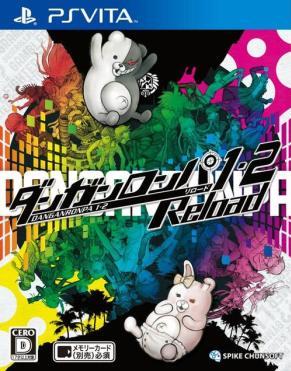
Dangan Ronpa 1+2 Reload - Totally unrelated, but might as well throw this in since I also played it in January. This is the Vita compilation of the two Dangan Ronpa games, which pretty much includes both games in higher resolution for the price of one. Commonly know as that series that’s like a cross between 999 and Phoenix Wright with high school students, it’s definitely worth a play. The game keeps up a consistent atmosphere of pressing tension and suspense, and the trials are faster-paced than those in the Ace Attorney series. The English version is releasing next month, so I will refrain from talking too much about the plot. I’ll just give a friendly reminder that the game is the most fun when the logic segment difficulty is set to Hard.