


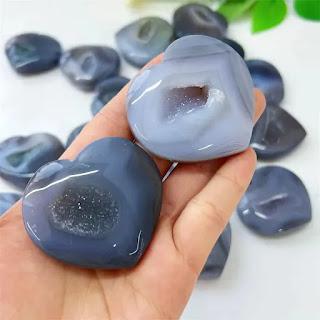
Druzy agate hearts, with their radiant quartz-coated surfaces, are not just products of natural geological processes—their iconic heart shape is meticulously carved by human hands. These formations begin as agate nodules, shaped over millions of years, before artisans reveal their inner brilliance through precise craftsmanship. This article explores how nature and human skill converge to create these geological marvels, focusing on their formation, carving techniques, and scientific significance.
1. Natural Formation: The Birth of Druzy Agate
Druzy agate originates in silica-rich environments like volcanic rock cavities or sedimentary basins. Over millennia, mineral-laden groundwater deposits microscopic quartz crystals (druzy) on agate surfaces. Key factors in their formation include:
- Slow crystallization: Silica solutions evaporate over thousands of years, forming layered agate bands and druzy coatings.
- Trace minerals: Iron and manganese create color variations, from deep reds to ethereal blues.
- Environmental shifts: Temperature changes and tectonic activity influence crystal size and density.
These processes result in rugged agate nodules, which later serve as raw material for heart-shaped carvings.
2. The Art of Carving: Transforming Stone into Symbolism
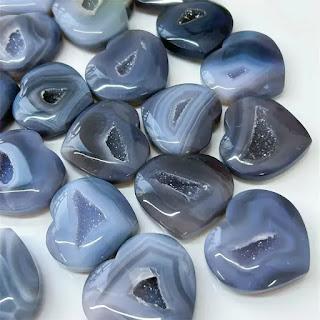
The heart shape is not natural but a product of skilled lapidary work. Artisans follow these steps to reveal the druzy’s beauty:
- Selecting nodules: Specimens with intact cavities and vibrant druzy layers are chosen.
- Cutting and shaping: Diamond-tipped tools carve rough heart outlines, avoiding damage to fragile quartz crystals.
- Polishing: Gradual abrasion enhances the druzy’s sparkle while preserving geological features.
Regions like India and Brazil are renowned for combining traditional carving methods with modern technology to produce these forms.
3. Scientific Insights from Carved Specimens
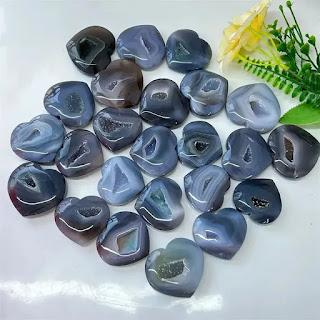
Studying carved druzy agate hearts offers unique advantages:
- Cross-sectional analysis: Reveals hidden mineral layers and ancient climate data trapped during formation.
- Crystallography: Exposed surfaces allow researchers to examine quartz alignment and growth patterns.
- Educational value: Museums use carved specimens to demonstrate agate’s dual geological and cultural significance.
4. Ethical and Sustainable Practices
As demand grows, responsible sourcing becomes critical:
- Low-impact mining: Brazilian and Madagascan cooperatives prioritize preserving agate-rich ecosystems.
- Cultural preservation: Indigenous communities in Arizona (U.S.) lead initiatives to document traditional carving techniques.
Conclusion
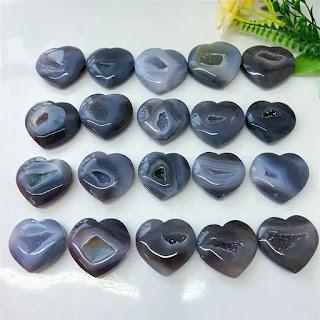
Druzy agate hearts epitomize the synergy between Earth’s artistry and human ingenuity. By understanding their geological origins and the craftsmanship behind their iconic shape, we gain deeper appreciation for these natural wonders. For further exploration, consider studying agate’s role in sedimentary geology or the cultural history of stone carving.





