


With its new live action MulanDisney had the chance to breathe life into the legendary warrior - a fixture in centuries-old Chinese storytelling - with a serious retelling and a beautiful cast. So it's ironic that the animated version, which debuted more than two decades ago, still shows more vim, vigor, and character growth than the big-budget offering is now assuming Disney Plus.
To be clear, I'm not a standard-bearer for the 1998 animated classic. But this version of Mulan took the time to get into the main character's mind and took us on her journey as she worked on making a worthy one Becoming a soldier while struggling to balance her dual identities. The new Mulan, played by Yifei Liu, hits many of the same beats but without the emotional resonance.
Unfortunately this seems to be taken for granted with blockbusters these days.
Mulan borrows the same conventions in Disney's other major franchises, the Marvel Cinematic Universe and Star Wars, that in recent years have emphasized the spectacle and standards of character development. Star Wars: The Rise of Skywalker has us rushing from one planet to another, but have we really learned a lot about Finn? (John Boyega, who played the Stormtrooper hero, doesn't think so, of course.) Avengers: Infinity War and Avengers: Endgame were too busy juggling dozens of characters to actually develop one of them.
Who cares? Those were bombastic, funny films that had a lot of fan service and the best special effects money can buy.
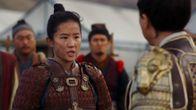
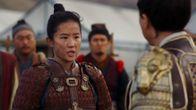
However, the sacrifice of character work in Mulan is a far more severe blow as it isn't the start of a multi-movie franchise. Steve Rogers and Tony Stark had the luxury of multiple sequels to evolve and grow - Mulan only had that one shot. The flat presentation is particularly a shame because director Niki Caro has built up a fascinating dynamic between Mulan and Gong Li's fascinating Xianniang (who is actually experiencing a certain development), which my colleague Abrar Al-Heeti in her review as one of the "most striking attributes of the film " designated . "
But Caro didn't give this developing relationship time to breathe, and the film accelerates through many of Mulan's greatest emotional moments. There is no struggle to become a warrior - she has been supernaturally gifted from the first minutes of the film. There aren't any scenes showing how hard it is when she leaves her family - she's already weighing her father's armor and holding his sword in a hero pose (maybe there is a place for her in the MCU?).
Slight spoiler warning here: The revelation of Mulan's real gender, her subsequent rejection, emotional breakdown, and ultimate reconciliation with her comrades should serve as the emotional backbone of the entire film. Instead, it takes about six minutes in total.
It's almost an afterthought between an epic fight and the climatic, action-packed finale.
It is important to have a fully worked out Chinese character on the canvas as there just aren't that many examples in Hollywood. And this dynamic between two Asian women who don't talk about their love life is even rarer. It felt like a lifetime ago when Crazy Rich Asians made it big, sparking expectation that the film would spark more projects with Asians and Asian Americans. And while South Korea's Parasite was a critical darling and this year's Best Picture Winner at the Oscars, it's not exactly a movie you watch with the family.
With a budget of $ 200 million and the weight of Disney, Mulan should be a big moment for Asians looking to make greater cultural impact in the US. Instead, it's on Disney Plus as a $ 30 add-on for subscribers.
And the combination of limited dialogue, some wooden action from Liu, and a hectic pace where training montages and declarations of being "loyal, brave and true" take precedence over more exchanges between Mulan and her comrades means you don't are invested in their travel or development.
It's especially painful to know that Caro and screenwriters Rick Jaffa, Amanda Silver, Elizabeth Martin, and Lauren Hynek tried to create something different from the animated version, even if the plot points were similar. Unlike the Lion King or Beauty and the Beast, this was not a literal remake. The filmmakers took on a far more serious tone, booting elements like the catchy songs and mushu (though this film has a more subtle substitute for the dragons).
Caro, in particular, deserves praise for the film's visual flair, from the stunning shots of the beautiful Chinese mountains to the suitably gorgeous scenes of the Imperial Palace. Mulan's wire work and sword fighting as well as the combat set pieces deserve every action blockbuster and are reminiscent of historical Chinese old school epics.
When the credits ended and I saw the note "Optimized for Imax Theaters" it was a reminder of all of that the coronavirus pandemic has taken away, including the opportunity to appreciate the visual grandeur of this film on a proper big screen. (For the recording, I watched the film on my 32-inch computer monitor.)
All this eye candy makes you hungry and makes you want more, and the emotional and character weight is definitely missing.
We hope, however, that Disney doesn't decide to get franchise-happy and produce a follow-up film. Otherwise, we could end up with another travesty like Mulan II. Mulan the warrior may be able to climb walls and fend off the fiercest Rouran invaders, but even she would have a hard time making a cheap sequel directly to DVD that is worth watching.






