Crafters of the past: a journey with Visundr in Viking Reenactment | #LRCrafts - DIY Passion: if you can think it, you can make it
Leggi in italianoWith the “Travelling Crafters” section, we like to take you on virtual journeys around the world, to discover the most varied creative disciplines. In our “Meet the Crafter” specials, these journeys lead us to meet extraordinary people and their fascinating stories.
Today, we have the pleasure of presenting a very special interview that takes us into the captivating world of Viking historical reenactment. For those who don’t know, historical reenactment is not just a hobby, but a true research, that combines study, craftsmanship and dedication. In this world we often find crafters and creatives who meticulously recreate objects, garments and scenes from the past, allowing us to experience an authentic and immersive adventure.
In this interview, we meet Visundr, an Italian group dedicated to living history, specializing in the Viking era of the town of Birka in Sweden. Let’s discover together their history, activities, and the passions that drives them.
In particular, we talked with them about a documentation project that caught our special interest: the Reenactor’s Passport.
First things first. What is Visundr and what’s its history?
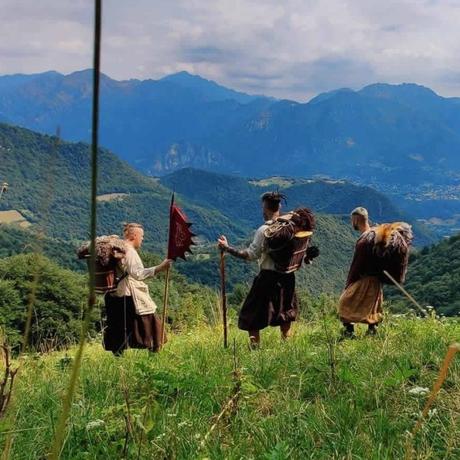
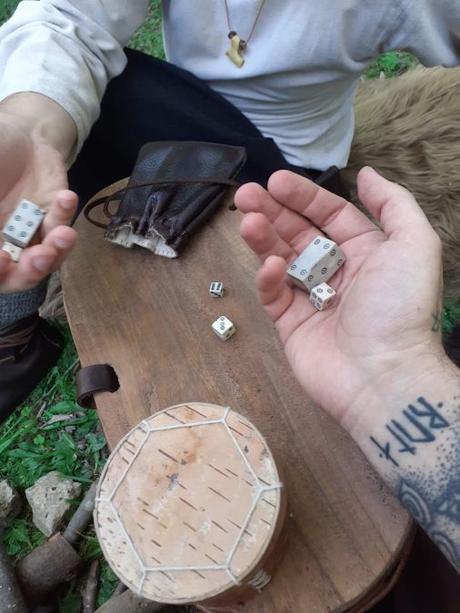
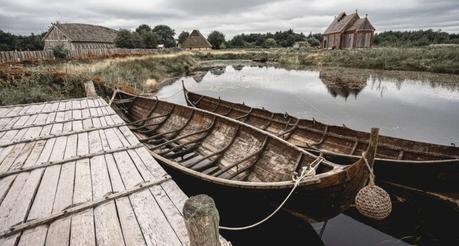
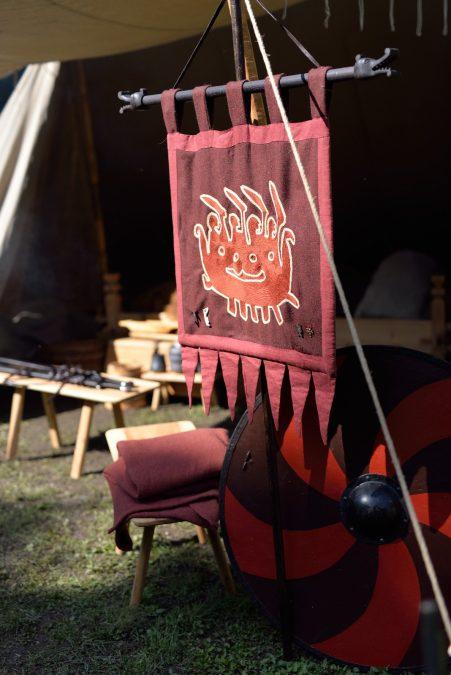
Visundr is a living history project dedicated to studying and reconstructing what daily life could have been like for the inhabitants of a trading center called Birka (located in what is now Sweden) during the Viking era around 950-75 AD. The group was founded in November 2005 following the creation of the Italian chapter of Jomsborg (initially identified as Elag Italy and now known as South Storm after welcoming Spanish, French and Swiss components), the largest global organization dedicated to Viking warrior culture. The absolute commitment, great challenges, and strong selection provided in that context have guided us and continue to guide us as one of the longest-standing lags (groups) of the Jomsborg brotherhood (next year, we will proudly celebrate our 20th year of continuous presence in Jomsborg).
Along this journey, which has always given us the rare opportunity to live almost exclusively through events abroad (bringing back precious know-how and vision on how to approach Viking historical reenactment seriously), we have also developed a great focus on what should be the main quality of a group in this field. That’s the respect for historical sources and their spreading among both the public and enthusiasts.
What are your main activities?
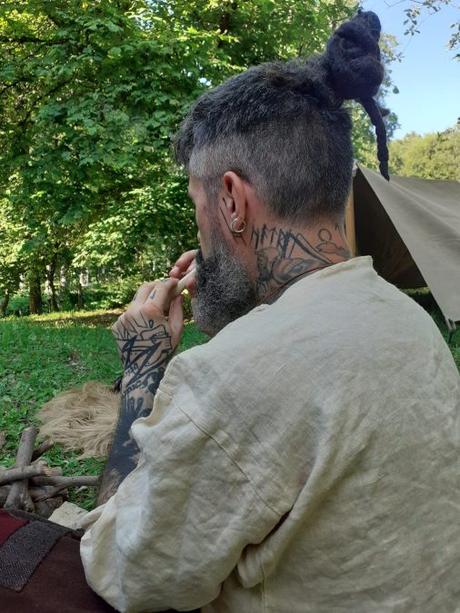
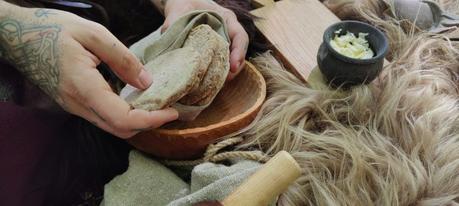
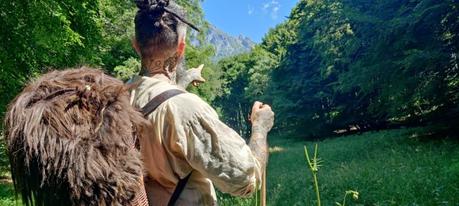
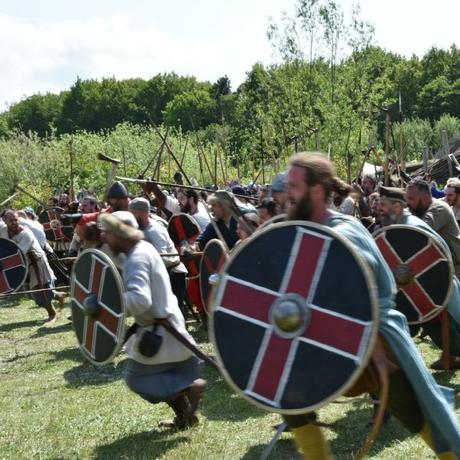
Our group life embraces a wide range of activities, that allow our members not only to experience history firsthand, but also to develop their personal qualities to the fullest. At the core of everything is a continuous and meticulous study and research of sources, a fundamental element that fuels all the group’s paths, which we can summarize as follows:
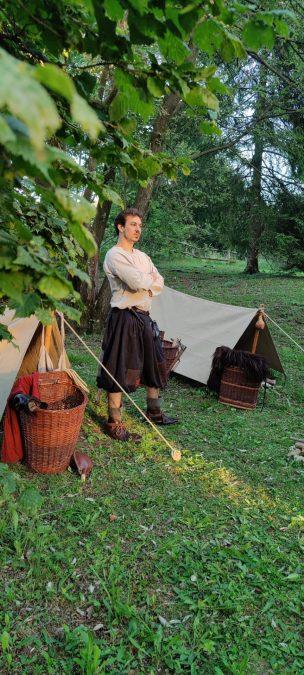
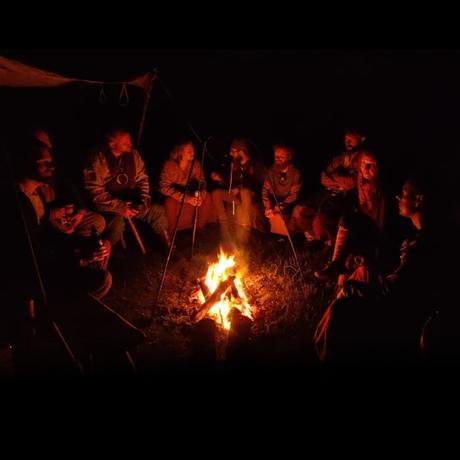
- Camp activities (mainly conducted during events, combining living history moments with educational ones for the public)
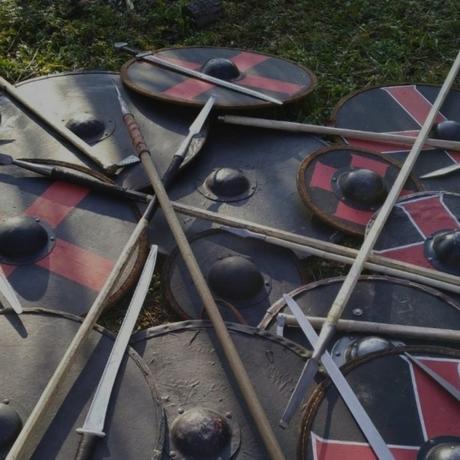
- Combat activities (let’s not forget that Jomsborg has remained the elite team in the world for competitive combat in Viking reenactment for 35 years)
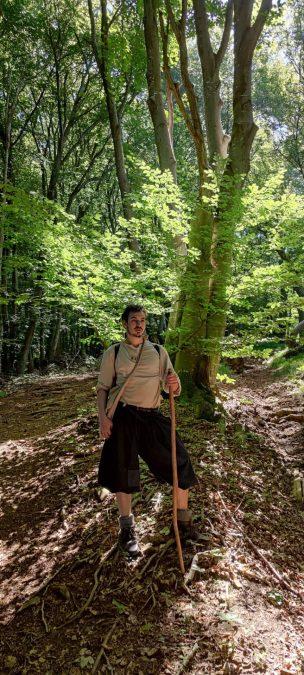
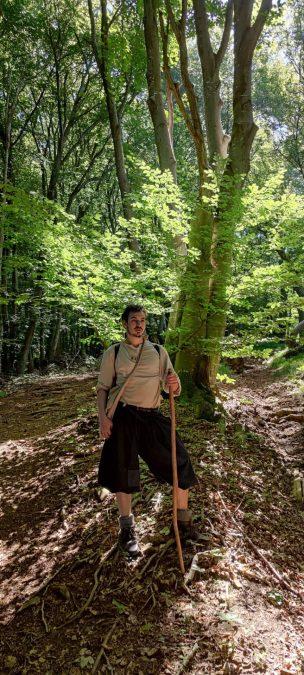
- Trekking activities (conducted in the mountains with 100% historical kit)
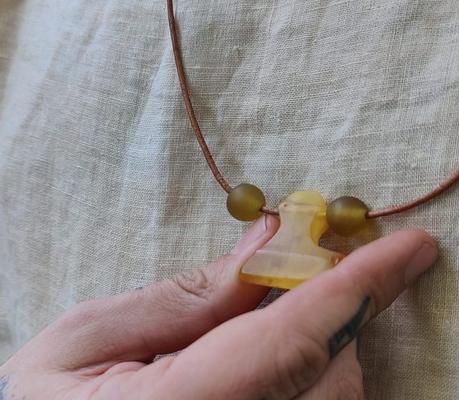
- Crafting activities (held regularly both in groups and individually, allowing us to keep our kits updated and to experiment firsthand with techniques studied in books)
- Educational activities (in schools)
You have a 240-page (and growing!) documentation project called the Reenactor’s Passport. Could you tell us what it is?
The Reenactor’s Passport is one of the cornerstones of our group. It is a massive illustrated document that presents and analyzes all the sources underlying our kits.
The project originated thanks to a valuable idea from the Forlog Project in 2021-22, which gathered and reworked a need for greater seriousness perceived by some reenactment groups, tired of being surrounded by reality and individuals who were – to say the least – ridiculous. The suggested project was and still is aimed at:
- Initially helping reenactors analyze and assess their historical kits and understand the flaws in their equipment
- In a second step, helping reenactment groups and event organizers interface with each other on a level of seriousness, using the passport as a benchmark for external collaboration and events, and as a common language, eliminating from various groups and events everything that is purely fantasy or poorly curated historically
It seems you are off the beaten track about Viking reenactment in Italy. What are the main reenactment events you’d recommend?
We don’t participate in any events in Italy. As mentioned earlier, our uninterrupted involvement in Jomsborg has always guaranteed us a more European scope, especially in Germany and Scandinavia… and once we came into contact with that level, we could no longer approach the local realities where historical inaccuracy and a very playful view of Viking reenactment prevail. The figure of the reenactor as a meticulous scholar is almost entirely absent, while the “weekend warrior” is ever-present. He spends his time at village fairs or neighborhood festivals, flaunting the most improbable camp setups (cotton tents, modern tables, and the inevitable local salamis on cutting boards). All this immersed in the most ridiculous scenario of sausage and beer stalls, perhaps he believes himself to be a modern berserker for those five minutes of combat on the asphalt between apartment buildings…
There are also efforts by some to overturn this situation, both at the group and event level, but it will take years to change the environment.
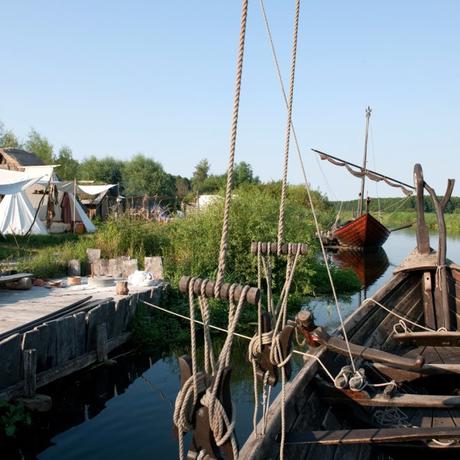
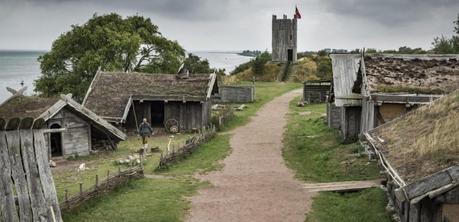
The events we are most attached to are:
- Sletten / Denmark (also the best combat event in the world)
- Ribe / Denmark
- Ukranenland / Germany
- Foteviken / Sweden
- Haithabu / Germany
- Oldenburg / Germany
In Italy, we have Impetus Silva, the private Jomsborg event that has become a decade-long tradition every autumn.
Any tips for new reenactors or for anyone in living history who wants to improve?
There are very few useful tips in this field to really excel:
- Endless study (collecting information and analyzing it is the lifeblood of a healthy group. For example, we currently have almost 400 gigabytes of material as a knowledge base from which we draw)
- Careful selection of people to reenact with (absolutely avoid individuals with a losing mentality or those who see reenactment as a game or an outlet for personal frustrations)
- Selecting events based on the level you want to achieve (the higher the event’s requirements for respecting historical sources, the more it forces us to improve)
The chat with Visundr offered us a fascinating insight into the world of Viking historical reenactment, highlighting the importance of accurate research and dedication. Their passion for history and commitment to maintaining high standards of authenticity not only enrich the reenactment scene, but also inspire new enthusiasts to follow this path with seriousness and rigor.
We hope this interview has fascinated you as much as it did us, and that it encourages many of you to discover more about this extraordinary world. In particular, we were captivated by the Reenactor’s Passport. We believe we will start using it as a growth tool in our (small) reenactment activities.
Did you already know about Visundr and the Reenactor’s Passport? Do you also aim for historical accuracy in your reenactment activities? Let’s discuss it together in the comments below!
Find out Visundr online
You can keep up-to-date on Visundr’s activities on Facebook or on Instagram.
InstagramFacebookby Rici86.