


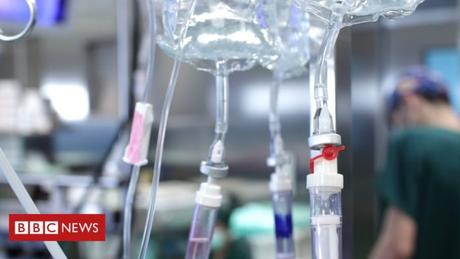

Online advertisements promoting intravenous drips that make false claims related to Covid-19 are accused by the state.
The Committee of Advertising Practice (CAP) says that companies that violate its guidelines will be referred to the Medicines and Health Products Regulatory Agency (MHRA).
Last week, three clinics were banned from advertising, suggesting that vitamin drip therapy offered protection against the disease.
NHS England previously criticized companies for selling off fake remedies.
Its guidelines state that companies should not make direct or indirect claims that IV drips can treat or prevent viral conditions such as coronavirus.
No treatment has yet been approved by the MHRA for Covid-19, which means companies cannot make medical claims for any product.
Matt Wilson, director of public affairs for the Advertising Standards Agency (ASA), told BBC News: "We are contacting other companies that offer these treatments and are directing them to remove any Covid-19 related complaints from their websites and pages. social media.
"We will monitor to make sure they are following the rules. Those who do not will face penalties."
The powers of the SAA are limited to demanding advertisements and must not be repeated.
He cannot issue his own penalties and his sentences are sometimes ignored.
On the contrary, if the MHRA believes that a violator is non-compliant, he could be subject to legal proceedings and, if found guilty, he could face an unlimited fine and / or up to six months of imprisonment.
IV clinics, or salons as they are sometimes called, are established around the world, often promoted by celebrities.
In the UK, there are at least 17 dedicated IV rooms and 2,500 private clinics offering IV therapy among other treatments.
Customers tend to be people under the age of 35 who pay for mixtures of saline, vitamins and enzymes infused directly into a vein.






