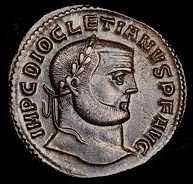
Diocletian reformed the coinage too
The Roman Empire had a chaotic patch in the Third Century; most reigns were brief and ended violently. Then came Diocletian, introducing an orderly system with responsibility divided among four rulers, two senior and two junior; the latter would duly move up and appoint new juniors. This “tetrarchy” worked for a short while, until some guys were too power-hungry to accept its constraints.
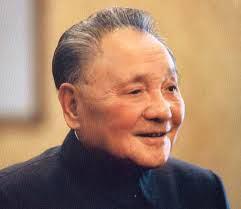
Deng Xiaoping
China had a chaotic patch between 1966 and 1976, when Mao Zedong’s power unleashed great violence. After his death, Deng Xiaoping, who had twice been purged, emerged as leader. Seeking to prevent a repeat of the Mao disaster, Deng, like Diocletian, established an orderly system of divided authority, including term limits. And like Diocletian’s, this system worked for a while, until one guy was too power-hungry to respect its constraints.
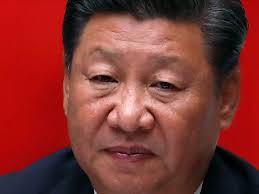
Xi Jinping
That would be Xi Jinping. He has consolidated far more power in his own hands than anyone since Mao; today no one in China but Xi really has much power. And it had become increasingly clear that he wasn’t going to bow out gracefully after 10 years as the Deng system would have required. Now, with little fanfare — and all internet discussion ruthlessly scrubbed — the 10-year limit has been formally abolished. Xi is now ruler for life.
It’s so much easier to amend China’s constitution than ours. Theirs being a charade of a constitution. Another advantage of China’s system. None of the messy public debate or legislative bickering that plague democracies.
The other big thing Deng Xiaoping did was to get China off Maoist-Communist economic madness, opening up to free enterprise. The result has been phenomenal economic advancement, raising hundreds of millions out of poverty. We Westerners had long believed that, as the Chinese gained economic security and affluence, they’d surely demand more say in governance.
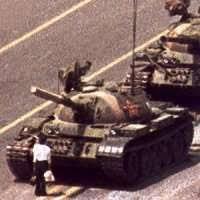
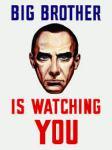
Xi Jinping is determined to prove otherwise. China’s previous baby steps toward democratization, loosening up, and rule of law are being relentlessly rolled back. All green shoots of civil society not under the regime’s thumb are being crushed. Sperm donors are now screened for political loyalty. Lawyers are no longer even allowed to defend regime targets. Xi is building a Big Brother 1984 surveillance state.
China is also deploying a pervasive system of social control, a monster Santa Claus naughty-and-nice list, utilizing “Big Data” to assign citizens points for good behavior and black marks for things the regime doesn’t like.

And not only within China. Thousands in other countries have been grabbed and whisked back for punishment.
There seems to be remarkably little resistance inside China; nothing resembling the dissident movement that harried the USSR’s regime. Of course, with such strong internet and other social controls, there’s very little opportunity for dissidence to surface. China’s Communist Party is actually more fiercely repressive than its Russian counterpart was (at least post-Stalin), and it’s working. But even so, the populace seems weirdly acquiescent to its massive civic emasculation. Were we wrong after all to consider Enlightenment values human universals? Are the Chinese really that different from us?

Xi seems intent on proving us Enlightenment suckers wrong not only for China but for the whole world. How much more comfortable the rulers will be in their Beijing palace if the rest of the world looks more like China than its American antithesis. Xi’s touted “Belt and Road Initiative” is an infrastructure development plan aiming to almost literally bind a big part of the world to China. “Confucius Institutes” proliferate around the globe to promote, in reality, not China’s ancient wisdom but its modern outlook. All over, China is buying up media outlets and pliant political stooges, bullying publications, and making its overseas students into an army of nationalistic propagandists.