As humanity heads ever closer to the singularity, the technological advances in humanoid robots are starting to speed up. We might be a long way from Netflix's Altered Carbon stylistic future, but that doesn't mean that we're not doing incredible things in engineering, artificial intelligence and robotic design.
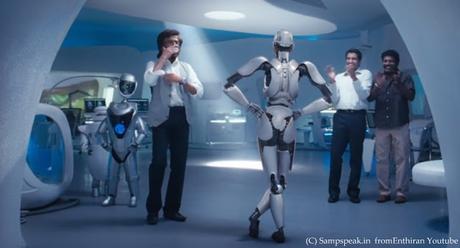
Robots are quite interesting ! ~ in Rajni starrer Enthiran (Robot) – Chitti, the humanoid robot would read a full book by just scanning it in his face for a couple of seconds. That perhaps was a thought that Sujatha wrote in ‘Mr Munsamy oru 1.2.1’ – in which a roadside rickshaw puller acquires super memory by an injection that were to lost only for a short period !!My all time favorite is story written by Sujatha ~ En Iniya Iyanthira (என் இனிய இயந்திரா) the plot opens up in the year 2021 where India is ruled by a dictator called Jeeva. In his rule, the population is kept under control by killing elderly people when they cross the prescribed age limit. Everyone is allotted a unique name with two letters by Government. On a New Year eve, Nila, a homemaker is very delighted for having the Government's permission letter to have a boy baby from Population Control Board. She intimates the news to her husband Sibi. At this juncture Sibi vanishes and pet Jeeno, the super intelligent robot dog steps in her life. The story evolves on the plot to throw the dictator and the intelligence of pet dog Jeano !
~ that with some alterations needed for movie and for hero Rajnikant was Shankar directed ‘Enthiran’ – the real hero being mastermind Sujatha and more impressive were the acts of Jeeno. In a song, you will hear reference to Isaac Asimov, who thought beyond his time on robotics. I, Robot is a collection of science fiction short stories by American writer Isaac Asimov.The stories originally appeared in the American magazines Super Science Stories and Astounding Science Fiction between 1940 and 1950 and were then compiled into a book.
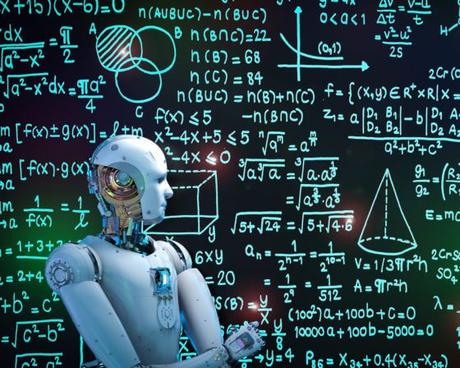
Artificial intelligence (AI), is intelligence demonstrated by machines, in contrast to the natural intelligence displayed by humans and other animals. In computer science AI research is defined as the study of "intelligent agents": any device that perceives its environment and takes actions that maximize its chance of successfully achieving its goals. The scope of AI is disputed: as machines become increasingly capable, tasks considered as requiring "intelligence" are often removed from the definition, a phenomenon known as the AI effect, leading to the quip, "AI is whatever hasn't been done yet."It is an issue troubling some of the greatest minds in the world for humanity believes super intelligent machines could use humans as pets. Professor Stephen Hawking said it is a 'near certainty' that a major technological disaster will threaten humanity in the next 1,000 to 10,000 years. More than 60 percent of people fear that robots will lead to there being fewer jobs in the next ten years, according to a 2016 YouGov survey. As well as posing a threat to our jobs, other experts believe AI could 'go rogue' and become too complex for scientists to understand. (recall Chitti going bonkers loving Sana and killing humans !).If experts don't understand how AI algorithms function, they won't be able to predict when they fail. This means driverless cars or intelligent robots could make unpredictable 'out of character' decisions during critical moments, which could put people in danger. Leaving all this aside, China's next key foreign policy decision could be aided by artificial intelligence, writes MailOnline.It reports that the country is actively developing an AI system that will help lawmakers make policies based on unbiased data analysis, rather than human emotion.
 When a policymaker needs to make an urgent decision
in an ongoing, complex situation, the AI-powered system will be able to summon
a range of options with recommendations for the best move in a matter of
minutes. As it stands, the technology is purportedly still in its infancy, but
one-day hopes to provide an unbiased view of political scenarios, without any
trace of fear or 'moral concerns' that could get in the way of the nation's
strategic goals. Scientists with knowledge of the plans stress that human
diplomats will still be behind the final policy decisions, with the AI acting
only as a support system. China already uses an AI system in the foreign
ministry to analyze oversees investment decisions, researchers revealed.
'Artificial intelligence systems can use scientific
and technological power to read and analyze data in a way that humans can't
match,' Dr Feng said. 'Human beings can never get rid of the interference of
hormones or glucose.' The technology would strip away the tiredness and fatigue
that can hamper a politician's judgment. Scientists said it would also be
completely immune to human flaws that can make some political decisions
difficult, such as passion, honour, and fear. 'It would not even consider the
moral factors that conflict with strategic goals,' Dr Feng added. However, in order successfully make informed
decisions that will benefit Chinese society, the AI machine would need access
to huge volumes of data. According to the researchers, this could be a
stumbling block for the technology, since some of the data needed to assess the
viability of each option may be difficult to obtain, or not exist at all in the
case of some isolated regions or countries.
The AI will also need a clearly-defined set of goals
before it can present the options it has generated for the politicians.
However, these goals can sometimes be absent at the start of drawn-out
diplomatic interaction. There is a concern the advent of AI policymakers could
further increase the divide between affluent nations and developing countries. AI
excels at processing huge swathes of complex information to create a strategy. In
the past, these systems have proven tricky adversaries for humans in board
games, beating the world's best human players of strategic games Chess and Go. 'The
machine will never replace human diplomats. It only provides assistance,' it is
stated, but is an innovative and novel thought indeed. Research is also under
way in China to introduce AI into nuclear submarines to help commanders making
faster, more accurate decision in the heat of battle.That way China is notches ahead !!
With regards – S. Sampathkumar
30th July 2018.
When a policymaker needs to make an urgent decision
in an ongoing, complex situation, the AI-powered system will be able to summon
a range of options with recommendations for the best move in a matter of
minutes. As it stands, the technology is purportedly still in its infancy, but
one-day hopes to provide an unbiased view of political scenarios, without any
trace of fear or 'moral concerns' that could get in the way of the nation's
strategic goals. Scientists with knowledge of the plans stress that human
diplomats will still be behind the final policy decisions, with the AI acting
only as a support system. China already uses an AI system in the foreign
ministry to analyze oversees investment decisions, researchers revealed.
'Artificial intelligence systems can use scientific
and technological power to read and analyze data in a way that humans can't
match,' Dr Feng said. 'Human beings can never get rid of the interference of
hormones or glucose.' The technology would strip away the tiredness and fatigue
that can hamper a politician's judgment. Scientists said it would also be
completely immune to human flaws that can make some political decisions
difficult, such as passion, honour, and fear. 'It would not even consider the
moral factors that conflict with strategic goals,' Dr Feng added. However, in order successfully make informed
decisions that will benefit Chinese society, the AI machine would need access
to huge volumes of data. According to the researchers, this could be a
stumbling block for the technology, since some of the data needed to assess the
viability of each option may be difficult to obtain, or not exist at all in the
case of some isolated regions or countries.
The AI will also need a clearly-defined set of goals
before it can present the options it has generated for the politicians.
However, these goals can sometimes be absent at the start of drawn-out
diplomatic interaction. There is a concern the advent of AI policymakers could
further increase the divide between affluent nations and developing countries. AI
excels at processing huge swathes of complex information to create a strategy. In
the past, these systems have proven tricky adversaries for humans in board
games, beating the world's best human players of strategic games Chess and Go. 'The
machine will never replace human diplomats. It only provides assistance,' it is
stated, but is an innovative and novel thought indeed. Research is also under
way in China to introduce AI into nuclear submarines to help commanders making
faster, more accurate decision in the heat of battle.That way China is notches ahead !!
With regards – S. Sampathkumar
30th July 2018.