For a first Carretera Austral itinerary, I’d start and finish in Balmaceda and focus on the southern section around General Carrera Lake, Patagonia National Park and Caleta Tortel. Seven days is a full trip, while 10 days gives you more time around the lake and fewer rushed stops.
I spent 6 days driving from Balmaceda down to Caleta Tortel and back. It was one of the best road trips I’ve ever done, but I could’ve done with one or two extra nights, mainly around the lake.
These self-drive itineraries are based on that trip, including the lessons I learned and the things I’d do differently next time. The timings I’ve suggested will allow you to make sightseeing stops along the way and do a few short walks, but not long hikes.
If you’re still deciding whether this road trip suits you, start with my Carretera Austral road trip guide, then come back here to plan the actual route.
Need help planning your next trip? Hire me as your Personal Travel Planner!

At a Glance
I wouldn’t attempt the whole length of the Carretera Austral unless you have several weeks. There’s a lot to see along the way.
Plus, if you’re driving a rental car, and aren’t planning to continue your road trip into Argentina, you’d likely need to double back for a good chunk of the route in order to return the car.
The main itineraries below start and end in Balmaceda and turn back at Caleta Tortel. You don’t need ferries for these routes.

7 days gives you the main southern stops, but includes several substantial driving days and little spare time. Stay in Puerto Guadal rather than extending to Chile Chico.
10 days is the version I’d choose. Visit the Marble Caves and Parque Exploradores on separate days, spend two nights around Puerto Guadal, and give Tortel a full day.
14 days lets you add more lake time, walks and weather flexibility. There’s also scope to add Chile Chico, or some of the route north of Balmaceda.

Why I’d Start in Balmaceda
Balmaceda is the simplest starting point for this southern route. You can fly in, collect a pre-booked car at the airport and head towards Villa Cerro Castillo without going into Coyhaique first.
If possible, try to book the earliest flight to Balmaceda, and the latest departing one at the end, to maximise the time you have for your road trip.
Allow around 4 to 5 hours for the drive between Balmaceda and Puerto Río Tranquilo, before food and photo stops. Add time for collecting or returning the car and checking in for your flight.
If you need to get a later arriving flight, I’d stop in Villa Cerro Castillo or stay near Balmaceda or Coyhaique and set off the next morning. For an early flight home, spend the final night as close to the airport as you can.

Caleta Tortel is the first place I’d cut if you need to free up a day.
Starting further north from Puerto Montt can be brilliant if you’ve got more time, but it adds ferry crossings and a slower build-up before you reach those epic southern landscapes.
Personally, I’d save that for a longer trip, or use the broader 14-day option below as a starting point and go from there.
Just be realistic. The more you add, the more the trip becomes about logistics and long travel days. For a first trip, I’d rather do the southern section well than rush the whole thing.

7-Day Carretera Austral Itinerary
If you’ve got a week, this is the route I’d follow. It’s close to what I actually did, but with an extra day built in so the whole thing feels less rushed.
You’ll still spend plenty of time driving, but not every day feels like a race. Importantly, it splits the return from Tortel over two days so Patagonia National Park doesn’t become a hurried stop during an already long drive.
Before fixing your dates, check the Chacabuco sector on Pases Parques. Its published visiting days currently run from Tuesday to Sunday, so check where your park day falls before booking the surrounding nights.

Route Summary and Overnight Stops
This itinerary keeps the route focused, avoids ferry logistics, and still gives you the best scenery I saw on this part of the Carretera Austral.
DayRoute / ActivityOvernight Base
1Balmaceda to Puerto Río Tranquilo via Villa Cerro CastilloPuerto Río Tranquilo area
2Marble Caves and Parque Exploradores, if timings and conditions allowPuerto Río Tranquilo area
3General Carrera Lake to Puerto GuadalPuerto Guadal
4Puerto Guadal to Caleta Tortel via CochraneCaleta Tortel
5Morning in Tortel, then drive to CochraneCochrane
6Valle Chacabuco in Patagonia National Park, then return northPuerto Río Tranquilo area
7Drive back to Balmaceda
This version assumes an early enough arrival on Day 1 and a late enough departure on Day 7 to do the airport drives in daylight. If your flights don’t allow that, shorten the route rather than squeezing the same stops into fewer usable days.

Day 1: Balmaceda to Puerto Río Tranquilo via Villa Cerro Castillo
Pick up your car at Balmaceda Airport and drive south towards Villa Cerro Castillo. I’d stop briefly in the village to stretch your legs and take in the mountain views.
On this route, it’s a stop on the drive rather than a Cerro Castillo hiking day. A long hike here needs its own day and would mean cutting something else.
Continue towards Puerto Río Tranquilo, allowing time for the slower road sections. Some of the gravel between Cerro Castillo and the lake was pretty rough when I drove it.

Enjoy the views to your right as you climb the hill leaving Cerro Castillo. There’s a great viewpoint at the top which I’d highly recommend stopping at.
Spend the night in Puerto Río Tranquilo if you want easy access to amenities.
I stayed just outside town at Chelenko Lodge, which was much quieter and more scenic. After a long travel day, having my own tiny cabin right by the lake was exactly what I wanted.

Day 2: Marble Caves and Parque Exploradores
Book a Marble Caves trip from Puerto Río Tranquilo in advance. Boat and kayak trips depend on the weather, so your timings might need to be a little flexible here. Try to go in the morning if the weather looks decent.

When I went, the lake was rough and the boat trip was cold, wet and slightly chaotic. The caves were still worth seeing, but it wasn’t the calm, glassy-water version you see in photos.
Bring a waterproof layer even if the weather looks fine.

Afterwards, drive out towards Parque Exploradores if you have enough time. This was one of my favourite detours on the whole trip. This road felt even more remote and undiscovered, like an exciting little side quest.
The park is 52 km from Puerto Río Tranquilo along the gravel X-728, and the drive takes about 60–90 minutes each way. Allow roughly 4 to 5 hours for the return trip including a short walk, and more if you want to linger.

Parque Exploradores is a private conservation area and you need to pay $9,000 CLP per adult ($5,000 CLP for children) to enter — definitely worth it in my opinion. Bring cash as their card machine only works intermittently.
There are a handful of self-guided trails through the forest and up to viewpoints overlooking Glaciar Exploradores. I did the 1km Chucao trail, which the friendly and helpful guy at the information centre said was the best if you have limited time.
The glacier isn’t as big or impressive as the more famous Perito Moreno or Gray Glaciers further south. But this park receives a tiny fraction of the number of visitors so it has a totally different feel.

I found it every bit as special, and much more atmospheric. I only saw 5 other people the whole time I was there.
Check Parque Exploradores’ access information and confirm opening hours before setting off, particularly after heavy rain, when the road can be affected by flooding or landslides.
Only combine the caves and park if you can do an early boat trip and have enough time afterwards. Either way, I wouldn’t cram too much else into this day. Stay a second night in or near Puerto Río Tranquilo.
If weather disrupts the plan, you could always cut Tortel at the end of the route and spend an extra day doing either Exploradores or the caves.

Day 3: General Carrera Lake to Puerto Guadal
The south shore of General Carrera Lake was one of the best driving sections of the trip for me. The colour of the water looked almost fake in places, and I found myself stopping constantly.
Follow the Carretera Austral south, then take the turn towards Puerto Guadal. Don’t rush this section. Stop often, take your time, and don’t plan too much for the afternoon.
You could theoretically drive all the way along the southern side of the lake to Chile Chico, but I wouldn’t do this if you only have seven days. You’ll want time to enjoy being by the lake once you’ve arrived, and you’d need to retrace that substantial extra drive before continuing south.
I stayed at Terra Luna Lodge near Puerto Guadal, and as soon as I got there I immediately wished I had another night. If you can build in extra time anywhere on this itinerary, this is where I’d use it.
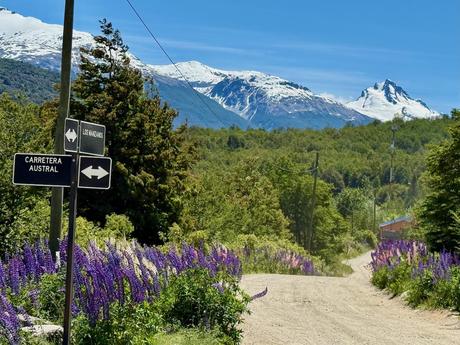
Day 4: Puerto Guadal to Caleta Tortel via Cochrane
This is one of the longer days, so start early. The road south feels more remote, and there are long stretches without much in the way of services.
Cochrane is the obvious place to stop for lunch, coffee, fuel or supplies before continuing.
From Cochrane, you still have roughly 125 km to Caleta Tortel, and this is the section where I got held up the longest by the Carretera Austral’s infamous roadworks. I spent well over an hour in total sat stationary waiting for the road to re-open in my direction.

Allow most of the day for the journey from Puerto Guadal, especially if you’re stopping regularly.
When you finally arrive in Tortel, you’ll notice it feels totally different from anywhere else you’ve seen so far along the route.
There are no normal streets in the centre. Instead, wooden boardwalks wind around the hillside, between houses and along the edge of the fjord, with staircases disappearing into the trees above.

Everything feels damp and slightly otherworldly. The wooden walkways, dripping vegetation, low clouds and absence of traffic give Tortel a spooky, end-of-the-world feel, which I liked.
Just don’t make the mistake I made. I arrived after sunset without accommodation booked and almost ended up sleeping in the car. There aren’t too many places to stay here, and most aren’t bookable online.
I eventually found somewhere thanks to the kindness of the guy working at the Copec filling station, who called all of his friends – and their friends – and finally (around 10:30pm) found me a very basic cabin where I could stay.
It was a cool story in the end, but it wasn’t a relaxing way to end the day. Try to book ahead here if you possibly can. Or at least arrive early enough that you can walk around town and find somewhere open.
Also, confirm how to reach your accommodation from the central parking area. You’ll likely be carrying your luggage along walkways and up and down steps, rather than driving to the door.

Day 5: Caleta Tortel to Cochrane
Spend the morning in Caleta Tortel before leaving. You don’t need a full day, but it’s worth exploring the boardwalks properly rather than treating the town as just an overnight stop.
I’ve never been anywhere with an atmosphere quite like Tortel. It kind of feels like a rainy, mystical pirate cove somewhere between Cornwall and Thailand, surrounded by steep forested hills and water.
It’s beautiful, but not in a polished or conventionally pretty way. More isolated, weather-beaten and faintly mysterious, as though you’ve stumbled across a settlement that shouldn’t really be there.
After that, start driving back north and stay overnight in Cochrane. This breaks the return journey and puts you close to Valle Chacabuco for the following day.
On my trip, I squeezed Patagonia National Park into the return from Tortel and didn’t give it enough time. I wouldn’t try to reach Puerto Río Tranquilo and visit the park on the same afternoon after leaving Tortel.

Day 6: Patagonia National Park to Puerto Río Tranquilo
Head into the Valle Chacabuco sector of Patagonia National Park in the morning. From Cochrane, the approach runs north along the Carretera Austral before turning east towards the park’s visitor centre.
This was another highlight for me. The landscape was completely different again – wider, drier, more open, and full of wildlife. I saw guanacos and foxes, and the whole place felt quiet and untouched.

Give yourself time for the valley and a short walk, then continue north to Puerto Río Tranquilo. You could easily spend longer here, but on a 7-day itinerary it works best as a well-timed detour on the drive north.
Check the official park notices, specifically the Chacabuco sector. Patagonia National Park also includes Jeinimeni near Chile Chico and Tamango near Cochrane, which have different access points.
Trail access can change with snow and weather, so ask the rangers which walks are suitable that day.
Stay in/near Puerto Río Tranquilo again afterwards, to take the pressure off tomorrow’s drive back to the airport.

Day 7: Return to Balmaceda
Drive back to Balmaceda for your flight. The distance doesn’t look too bad, but don’t cut this too fine or add any long detours.
Road conditions, photo stops and the inevitable roadworks all add time, and this isn’t a route where I’d want to be stressing about a flight. Leave plenty of margin.

10-Day Carretera Austral Itinerary
This is the version I wish I’d had. It follows the same route, but gives you breathing room in the places that deserve it most.
The biggest improvement is around General Carrera Lake. I rushed through this part more than I should have, and I would’ve happily stayed longer there rather than moving on so quickly.
Here’s how I’d change the day order and overnight stops:
DayRoute / ActivityOvernight Base
1Balmaceda to Puerto Río Tranquilo via Villa Cerro CastilloPuerto Río Tranquilo area
2Marble Caves, then afternoon around town or the lakePuerto Río Tranquilo area
3Parque ExploradoresPuerto Río Tranquilo area
4Drive around General Carrera Lake to Puerto GuadalPuerto Guadal
5Stay around Puerto Guadal and the lakePuerto Guadal
6Valle Chacabuco in Patagonia National Park, then CochraneCochrane
7Cochrane to Caleta TortelCaleta Tortel
8Full day in Caleta Tortel OR return drive to Villa O’HigginsCaleta Tortel
9Return north via Cochrane to Puerto Río TranquiloPuerto Río Tranquilo area
10Return to Balmaceda
Days 2 and 3 allow you some flexibility around lake conditions, rather than cramming both outings into one day. Giving Exploradores its own day means can take your time on the drive, and do more than one short trail.
I’d keep Day 5 around Puerto Guadal fairly loose. A short walk, a slower morning by the lake, or just sitting on the beach and relaxing would have suited me nicely.
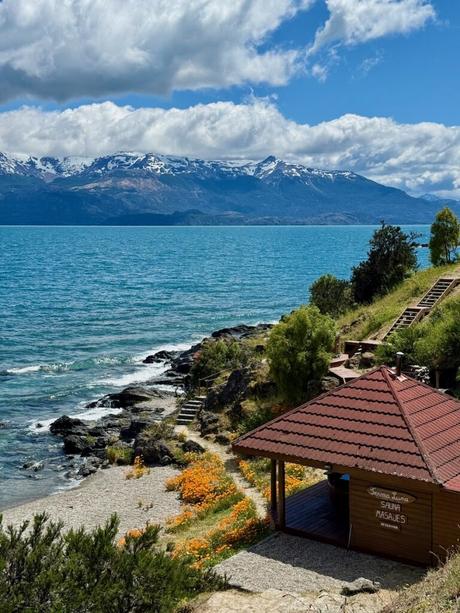
If Chile Chico is a priority, use Days 4 and 5 for that longer south-shore extension, then allow more driving time on Day 6. On a 10-day trip, I’d still lean towards staying around Puerto Guadal unless you particularly want to explore further east.
Visiting Valle Chacabuco before Tortel lets you finish the park day in Cochrane. Check the park’s opening days before committing to this order though.
On Day 8, I’d recommend spending the day walking the boardwalks and enjoying Tortel without needing to leave that morning. It also gives you some flexibility if the weather is poor, although you’ll still need to do the long return drive on Day 9.
However, one optional tweak could be to drive from Tortel to Villa O’Higgins and back again on Day 8.

Villa O’Higgins is where the Carretera Austral officially finishes. It’s literally the end of the road, south of which the Southern Patagonian Ice Field separates Aysén from the Magallanes and Antártica Chilena region.
If you’re a completist (and I can wholly relate), you might want to reach the very end of the Carretera Austral. Or you might prefer to spend more time relaxing and enjoying the unusual atmosphere of Caleta Tortel. It’s up to you really.
Just bear in mind that the journey from Tortel to Villa O’Higgins is about 4 hours each way, and involves a ferry (each way), so you’ll need an early start. The Puerto Yungay to Río Bravo ferry is free and departs every few hours in the summer, first-come first-served.
For an early flight on Day 10, spend one night rather than two in Tortel, return to Puerto Río Tranquilo on Day 8 and move closer to Balmaceda on Day 9.

14-Day Carretera Austral Itinerary
With 14 days, you have a choice. You can either make the southern route slower and more relaxed, or you can start adding more of the Carretera Austral further north.
I’d probably still choose the first option for most people. The second makes sense if you really want a longer road trip and are happy dealing with more logistics.
Option 1 – A Slower Southern Route
DayRoute / ActivityOvernight Base
1Balmaceda to Puerto Río TranquiloPuerto Río Tranquilo area
2Marble CavesPuerto Río Tranquilo area
3Parque ExploradoresPuerto Río Tranquilo area
4Lake day or spare time for a postponed outingPuerto Río Tranquilo area
5Drive to Puerto GuadalPuerto Guadal
6Puerto Guadal and General Carrera LakePuerto Guadal
7Continue along the south shore to Chile Chico, or stay by the lakeChile Chico or Puerto Guadal
8Drive back to the Carretera Austral and south to CochraneCochrane
9Valle Chacabuco in Patagonia National ParkCochrane
10Cochrane to Caleta TortelCaleta Tortel
11Full day in Caleta Tortel OR return drive to Villa O’HigginsCaleta Tortel
12Return north to Puerto Río TranquiloPuerto Río Tranquilo area
13Lake or Cerro Castillo stops, then move towards the airportBalmaceda or Coyhaique area
14Return the car and depart
If you include Chile Chico, treat Day 8 mainly as a driving day. You still have Day 9 for the park, without trying to combine the entire drive from Chile Chico with a substantial walk.

If you skip Chile Chico, use that time around Puerto Guadal or add a second park day from Cochrane. Swap the local days as needed for park opening dates and weather.
See above (in the 10-day section) re whether to spend a whole day in Caleta Tortel versus doing the return drive to Villa O’Higgins.
Day 13 can absorb a delay earlier in the trip or give you another stop around Cerro Castillo.

Option 2 – A Broader Route
The other option is to use 14 days to add more of the route further north. This gives you a broader Carretera Austral trip, but it also changes the feel. You’ll spend more days in transit, and there’s more planning to do, especially if you include ferries.
I’ve driven the southern section from Balmaceda and a small opening stretch from Puerto Montt, but I haven’t driven the full north-to-south route in one continuous trip.
That said, you could start in Puerto Montt, travel through the northern section around Chaitén and Puyuhuapi, then continue south towards Coyhaique and General Carrera Lake. Finish in Balmaceda, don’t try to drive all the way back up to Puerto Montt.

If this is something you’d like to do, confirm the arrangements for one-way car rental (i.e. collecting in Puerto Montt and returning in Balmaceda) before you do anything else. When I checked, the extra fee for this was over $1,000 USD, which is one of the reasons I didn’t do it and generally recommend starting and finishing in Balmaceda.
Also, be sure to work your northern accommodation around the various ferry sailings. And check access to the Queulat trails before making them a fixed part of your itinerary.
You won’t have the same amount of time for the southern stops. I’d cut Caleta Tortel first, keeping Puerto Río Tranquilo, the lake and Patagonia National Park, rather than adding the entire north to the southern itinerary above.
If you want this version, read my Carretera Austral ferry guide before booking anything. It needs considerably more planning than the road-only Balmaceda routes.

Another Alternative
If you want to include places like Puyuhuapi and Queulat, but don’t want the hassle of one-way rental or ferries, here’s another suggestion.
Start and finish in Balmaceda, spend a few days exploring the highlights north of there, and then head back down south and continue with some (or most) of the southern section.
The danger lies in trying to keep everything. If you add the north, you’ll probably need to trim somewhere else — unless you can add an extra few days of course.
That probably means less time around General Carrera Lake, skipping Caleta Tortel, or making Patagonia National Park a shorter stop.
Personally, I wouldn’t make those cuts unless covering a longer stretch of the road matters more to you than going deeper in the south. But, as always, it depends on how much time you have. With 3 weeks, you could comfortably do both.

What to Cut If You Only Have 5 or 6 Days
Cut Caleta Tortel first. I liked it, and I’m glad I went, but the drive south and back takes a lot of time away from the other good stuff.
With 5 days, focus on Puerto Río Tranquilo, the Marble Caves, Parque Exploradores and General Carrera Lake. Use one base near Puerto Río Tranquilo, or add a night around Puerto Guadal if your flight times leave enough room.
With 6 days, you could add Valle Chacabuco and an overnight in Cochrane, then work north again. I wouldn’t treat Patagonia National Park as an easy day trip from Puerto Río Tranquilo.

Where to Stay on This Route
Plan accommodation around your driving days. A lakeside lodge can be lovely, but its exact location matters when you have an early tour or a flight to catch.
Puerto Río Tranquilo and Nearby
Puerto Río Tranquilo is the most useful base for the Marble Caves and Parque Exploradores.
If you want a range of restaurants, walkable bars and easy logistics, stay in town. For somewhere quieter and more picturesque, stay just outside town.

I stayed at Chelenko Lodge and loved its peaceful setting on General Carrera Lake. Being right by the water felt great after a long travel day, and their onsite restaurant is excellent.
Puerto Guadal and Chile Chico
Puerto Guadal is the simpler lake base for continuing south towards Cochrane. Chile Chico can make sense if you want to push further along the lake and explore more of the south shore, but this adds a fair amount of backtracking.

I stayed at Terra Luna Lodge near Puerto Guadal and was annoyed I only had one night there. This is definitely where I’d use an extra night to slow down and enjoy being by the lake.
Either way, don’t treat this area as just a place to sleep. The lake was a major highlight of my whole Carretera Austral trip.
Cochrane
Cochrane is practical rather than especially memorable, but it’s useful for food, fuel and supplies. Staying here also puts you closer to Valle Chacabuco and breaks the journey to or from Tortel.

Cervecería Tehuelche is a great little craft beer brewpub in Cochrane, and Café Tero does superb coffee, cakes and sandwiches.
Caleta Tortel
Try to confirm a room before you arrive, especially if you’re coming late in the day. I didn’t, which was one of the few proper mistakes I made on this trip.

If you’re going all the way there, stay at least one night. With 10 days or more, two nights makes the detour feel much more worthwhile.
Best Time to Follow This Itinerary
December to March is the easiest time to drive the Carretera Austral, with longer days and generally more favourable travel conditions. That still doesn’t guarantee clear weather, calm water or access to every trail though.
Shoulder season (October–November or April) can work if you’re flexible, but I’d expect more weather-related disruption and fewer services.

Winter wouldn’t be my first choice for a first Carretera Austral road trip. Check out my guide to the best time to visit Chile for more info on this.
Whenever you visit, book key stays ahead, especially in smaller places such as Tortel. Outside the main season, confirm accommodation, tour operations and park access individually rather than assuming everything will be running.
Practical Tips
Keep Fuel Topped Up
I never had a fuel crisis, but I topped up whenever I had the chance. Don’t run the tank low here.

A good rule of thumb is never to drive past a petrol station if you have less than three-quarters of a tank remaining.
Villa Cerro Castillo, Puerto Río Tranquilo, Puerto Guadal, Cochrane, Tortel and Chile Chico all have filling stations, but don’t assume every stop will have fuel available whenever you arrive.
Fill up before heading to Tortel or taking any other long detours, and carry enough food and drinking water for the drive.
Allow More Time Than Google Maps Suggests
Gravel, roadworks and weather can make a short-looking drive take much longer than expected. Check local road conditions before setting off and download the route for offline use.

I also stopped a lot, sometimes for viewpoints and sometimes just because the light had changed and the scenery looked almost too good to be real. Leave enough time for that.
Don’t plan back-to-back long days unless you enjoy spending your holiday feeling mildly late.
Choose a Suitable Car
You don’t strictly need a 4×4 for this southern route. I saw people doing it in small 2WD cars and old vans. But I was very glad I had one.

The rougher gravel sections and the road into Patagonia National Park needed a lot of concentration, even in my (awesome) Subaru Forester.
A 4×4 made the whole trip feel less stressful for me and gave me more confidence on the rougher stretches.
Also, check that the rental company allows you to drive on unpaved roads.
What to Read Next
- Carretera Austral road trip guide
- Carretera Austral ferry guide (coming soon)
- Chilean Patagonia guide (coming soon)
- Chilean Patagonia itinerary (coming soon)
- Chile itinerary (coming soon)