


When not gallivanting around the north of England, I’ve been gardening frenetically these past few weeks. Why, I’ve barely had time to file my nails and flick through ‘Hello’ magazine.
Some jobs are annual tasks, such as …
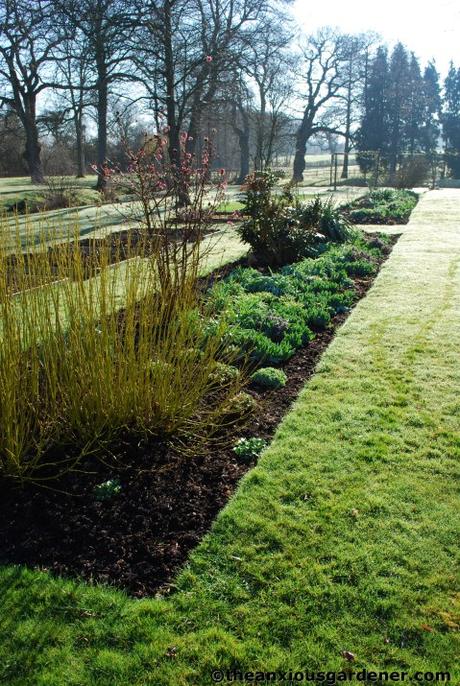
The Long Borders are full of allium and tulip promise. Since this photo was taken I've pruned the cornus in the foreground.
… the mulching of the beds. I normally try to get them all finished during the winter but I seem to be playing catch-up this year. I also finally got round to …
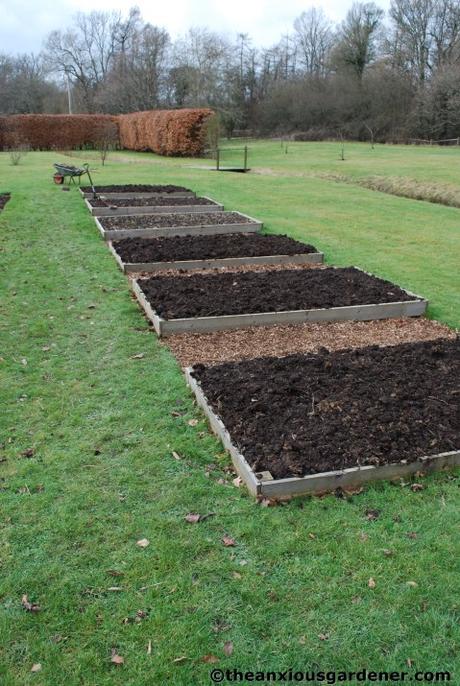
… digging the vegetable beds and adding three barrows of compost to each; except the one that holds, frankly, disappointing over-wintering onion sets. I also added two barrows of manure to four of them – from the infeasibly large manure pile out on the drive.
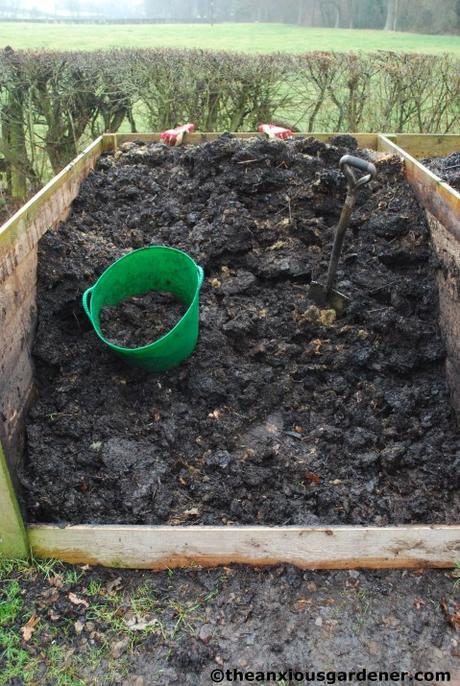
Working through my bin of compost. The pale green lump by the spade is duckweed. Note to self - it doesn't break down (who knew), so don't bother composting it again.
I’ve used up most of my leaf mold now. It went as a mulch on some of the beds (the kidney beds in particular) and on the young beech hedging. With the leaf mold all but gone, I started to use the compost that I made last year. I’m terribly pleased with it. It is almost entirely composed of grass cuttings but regular turning and the adding of green waste, paper and cardboard has made it into the above.
I’ve also been digging up herbaceous plants and relocating them into gaps in the borders. Splitting and dividing where they have been large enough to do so, moving plants to more suitable locations and generally striving for more cohesion. The trick though, is to remember what’s planted where – something I have yet to master; though it’s been fun trying to work out which dormant plant is which.
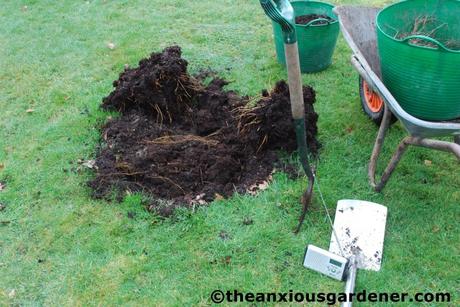
I finally dug up the Gunnera manicata (see earlier post – ‘Gunnera manicata’) which was struggling on the east lawn. It split easily into three parts which I barrowed over to the meadow and re-planted next to another gunnera that is much happier (as much as a gunnera can be happy).
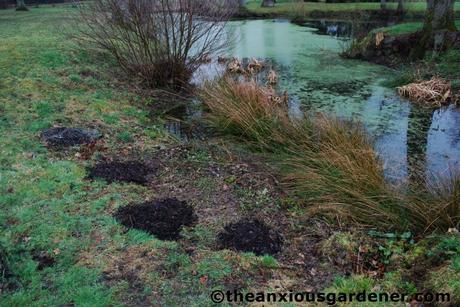
Hopefully, I shall end up with a large bank of huge stately leaves.
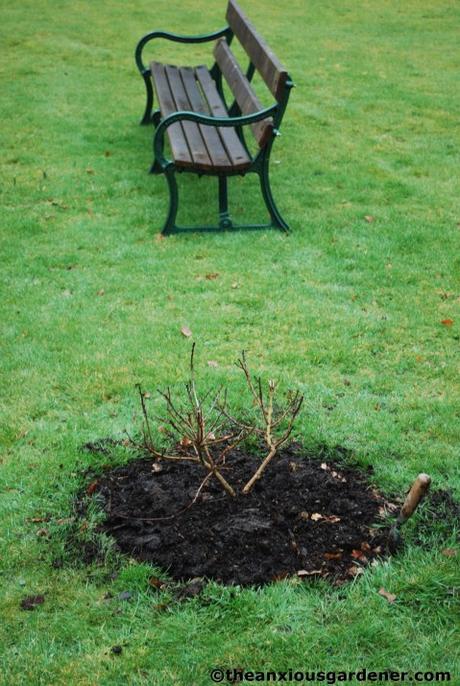
And in the space vacated by the GM? Well, I put in a Cotinus coggygria ‘Royal Purple.’ I’ve been meaning to plant a Smoke Tree/Bush for a couple of years now. When I saw one recently reduced by 50%, I grabbed it quicker than quick can be, clasped it tightly to my chest and scowled at anyone who came too close. Here, with plenty of space available, it can attain any size it pleases.
The Priory has a rose tunnel. Not a gorgeous, elegant rose tunnel but a rose tunnel nonetheless. It is old and rustic and made from chestnut posts and top-rails. I would prefer something more architectural and curvy but hey, it is a rose tunnel – not something I’ve ever had the chance to play with before. Some rotten and some missing posts were replaced last year and it was extended in length too.
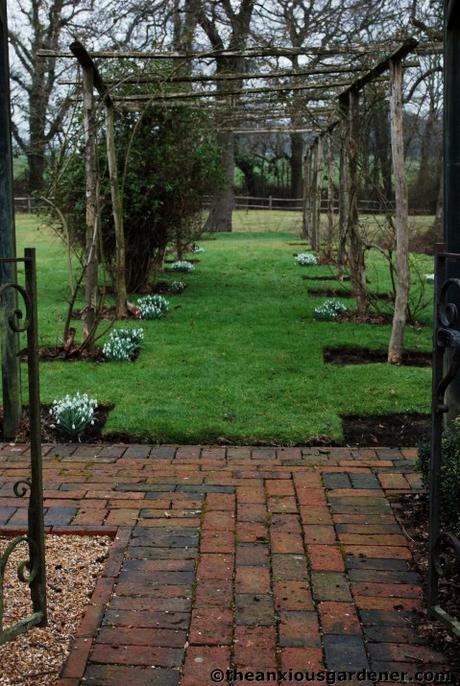
I’ve dug nine more planting pockets for David Austin roses and I’m now awaiting their delivery; all disease resistant, repeat flowering whites. Edging the planting spaces are snowdrops and I’ve ordered more to plant in the newly cut squares. I’ve had a murderous glint in my eye ever since I first spied the evergreen honeysuckle (above) and was finally given permission (after much nagging on my part) to despatch it. Hoorah!
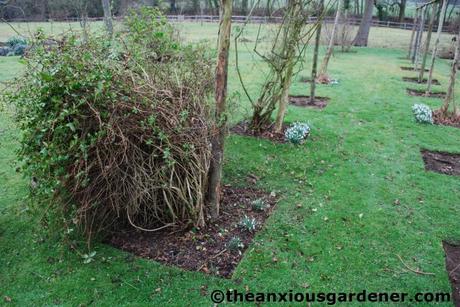
A quick unravelling of stems and …
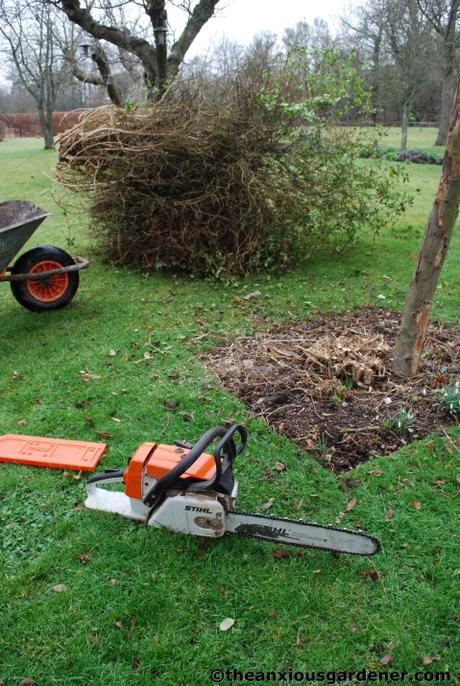
… a maniacal whizz-whizz with the chainsaw and the deed was done. A few swipes with the mattock and out came the roots. Hoorah again.
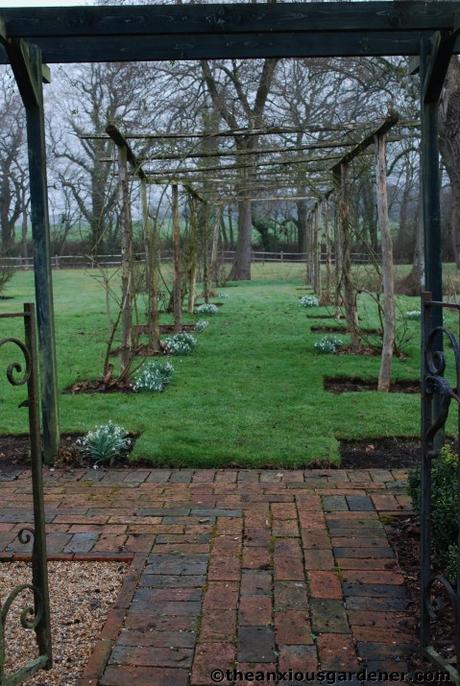
In leaf and flower, the roses will, with luck, hide much of the tunnel structure.
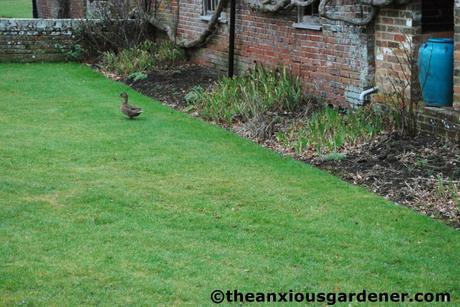
The Iris Bed hasn’t worked. I’ve tried but have decided that, like the honeysuckle, its time has come. I inherited three patches of bearded irises with planting spaces in between. I then added two more patches – creating five planting spaces. When the leaves were tidy, the irises could look rather good and provided some structure in the bed all year round.

The Iris Bed (with iris leaves waiting to be cleaned up) - September 2011
But the flowering season was terribly short and the amount of time needed to weed in amongst the rhizomes and take off dead shrivelled leaves meant that the bed as a whole was simply too labor intensive. They had to go.
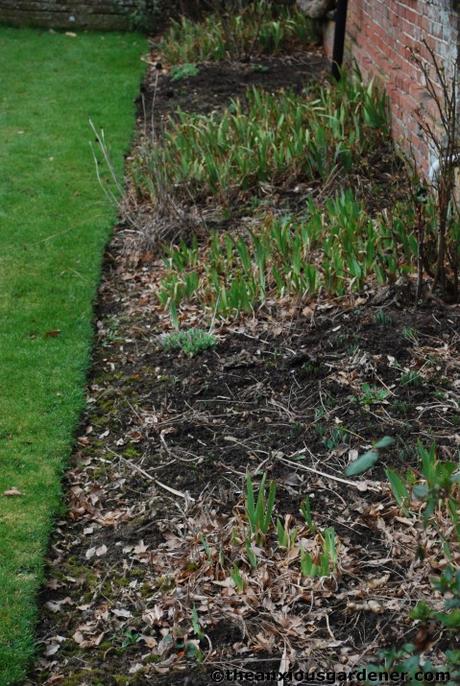
So the iris bed is to become a new tropical border. I planted a small one last year and the owner was rather taken with it; so we’ve decided to expand into this bed.
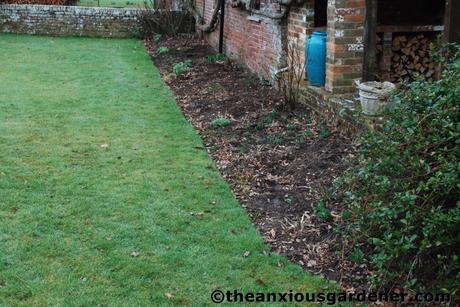
I spent quite some time digging up irises and some double tulips I didn’t much like (though I re-used a few Carnival de Nice) and then replanted sedums, rudbeckia and other bits and pieces in various parts of the garden. I’m now almost ready to dig it all over, incorporating manure and compost. I do though need to remove a few inches of soil; it is banked up too high against the outbuilding wall and causing internal damp.
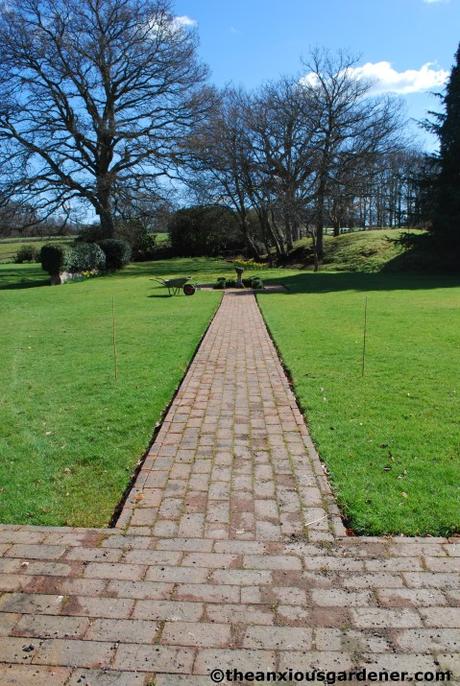
Nearby is a relatively new path; looking like nothing so much as a runway. I’ve ‘painted’ it with watery manure and a broom (fun job) in an attempt to age it and it isn’t quite as shocking as when it was laid. I’m cutting two new borders along side it in order to soften the straight lines. Excess soil from the Iris Bed will be incorporated into them when ready.
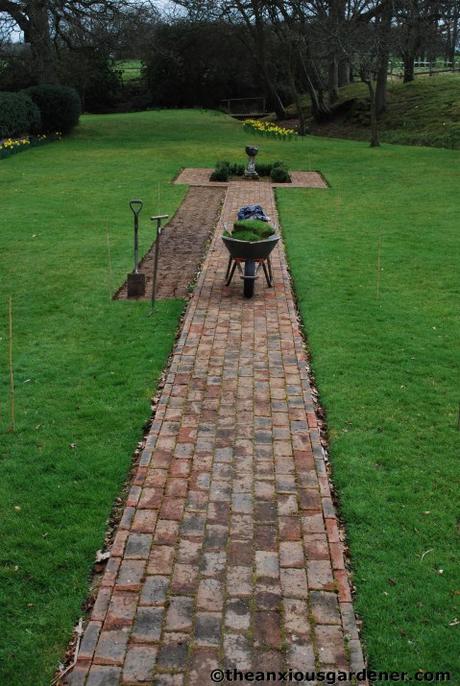
This is a big job as you can imagine; the path is about twenty metres long and the new beds will have curved outside edges when I have finished. I’ve got some ideas for the planting plan but I also have a big pile of books and gardening design mags to thumb through for inspiration – while filing my nails.






