


The APIB has recorded more than 980 officially confirmed coronavirus cases and at least 125 deaths, suggesting a mortality rate of 12.6% - compared to 6.4% nationally.
While the Special Secretariat for Indigenous Health at the Ministry of Health has reported only 695 cases of coronavirus in Indigenous communities and 34 deaths, it is monitoring a smaller group of people - only those living in traditional villages and registered in local health clinics, not indigenous people who have moved to cities.
"The coronavirus has benefited from years of public neglect," said Dinaman Tuxa, executive coordinator of APIB and a member of the Tuxa people in northeast Brazil. "Our communities are often in remote and inhospitable regions, without access or infrastructure."
He said that in the 1,400-person Tuxa community there are no hospitals and the nearest ICU is a four and a half hour drive. Their main form of prevention has been complete isolation.
"Faced with the pandemic, we did not have much choice," he said. "We have completely isolated ourselves. We have erected barriers. No one is allowed to enter and we are trying to prevent anyone from going out."
So far, there have been no confirmed cases at Tuxa, but he does not know how long they can ward off the virus. More than 60 indigenous communities have confirmed cases of Covid-19, many of them in the Amazon region, where people can only get to hospitals by boat or plane.
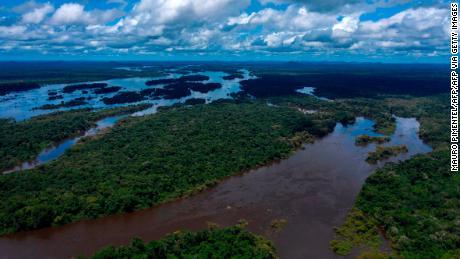
According to a study by InfoAmazonia, a non-profit organization, the average distance between indigenous villages and the nearest intensive care unit (ICU) in Brazil is 315 kilometers. And for 10% of the villages, this distance is between 700 and 1,079 kilometers.
"Indigenous communities - even those with basic clinics - are simply unprepared for the coronavirus, which means that infected people must be removed and often travel long distances," said Joenia Wapichana, the first member of the Indigenous Congress of Brazil, in a press release. interview. "And when they get there, they have to compete for hospitals, for intensive care beds, for ventilators, because there just aren't enough."
The northern and northeastern states were among the hardest hit by the coronavirus in Brazil. Most of the deaths of Covid-19 in indigenous people have occurred in the Amazon, one of the states with the highest infection rate, where local officials warned that the health care system was collapsing in March .
Indigenous rights activists warn that illegal mining and logging on indigenous lands, which have increased since the swearing in of Brazilian President in favor of development, Jair Bolsonaro, last year now constitute a an even greater threat to remote communities.
Deforestation in the Brazilian rainforest increased by almost 64% in April this year, compared to the same month last year, according to data from the Brazilian National Institute for Space Research (INPE). In the past month alone, more than 156 square miles (405.6 square kilometers) of rainforest has been destroyed - a vast swath more than double the size of Washington, DC.
The first quarter of 2020 had already seen an increase of more than 50% in deforestation compared to last year, according to data from the INPE.
"The natives of the Amazon have no antibodies against diseases that originate outside the rainforest," Brazilian activist and photographer Sebastião Salgado told CNN's Christiane Amanpour in a recent interview. "There is a huge danger that the coronavirus can penetrate inside the native territory and become a real genocide."
Last week, the Brazilian Congress adopted an emergency plan for indigenous communities which would provide not only medical equipment and field hospitals, but also clean water and food allowing the tribes to isolate themselves. But it still has to be approved by the Senate and get the green light from Bolsonaro, who downplayed the virus and has a historically antagonistic relationship with indigenous communities.
"Indigenous peoples cannot always be the last to be treated, the last to receive materials," said Wapichana, who is the rapporteur for the plan. "There is not a single field hospital for the locals. They are building them in the wrong places."






