


Socrates denounced writing as undermining people’s faculty for memory. Nevertheless, writing and reading spread greatly in the ensuing 2400 years. Now that’s gone into reverse.
Decades ago some feared TV rotting our brains. But today people are ensorcelled by blizzards of distractions oriented to the visual, and with instant gratification. Acculturated to a pace so quickened that if a stimulus does not pack an immediate punch, people swiftly move on.
That applies to prose. A word few nowadays might know. A recent piece in The Economist begins by noting a test wherein the opening of the Dickens novel Bleak House confuzzled many readers, unable to make sense of the words. And those were University English literature students! “Barely even literate,” snarks the article.
In the wider population it’s worse yet, with ever fewer reading books (or much else). The newspaper landscape too is contracting. Indeed, so is prose itself: The Economist did an analysis, finding declining word counts in published sentences generally.
I strive for concision in my own writing. However, we’re seeing shorter sentences not because writers are improving but because readers are less receptive to longer ones, which they’re less able to grasp.
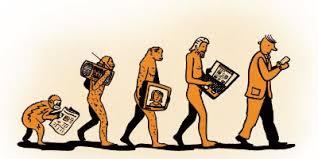
Not so long ago, few could read at all. Then came a more educated era, where masses embraced reading as a route to self-improvement and advancement, boosting one’s ability to engage intelligently with the wider world. Hence the broad “middlebrow” Book-of-the-Month Club phenomenon. That light is flickering out. The Economist cites surveys showing younger people in particular call reading “a chore” or “boring.” So schools assign less of it. Making for a doom-loop.
Also another propellant for inequality. Today’s reading decline most strongly harms those already suffering socio-economic disadvantage, widening the gap between them and the affluent (who read more).
The Economist says reading is one of life’s great pleasures. I love seeing how other writers do what they do. But more importantly, it’s been central in my lifelong project of trying to understand people and the world. Something that others today — an era of “smart” phones, social media, and TikTok — could use more than ever.
Instead we see a great dumbing-down. We once thought the “information age” would make us more informed. Ha-ha. And it’s not just a matter of factual knowledge, understanding true reality. The Economist says declining ability to read complex prose leads to diminished general ability to handle complex ideas; decreased literary sophistication lessens political sophistication. People becoming, politically, unguided missiles.
And the public square is increasingly polluted with lies and fake news, metastasized by Artificial Intelligence. My own first line of defense against falsehood is my understanding of how reality works, honed by a life of reading. So when Trump says other countries empty jails and nut-houses to send those inmates to us, I don’t have to think twice whether it might be true. It just flies in the face of how I know the world works. But ever fewer people have such understanding.

One might counter that it isn’t people getting less information, it’s just different information, in a different format. Well, sorry: funny little TikTok videos people addictively scroll ain’t “information” (in the word’s common sense). Many say they get their news from TikTok. That’s not equivalent to The New York Times. And only 38% of Americans surveyed say they pay attention to news at all (and many of those are probably lying).
Walter Lippmann, in his 1922 book Public Opinion, noted that journalists chronicle facts and events — but that’s not the same as truth. Grasping truth requires more effort. Mere facts — not to mention “alternative facts” — can become highly misleading without proper context. And it’s context that reading broadly provides.
Here again Artificial Intelligence doesn’t help. Students increasingly use it in their education, to answer questions and do work for them. Studies already show that this blunts one’s critical thinking faculty. Artificial Intelligence diminishes the real kind.
Something else looming: online porn has long been a big distraction, but AI has only just started metastasizing this, making it far more enticing. Also reducing readership for the likes of Bleak House.
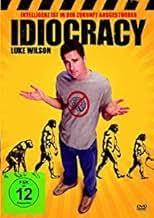
America is going off the rails, our civic culture collapsing. Becoming the Idiocracy of the 2006 comedy film. I don’t expect everyone to read Bleak House. But when people aren’t reading much of anything, maybe it’s not so surprising they’d elect a lunatic who tried to overthrow the government, and deploys masked goons seizing folks off the streets. I can’t imagine those past book club devotees voting like that.
And this is not just an American syndrome; the same factors are making voter behavior irresponsible in countries like Britain, Germany, France, etc.
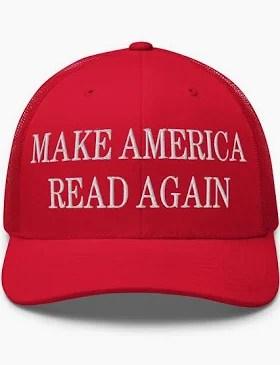
Culture wars debate what people are allowed to read. A greater concern should be how little they read. Why ban or burn books when they’re not read anyway?







