


"If Congress doesn't give equity to Big Tech, which they should have done years ago, I will do it with executive orders too."
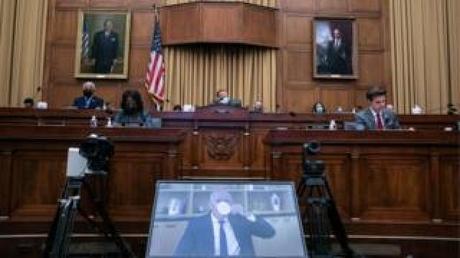
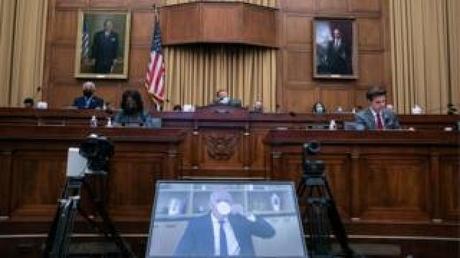
Those were the words of American President Donald Trump on Wednesday just before the leaders of Apple, Amazon, Alphabet and Facebook were questioned by Congress.
That word "equity" is crucial when it comes to the future regulation of these tech titans. This is because, in the mouths of different legislators, equity means very different things.
"These companies, as they exist today, have monopoly power ... some must be destroyed, all must be properly regulated".
These were the concluding remarks of David Cicilline, chairman of the anti-trust subcommittee of the House judicial committee.
For him, equity means not only cutting off Big Tech's wings, but fundamentally restructuring their relationship with Americans.
Cicilline was one of many legislators who came out swinging. At one point he asked Jeff Bezos of Amazon why the company had been compared to a drug dealer.
Being American politics, there was also - obviously - a partisan division.
Republicans like Jim Jordan and Matt Gaetz had a different interpretation of equity - and it had nothing to do with antitrust.
"I'll just stick to the chase. Big Tech is out to find conservatives," Jordan said.
Much of their anger was centered around censorship claims, particularly that Facebook and Google unfairly discriminate against conservatives.
Even President Trump has suggested. He has already criticized Twitter and Facebook for removing conservative content and even reporting his posts and tweets.
American elections
This division makes it difficult to predict how the United States could attempt to lasso these tech giants.
Republicans are generally opposed to market regulation, against increasing bureaucracy.
However, many Democrats believe that these companies act like cartels - damaging "mom and pop" businesses. Such stricter legislation will protect consumers.
The subcommittee will publish its recommendations - and then it will be up to the legislators of Capitol Hill.
It is highly unlikely, however, that it will happen long before the US election in November.
In addition to the presidential vote, all seats in the House of Representatives are up for grabs, as well as about a third of the Senate.
And so we reach a crossroads for Big Tech in America.
A republican victory would likely see tech giants scrutinized further on how they control free speech. Section 230 - which offers social media companies immunity from prosecution for what is published on their platforms - would likely be examined.
If the Democrats win, expect more regulation in an attempt to inject more competition into the technology sector.
In reality, though, it's unlikely to be so black and white.
There are Republicans who have sympathies with some of the anti-competitive arguments, for example.
The accusations against Amazon that have injured tens of thousands of small American businesses are as much a republican concern as a democratic one.
There may be bipartisan compromises on anti-competition which are attractive to both sides.
But it is difficult to avoid the conclusion that whoever wins the next election, Big Tech will be hit. The question is how and by whom.






