


At today's judicial committee hearing, Amazon CEO Jeff Bezos has confused attempts to mitigate concerns that the company attacks ideas from its competitors, igniting hard fire from Rep. Pramila Jayapal (D-WA) and others. Faced with employee testimony that there is "no one who enforces" policies, resulting in a "candy store" of vendor data, Bezos admitted what amounts to ignorance or complicity.
Jayapal's interrogation was one of the few valuable substantive exchanges in an audition dominated by annoying noblemen and lines of uninformed or irrelevant questions.
Amazon has been haunted for years with well-founded claims that it uses its bird's-eye position in online retail, many of which go through its platform, to identify new products and categories and enter them using that insider information - often suffering huge losses to underestimate the existing players on the market.
Jayapal - who represents the district in which the company is based and has dealt with the company numerous times - started by asking directly if Amazon does it (the wording of questions and answers has been modified only slightly for clarity):
Jayapal: Does Amazon have access to and use third-party vendor data when making business decisions?
Bezos: I can't answer this question yes or no. I can tell you that we have a policy against the use of specific seller data to help our private label business but I cannot guarantee that this policy has never been violated.
In response, Jayapal cited a recent WSJ report citing multiple cases where Amazon had done just that:
Jayapal: You are probably aware that an April 2020 report in the Wall Street Journal revealed that your company accesses third-party vendor data by both reviewing data on individual products and popular sellers and by creating small categories that have allowed your company to categorically access the detailed seller information in an apparently aggregated category do you deny this report?
Bezos: I know the Wall Street Journal article you are talking about. We continue to examine it very carefully, I am still not satisfied with having hit the bottom. It is not as easy to do it as you think because some of the sources in the article are anonymous.
Jayapal: I will take it as a don't deny it.
"It's a candy store, everyone can have access to anything they want."
His next move was a malicious quote from an ex-employee that Bezos seemed to be at a loss to counter.
Jayapal: A former Amazon employee and third-party sales told this commission a recruitment, "there is a rule but there is no one who enforces or performs spot checks. They just say they don't help the data. It's a candy store, everyone can have access to anything they want. "Do category managers have access to non-public data on third-party products and companies?
Bezos: Uh, here's what I can tell you. We have put in place some guarantees. we train people on politics, we expect people to follow that policy as we would others. It is a voluntary policy [in that having such a policy is voluntary, not that it is voluntary to follow that policy, he clarified]. If we found out that someone had violated her, we would have taken action against them.
Jayapal: Well, there are numerous reports and the committee has conducted interviews with former employees confirming that there are employees who have access to that data and are using it. If you thought you were actually applying these rules, do you think it works? There are credible reports that have documented violations of these rules that you have put in place and this committee has interviewed employees who claim that such violations typically occur.
After confirming that the "aggregate" data could concern a single seller according to Amazon's policy, he then began a long presentation of why this was obviously a serious concern for competition:
Jayapal: Interviews with former employees made it clear that those aggregated data essentially allow access to highly detailed data in those product categories: there is the example of Fortem, a small business that had no direct competitors, except for Amazon Warehouse Deals, a resale clearance account that sold only 17 units. An Amazon employee had access to a detailed report on sales of the Fortem product with information on how much the company spent on advertising per unit and the cost of shipping each trunk. And then Amazon launched their competing products in October 2019. This is a great loophole. And I return to the general councilor's statement to this committee very clearly that there was no access to this data, that Amazon does not use it to its advantage. And now I hear you say, well, you're not so sure what's going on.
... You have access to all information about prices and inventory of sellers, past, present and future and require the participation of third-party sellers on your platform. So you can set the game rules for your competitors but you can't actually follow them yourself. Do you think it's fair for the third-party mom and pop buses that are trying to sell on your platform?
Bezos: I appreciate this question and I really like it, because I really wanted to have the chance to deal with it. I am very proud of what we have done for third party vendors on this platform ...
Feeling that Bezos was inflating and / or playing in time, Jayapal interrupted him to make his last point:
Jayapal: So you could allow third party vendors on your platform, but if you're continuously monitoring the data to make sure it never gets big enough to compete with you, that's actually the committee's concern. The whole goal of this committee's work is to make sure there are more Amazons, more Apples, more companies that can innovate and small businesses that thrive. That's why we have to regulate these markets, so that no company has such a dominant platform that it is essentially a monopoly.
"Mr. Bezos, did you personally sign the plan to raise prices after Amazon eliminated the competition?" "I don't remember it at all."
Representative Jayapal's questions seemed to open the season on Bezos. Representative Mary Scanlon (D-PA) soon highlighted Amazon's willingness to lose hundreds of millions of dollars to bring competitor Diapers.com to its knees:
Scanlon: The price war against Diapers.com worked, and in a few months it was struggling, so Amazon bought it. After purchasing your main competitor here, Amazon cut promotions such as Amazon.mom and the heavy discounts it used to attract customers from Diapers.com, thereby increasing diaper prices for new moms and dads. Mr. Bezos, did you personally sign the plan to raise prices after Amazon eliminated your competition?
Bezos: I don't remember it at all. What I remember is that we matched the prices of the competition and I believe we followed diapers.com. 11 years have passed, so you're asking me a lot about my memory.
Then the President, Rep. David Ciccilline (D-RI), took the opportunity to get some more direct answers on Rep. Jayapal's line of questions.
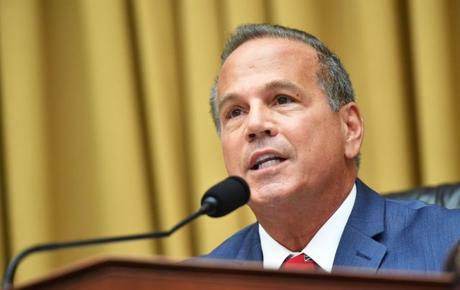
Cicilline: Isn't it an intrinsic conflict of interest for Amazon to produce and sell products on its platform that directly compete with third party vendors, particularly when you, Amazon, set the rules for the game?
Bezos: Thanks ... no, I don't believe it. We have ... the consumer is ultimately the one who makes the decisions on what to buy, at what price to buy it, from whom to buy it.
Cicilline: That's not the question, Mr. Bezos. The question is: is there an inherent conflict of interest. ... You said you can't guarantee that the policy of not sharing third-party vendor data with the same Amazon line has not been violated, you can't be sure. Can you please explain it to me? Can you list examples of when that policy was violated? Shouldn't third parties know for certain that data is not shared with their line of competitors?
Bezos: What you think is important to understand is that we have a policy against the use of individual seller data to compete with our private label products.
Cicilline: You cannot assure Ms. Jayapal that this policy is not routinely violated!
Bezos: Well, I mean, we're investigating it. I don't want to go beyond what I know right now, but we are as a result of that Wall Street Journal article, we are looking at it very carefully.
The committee's interrogation of Google's Sundar Pichai, Facebook's Mark Zuckerberg and Apple's Tim Cook was far from this level, but Amazon's portions were effective - if only to see one of the richest and most powerful people in the world tripping over his words, unable or unwilling to answer basic questions. Bezos has little experience with these hearings and has demonstrated - no doubt this was as informative for him as it was for Congress.








