


A house that cleans itself was once science fiction. Now these machines have become a reality. In fact, they are more than that. Today's robotic vacuums are more advanced than ever. They have arrays of sophisticated sensors, lasers, CPUs, even AI-enhanced software. The fact is that these robots are useful tools Keep yourself nice and tidy at home.
If you live the robot vacuum dream, you can get a healthy pile of cash back, some of which can cost up to four-digit amounts. While you don't have to spend that much, you can get a lot on a bargain. That includes Multi-space and soil mapping, self-emptying dust container, strong suction and well thought-out hardware.
Despite all this sophistication, none of these machines can really replace a mop.
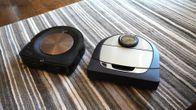
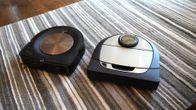
Fight against Bot Vacs: iRobot Roomba S9 Plus against Neato Botvac ...
To choose the best robotic vacuum, I spent over 120 hours (that's a lot of time) testing a group of 12 robotic vacuum cleaners on things like suction power, their ability to work on carpets and hard floors, and how well they each performed to torment every cleaning cycle. These include brand new models recently launched, flagship models, and compelling options offered by numerous online retailers. I excluded older models that are unlikely to be sold for long. I update this list regularly.
CNET Smart Home and Appliances
Get Smart Home Reviews and Ratings, Video Reviews, Buying Guides, Prices and Comparisons from CNET.
Tyler Lizenby / CNET
If someone is going to give you a blank check and tell you to buy the best robotic vacuum, this is the bot you should get. The iRobot Roomba S9 Plus costs a whopping $ 1,099. For this amazingly high sticker price, this robotic vacuum cleaner offers powerful suction and excellent dirt and dust removal.
On hardwood floors, this Roomba picked up an average of 93% of our test sand, the highest amount in our test group, but found it a little difficult to remove sand from low-pile carpets and carpets, resulting in a low average dust and sand pick-up of 28%.
Even so, while vacuuming, the Roomba robotic vacuum cleaner removed an average of 71% of the sand from our medium pile carpet. Again, this is the best result we've seen on this particular test. It also removed more dog hair, flakes, and allergens than any vacuum in this test group, and the bot navigates and maps multiple rooms and floors. iRobot has also updated its app so you can set "keep out zones" that the S9 Plus should avoid when cleaning. The app also lets you use voice commands to instantly clean a room with Alexa or Google Voice Assistant.
The robot also raced through our test room in a short average time of 25 minutes. You can also connect the S9 Plus to the Roomba app and your home WiFi. The best thing is the CleanBase docking station of the Roomba S9 Plus. The dock charges the robot's battery and automatically empties the trash can, making cleaning even easier and eliminating the need to worry about battery life. That is practical. Read our first impressions of the Roomba S9 Plus.
Tyler Lizenby / CNET
For about half the price of the Roomba S9 Plus, the $ 550 Neato D7 vacuums up dirt, dust, and grime almost as well, making it the best mid-cost robot vacuum. On average, this robotic cleaner picked up a larger amount of sand (36%) on low-pile carpets than the Roomba.
This automatic vacuum cleaner just beat the S9 Plus when it comes to cleaning wooden floors, collecting an average of 95% of the sand we put down. The vacuum cleaner was less effective in cleaning dirt, dust and sand from carpets and achieved an average cleaning intake of 47%.
While the Neato can't compete with the Roomba's abilities to remove pet hair or empty its own dust bin, the D7 navigates around furniture more efficiently and covers more ground thanks to the built-in lidar laser navigation mapping with intelligent robot vacuum. You can also control the cleaning robot with the Neato app as a remote control and link it to Amazon Alexa and Google Assistant. You can also use the app to designate areas of your home as not approved for cleaning.
Tyler Lizenby / CNET
Here's a robotic vacuum that proves you don't have to break your budget to buy a solid robotic vacuum. While the Robovac 11S Max only costs $ 16 (and was cheaper), it cleans floors effectively. This is especially true for cleaning wooden floors.
We managed to remove an average of 71% of our test sand from this type of surface. The bot did not clean carpets as well and earned sand pickup averages of 21% and 27% on low and medium piles, respectively.
And thanks to the basic navigation system of this vacuum, negotiating our test room lasted well over an hour. In terms of time, that's a lot. Nonetheless, the Eufy used its running time wisely. The vacuum covered the room well, cleaned up and left almost no stains untouched. The Eufy also charges itself, so you don't have to worry about battery life or include it in the total cleaning time. It's the best robotic vacuum for value. Continue reading.
How we test robotic vacuum cleaners
Our method of evaluating robotic vacuum cleaners is straightforward, yet arduous. We do two types of tests. The first try is to find out how well a robot covers the ground during cleaning. To this end, we have built an industry standard test room established by the International Electrotechnical Commission. The IEC is an international standardization organization that is responsible, among other things, for the administration of robot vacuum test procedures for vacuum manufacturers.
In this space there are objects that are supposed to simulate typical obstacles that a robot encounters while cleaning for navigation. These obstacles include wall edges, table and chair legs, sofas and other furniture, etc., as well as bare tile and wood floors and carpets.
We mount LED lights on top of every vacuum cleaner. The dimensions of the lights correspond to the measured nozzle width of each individual robot vacuum tested by us.
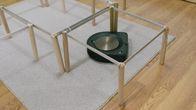
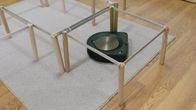
Lasers, sensors and robots, oh my god: some robotic vacuums ...
While robots move through the room while cleaning, a camera above them takes a long exposure image of the entire room in poor lighting conditions. This photo then has a trail of light created by the LEDs showing the exact areas the robot moved (and its nozzle position) during its runtime. We can also see areas of the floor that the vacuum may have missed or stuck.
You can see the navigation results of all the robotic vacuums in our test group in the gallery below.
Some robotic vacuums have a better sense of direction than others
The second type of test shows exactly how much physical dirt a vacuum can pick up from the floor. To mimic small particle size dirt, we use a mixture of play sand and landscape sand. For soils with larger particles, we use grains of uncooked black rice. Robots then walk in straight-line mode over three types of flooring (low-pile carpet, medium-pile carpet, and bare hardwood floors).
We also control the specific nozzle width of each vacuum. We designed an adjustable tool to pollute our test floors. This way we can lay down a strip with the exact bottom area to match the nozzle dimensions for each robot. The mass of the soil is also not chosen at random. We measure a proportional amount related to the soil material, the type of debris and the nozzle width of each vacuum.
We do at least three cleaning runs for each floor type. We also do cleaning tests with sand and rice separately. That's at least 18 tests per robot vacuum cleaner. We weigh the robot's dust container before and after each run. From there we can calculate the percentage of dirt pick-up for each cleaning run and the average amount of soil a machine can remove. In addition, we carry out anecdotal (visual) animal hair tests for all three types of soil for each robot.
The following table shows the performance data for fine dust cleaning for all of the robot vacuum cleaners we have tested. It should give you a pretty good idea of cleaning performance on different types of flooring. Our medium-sized rice-based particle test did not show sufficient differentiation between the individual cleaners, which means that they can all handle larger particles without any problems. For fur removal for pet owners, we have assessed anecdotally.
Percent earth removed
Neato Botvac D6 connected
Legend:
Sand from low pile
Hardwood sand
Sand of medium pile
Note:
Results reported are the average percentage of total material removed from the test surface
Do you want more robot vacuum options? Here is a list of the other robotic vacuums we tested alongside the models listed above.






