


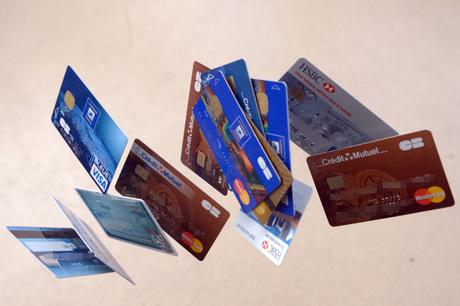
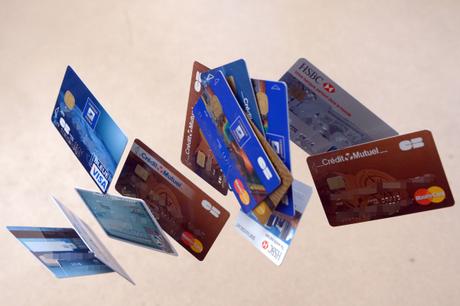
A few weeks ago, ProWellTech wrote about how Ramp, a corporate credit card startup focused on cost control, had added expense management software in addition to its corporate plastics business. Closing our piece, I wondered if "cards aren't de facto commodified at this point," given the huge number of companies that are willing to underwrite or supply corporate and consumer plastics.
One company in particular agreed with the sentiment, namely Airbase, which we last covered in March when it added $ 23.5 million to its Series A round, albeit about three times the valuation of its previous tranche. series A.
CEO Thejo Kote tells ProWellTech that the cards are software-enabling, rather than the main event itself. The CEO wants to create business spending software, not a business card business.
Air base offers corporate cards and a SaaS suite of financial tools to support corporate accounting departments and employees. Though the startup collects revenue from the interchange - card providers get a small chunk of transactions that happen on the cards they distribute - most of its revenue comes from its recurring revenue from the software, he told ProWellTech.
It's a reasonable prospect, as with the growing popularity of virtual cards, "credit cards" are likely to become more digital shopping points than the physical goods you carry with you in a short time. At that point, what will differentiate one digital plastic set from another? Perhaps the software that surrounds it.
Cards as a gateway to software are actually an accurate business model, as Airbase can make money with both products. Much like some SaaS companies are adding in-home payment support to add another revenue stream, interchange income is secondary income for Airbase, which Kote considers a B2B SaaS business first.
That doesn't mean Airbase isn't seeing its spending-related revenue grow. According to Kote, Airbase users spent 500% more in Q2 2020 than Q2 2019, for example. But, at the same time, in the four quarters ending July 31, 2020, Airbase has seen its annual recurring revenue (ARR) expand by 280%, even as the company counts the trade in that figure that some may find an inclusion. controversial. The startup also claimed a net retention rate of 126% in the "first two quarters of 2020". (Ramp has also seen rising spending results, as has Finix, to provide another benchmark.)
So things are looking good for Airbase, at least in terms of growth.
Airbase plans to continue building its software stack to incorporate (support?) More and more a company's spending into its product. A more central spending and control suite could save some companies time, perhaps making accounting easier and faster. And, of course, it would also make Airbase more clingy within its customers, and therefore less likely to see a SaaS abandonment or interchange.
Fintech at one point meant accessing your online bank account information. So it meant doing more banking online than in person. Then came waves of online spending services and investment tools. We've recently seen banking and investments digitally redone, with commissions falling and accessibility increasing, at least in theory.
So perhaps unsurprising that corporate cards are about to be reinvented, with players like Ramp, Brex, Airbase and others try to understand what the future of business spending will look like and how best to get as much of the market as possible. Let's see who wins.






