


One of my favorite hobbies is coming to an end, and it's Apple's fault.
In 2016, I was frustrated that Apple hadn't updated its Mac Mini, iMac or Mac Pro Computer in at least a year. The company has been pumping out new iPhones, iPads, AirPods, and MacBooks on a regular basis, and I've had at least one of each. But desktop Macs didn't get the same amount of attention.
Everything Apple
CNET's Apple Report newsletter provides news, reviews, and advice about iPhones, iPads, Macs, and software.
I wanted an inexpensive, multi-purpose machine that I could rely on to work and play for years to come. But if I cut the $ 499 starting price Apple wanted for its Mac mini computers at the time, I'd pay the full amount for a machine whose innards were more than two years old. Not OK.
So, I decided to do one of the neriest things a technical Apple user can do: me built a pc.
I bought all of the parts I needed including a storage drive, system storage, and a graphics card. Next, I put them together in a more general looking case. Then I got Apple's macOS software to power them.
The project cost about $ 800, lots of nights blinking at computer code and a few frustrated bangs on my keyboard, but eventually I got there.
I had turned my DIY computer into a Hackintosh.
This is not supported by Apple and may violate the license terms for macOS software. (Apple declined to comment on this article.) However, the end result was that I had a desktop Mac computer on my terms. I was in control of Apple.
I also felt like a winner. During the day, I would switch between my MacBook Air and Hackintosh for work, using the special Mac software I could rely on to keep track of my to-do lists, manage my calendars, and find clever GIFs to idle.
At night, I switched the Hackintosh to Microsoft Windows, which powers more than 73% of the world's computers. This is one of the few ways to play reputable virtual reality Games like Valve's science fiction shooter Half-Life: Alyx, which CNET sister site GameSpot has just named Game of the Year 2020.
And if a component like the graphics card is not enough, I can upgrade the machine with little effort. Nerd paradise.
Unfortunately, that all changed that summer when Apple CEO Tim Cook stepped onto his company's virtual livestream stage and said it Macs changed forever. Their microprocessing brains, formerly made by chip maker Intel, have instead been replaced with Apple's bespoke M1 chips. Apple said it is because the technology behind its iPhones and iPads is better suited to Mac computers than the Intel processors that Apple has been using to power Macs since 2006.
"Progress on this scale comes only from bold changes," Cook said, as Announcement of the first M1 devices from Apple, which will go on sale in November.
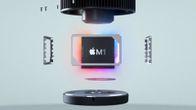
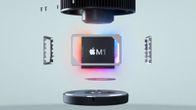
Those first M1 Macs were the MacBook Air, a 13-inch MacBook Pro, and a Mac Mini, and each of them received high marks from reviewers. CNET reviewer Dan Ackerman says they do a lot better than their predecessors and even outperform Intel-based Macs released in early 2020.
Unfortunately, for me and many other Hackintoshers, you can't buy Apple's M1 chips on your own. That said, I can't put it in my computer and get Apple's macOS software to run on it.
Apple said Intel's transition would take about two years. A few years later, the company is expected to stop updating software for Intel Macs.
At this point, my Hackintosh dream is officially over.
Apple is known for how much control it has over its devices. You can't download apps for the iPhone or iPad unless you go to the Apple App Store, where the company reviews each program before making it available for download.
It's no surprise Apple is getting even tighter under control of its computers. But I'm still sad to see hackintos go.
So I decided to build one last hurray. The shiniest fake apple I could muster.
A hobby and a workhorse
In the last few years it has become a lot easier to put together a Hackintosh. This is mainly due to better hacking tools and active communities with people who are happy to help. Some of them even write step-by-step guides with lists of what parts to buy, how to configure them, and what to do if they don't work.
One of the people I can count on for input is Mykola Grymalyuk, a 20 year old student studying computer science in Canada (what else?). He had come to Hackintoshing through his stepfather, who had his own. At some point, Grymalyuk recovered from a medical episode that took a lot of time.
"I was constantly in a hospital bed, I couldn't really walk a lot, I couldn't really do a lot and I felt kind of worthless," said Grymalyuk. "But the Hackintosh community gave me something to do."
Realizing that there wasn't a lot of up-to-date or comprehensive guides that could help people build the Hackintosh, he decided to write some of his own. First, he made a list of graphics cards that worked best with Apple's software. Then he wrote about how you can optimize parts of your computer so that everything works better. What has been most helpful to me is that he created detailed guides to help you understand the apps and processes you need to follow to set up a Hackintosh for the first time.
"It just twisted from there," he said.
Earlier this year he summarized his work on a website he co-founded called Dortania. It's named for a flower so dark that he hoped the website could easily shoot for the top link on Google (it did). The site has no ads and it doesn't ask for money. He encourages people to donate to Crohn's and Colitis Canada.
As much as Grymalyuk enjoys reading his Hackintosh manuals, he knows that Apple's M1 chips mean everything will end in about five years. Until then, he expects all Macs and Mac apps to be switched to Apple's chips. From this point onwards, Apple will likely begin phasing out software updates for Intel-based computers, as they are no longer being sold anyway.
An avowed fan of Apple products, Grymalyuk said he recently started helping people run older Mac software on new computers and helping others run new Apple software on older Mac computers.
His dream is to channel all of this knowledge into writing documentation for other technical products. He wants to help people understand the details that make their computers tick, regardless of whether they were made by Apple or not.
"I want to teach and not just get to the bottom line," he said. "I want people to service their machines. When you know what breaks, how it breaks and what needs to be fixed, you feel like, 'Wow, I can maintain this machine all by myself. I don't need any outside help . '"
My last hackintosh
I was inspired to build my latest Hackintosh because of the M1 Macs. I decided to build a machine with the latest in microprocessing brains and more than double the storage space as the 1 Terabytes I use today. I also selected an AMD graphics card similar to the latest Mac Pro computers to make sure it would work more easily on macOS. I wanted to make sure that this machine would meet my needs for at least the next few years.
When I get stuck, I'll be grateful that I have the community of Hackintoshers helping me fix the bugs I run into. Sites like Grymalyuks Dortania, Reddits Hackintosh Community, and tonymacx86 are still popular. This also applies to YouTube channels such as Snazzy Labs, where Hackintoshs are discussed from time to time. Some of these communities even saw strong interest when Apple released its first M1 computers in November - also because people are curious to see how Hackintoshers prepare for when MacOS no longer works on Intel chips.
"There is still a thriving global community of active hackers," said Tonymacx86. The person behind the username and website prefers to remain anonymous to avoid overzealous fans and critics alike.
According to Tonymacx86, after Apple completely cut off Hackintoshes, the websites and guides will likely be redesigned in tribute to more than a decade of remodeling these Frankenstein-like machines. They also likely become support communities for people who get stuck with their computers after they get software updates from Apple.
I'll probably be done with hackintoshing by then. I know that one day I will no longer be able to run the machine I just built smoothly on macOS. When that time comes I'll either have to rely more heavily on my Mac laptops or buy a new desktop from Apple.
Hopefully by then Apple's computers won't be as disappointingly outdated as they were at the beginning.






