


The very fact this is not an either/or issue, gets the alarm bells ringing this may not be the most informed analysis.
Alex, like a lot of free-market evangelists, is deeply confused about what gives land its value. Like fellow economist Kristian Niemietz, he seems to be saying that if we had no planning restrictions, land values would be zero, or close to it (strangely though, this economic rule doesn't apply to Chelsea and Westminster).
In a functioning land and development market, house prices will be close to the cost of construction, and land value will not vary by use. Except for a handful of cases (e.g. prime central London) land will roughly be the same value across different parts of the country and for different uses. A field of land for agricultural use outside London will have the same value as a site with industrial planning permission outside Newcastle. If the market is dysfunctional or is unable to function properly, large and volatile price differences will emerge."
Phew! It appears Alex can think of no good reason why an acre of land (prime central London excepted) in one location might be more valuable than in another. Outer London, Outer Mongolia, can you spot the difference?

But hold on. A few pages further on, explaining the principles of LVT he writes:
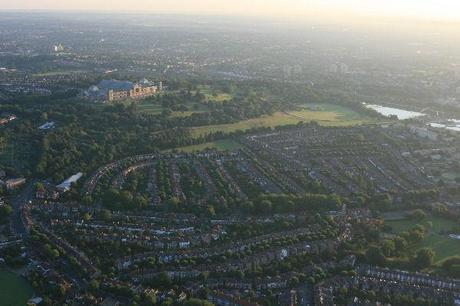
"Land values arise from the advantageousness of location. If two identical semi detached houses are built in the same area, but one is next to a park while the other is not, the one by the park will have a higher selling and renting prices. The difference results from its higher land value, in turn caused by the proximity to a particular amenity, in this case the park."
Now imagine that difference was somewhere that paid higher wages, had more opportunities, offered a greater diversity of leisure and shopping facilities. If you are in business do you want access to huge rich market, or a poor small one? Who wants to be at the margins? Some do, but most want to be where the action is. And they are prepared to pay for it. Difference in location value? How much can you afford to pay for it?






