This is mainly about the episode Make It Stop, but there will be mention of events after and before as well, covering the entirety of Andor.
Lonni Jung: And what do you sacrifice?
Luthen Rael: Calm. Kindness. Kinship. Love. I’ve given up all chance at inner peace. I’ve made my mind a sunless space. I share my dreams with ghosts. I wake up every day to an equation I wrote fifteen years ago from which there’s only one conclusion: I’m damned for what I do. My anger, my ego, my unwillingness to yield, my eagerness to fight, they’ve set me on a path from which there is no escape. I yearned to be a savior against injustice without contemplating the cost and by the time I looked down there was no longer any ground beneath my feet. What is my sacrifice? I’m condemned to use the tools of my enemy to defeat them. I burn my decency for someone else’s future. I burn my life to make a sunrise that I know I’ll never see. And the ego that started this fight will never have a mirror or an audience or the light of gratitude. So what do I sacrifice? Everything! You’ll stay with me, Lonni. I need all the heroes I can get.
Season 1, Episode 10: One Way Out
Kleya: When do we start fighting back?
Luthen: We have.
Kleya: By walking away?
Luthen: We fight to win. That means we lose and lose and lose and lose. Until we’re ready. All you know now is how much you hate. You bank that, you hide that. You keep it alive until you know what to do with it. And when I tell you to move, you move.
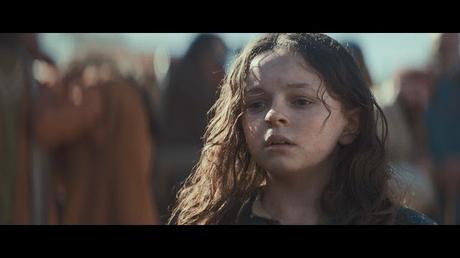
I’ve been trying to find my way into writing about this episode, Make It Stop, the second season’s tenth and what I think may be this year’s best single episode of television. I keep returning to Kleya’s (young Kleya played incredibly by April V Woods) witnessing of an imperial execution, when she defies Luthen’s (Stellan Skarsgård) command to walk away and instead stands there, watches the stormtroopers aim their weapons and shoot a group of civilians that includes a boy who can’t be much older than she is. They do it in retaliation for an assassination of one of their own, but it is clear that this is no longer about finding the actual perpetrator but to instil fear and terror in the civilian populace. The people around her turn away when the shots ring out, horrified. They cover their faces. Kleya keeps her eyes trained on what happens, and her face betrays what it costs her to keep on looking. She has already witnessed so much horrifying violence – the destruction of her own people in a massacre – but it still affects her deeply. She isn’t looking to become untouched or dead to the effects of imperial violence, but to train her gaze, to bear witness. She is collecting these moments like firewood, banking them for later use. When she walks away from the scene with Luthen, she expresses her frustration that they have not yet begun fighting back, and he explains to her that bearing witness is part of it: stoking the hatred, holding on to these feelings to make use of them later.
Later, and time seems to pass mainly by how Luthen and Kleya manage to carve out an increasingly more powerful position for themselves, accruing capital by trading in antiques, wearing better clothing, blending in perfectly in different places, they run their first mission together. They are having dessert in a Naboo café, overlooking a bridge with Imperial tanks and troops on it. Luthen is hesitant, double- and triple-checks that Kleya wants to go through with it. She mocks him for being sad and afraid, and he responds that he is “only afraid of what I’m doing to you”. Luthen reminds her to look around at the beautiful city, the people having their fancy drinks and food in peace: “life shows us what we stand to lose.” The only way this episode, and this relationship, works is if it is clear that Kleya is the one making the decisions. Luthen is providing resources and tools, he is giving her expertise, he is sharpening her like a knife, but Kleya is the one with the drive and conviction to aim their efforts at the Empire. He pushes the detonator for the bombs they have played toward her, but in the end, he is the one pushing the button: perhaps concerned with the cost to her, still, protecting her from the direct responsibility for what is happening. He tells her not to look before the bombs go off, to retain their cover. She looks after as it goes up in flames, and it’s already clear that there will always be an additional cost to innocent bystanders, collateral damage, to what they are doing. It’s the point of no return for them; they’ve made their choice. They’re set on their path, and it leads directly to the present.
Luthen and Kleya. We’ve spent two seasons with them without knowing who precisely they are to one another. Kleya (Elizabeth Dulau) has maybe fifteen minutes of screentime in the first season of the show, which when viewed together reveal the great deception at the heart of their relationship: when customers enter their store, or when they manage their assets, there is the misconception that Kleya is his assistant, seamlessly slipping into her customer service persona, standing in the background, cleaning some coins or distracting nosy drivers while Luthen deals with the big stuff. But in private, every moment between them makes clear that this is a deliberate ruse: Kleya is the one who makes the decisions, who calms Luthen when he spins out of control, who is placing all of their listening devices, who has ears everywhere. They are at the very least equal partners. When Vel questions what Kleya has done lately for Luthen, she responds that she doesn’t have lately, she has always: she has “a constant blur of plates spinning and knives on the floor, and needy, panicked faces at the window, of which you are but one of many.”
The deception is so successful that even after this episode, when Kleya arrives in Yavin, rescued by Cassian, Mon Mothma, the senator who has spent a considerable amount of time around them, isn’t sure if they are father and daughter or not. The truth is only revealed at the end of everything, when their cover is burned, when Luthen has sacrificed everything for the most vital piece of information for the future of the rebellion.
The episode begins with Lonni sounding the Big Bell, a signal that means not only the end of his covert operation in the belly of the ISB, but the end of Luthen’s ability to put on his rings and his wigs and face the upper echelons of Coruscant with his smile. Lonni has heard from a colleague in the ISB’s tactical unit that Dedra Meero is coming for Luthen, and beyond that, he has finally used her access codes to read all the secret files she has collated behind everyone’s back, collected and hoarded because she could never let go of her obsession with Axis. Later, Krennic calls her a scavenger: someone who has single-mindedly ignored operational security because ever since she got her hands on that Imperial Starpath Unit, she has been unable to let go. From those files, Lonni has put together that the Empire’s energy project is a lie, that they have been building a superweapon. It’s information so vital that it justifies burning Luthen’s operation – the Death Star looms above everything. Lonni becomes the final ghost on Luthen’s conscience, because there is no way to extract him safely – even getting off-planet himself with Kleya will be next to impossible, but has now become the most vital thing he’s ever had to do, because it’s the only way to get the information to the Rebel Alliance on Yavin. I think that when he makes the choice to do the burn himself – to go back to their shop to destroy the communications equipment – he already knows he is doomed, and he is making the decision to save Kleya. Kleya’s grief begins when she realises what he is planning to do. He asks her to wait for him in the safe house but it’s the last time they will talk to each other.
In the end, it’s Dedra Meero’s hubris that enables him to escape in his own way. She can’t help but gloat, waste time on parading her success and giving a great speech. She has dreamt of this moment too long to let it pass unremarked, giving Luthen time to attempt suicide. She is already too late: the rebellion is no longer concentrated in this one man, it has spread everywhere, it is on Yavin, resourced by all of their hard work. “There’s a whole galaxy out there waiting to disgust you”.
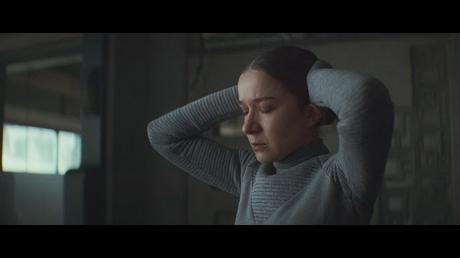
Kleya watches from a distance as Luthen is wheeled away, and she knows precisely what she must do: the threat of Imperial torture, after we have seen how effective it is at extracting information even from the strongest victims, means that she has to kill Luthen. Not only does she have to execute this task with the limited resources available (one explosive charge, one gun), but she has to survive it to ensure that the vital information gets to the Rebels. It’s an astonishingly difficult task, both emotionally and strategically. It’s meaningful that the scenes from the past aren’t exactly flashbacks, but Kleya’s memories triggered by what she now has to do: the first time we see Luthen as a younger man is through the grate of Kleya’s hiding place on his ship, like she is replaying their shared history together to brace herself and mourn his loss at the same time.
Apparently, Tony Gilroy took a while to come to a decision about Luthen’s backstory: if it was going to be a tale about revenge, or something else. In his monolog to Lonni, he talked about the cost of what he was doing, burning his humanity to the ground, using the oppressor’s tools against the Empire, creating ghosts on the way with every asset he sacrificed. The first memory of Kleya’s that we witness shows where it started. Luthen not yet Luthen, Sergeant Lear, in the middle of an Imperial massacre against a civilian population, horrified by what he has made himself complicit in, asking for it to stop without the ability to do anything about it. He has fled the scene of the massacre and is witnessing it from his ship, drinking. He has turned the radio off but the horrors still come through. He is trying to look away, but he can’t. In this first scene, Luthen is guilty, maybe irredeemably. It adds another layer to the relationship with Kleya because regardless of whether he saved her, regardless of how close they have grown and how they are now each other’s everything, because at the beginning of everything, Kleya must have hated him for what he did. The love must have grown around that hatred, but I think about Kleya in that safehouse planning what she has to do remembering these first moments, accessing that hate, reminding herself of it to gather the strength for what is necessary.
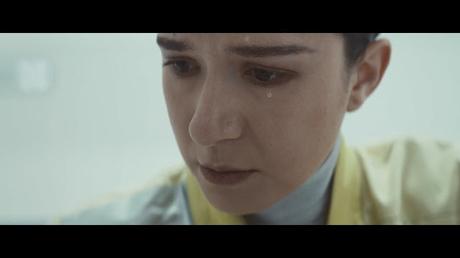
We’ve seen Kleya in all of her competence, precision and rigour, skilfulness before. She wears her clothes and her lipstick like armor. She is commanding: think of Lonni, attempting to escape when she uses him as a shield to remove the microphone from Sculdun’s gallery, but unable to defy her commands. She’s unsentimental, and frustrated when her assets become distracted or don’t follow operational security: this is why her relationship with Vel is so combative, because she considers Vel’s love for Cinta a distraction, her unwillingness to follow protocol dangerous. Make It Stop is the first time that we really see Kleya as an operative in action, and she glorious to behold, so effective that when the ISB investigates what she has done, their initial assumption is that they are dealing with a team of three. She is stripped of her armor in the hospital scenes: instead of her blue, she wears nurse’s scrubs, and yet she executes every single step with precision and without hesitation, setting off the explosive charge to distract the security forces, shooting whoever remains in her way, finally arriving in Luthen’s hospital room. She disconnects the machine that is keeping him alive, she cries and kisses him on the forehead, and then she leaves, because there is a second part to her mission that she has to remain alive for. It’s stunning, from beginning to end, maybe the most perfectly executed heist the show has done, and she does it by herself.
Going forwards and beyond the episode, Kleya won’t be putting the old assistant outfit on again. I think she would have always thought exactly the same as Luthen, that she was making a sunrise she wouldn’t get to see. She calls Yavin because she has to deliver the message but when Cassian arrives, she doesn’t plan on going with him, like she has made peace with the idea that this is the end of the road for her. He is the one who insists on saving her, unwilling to leave her behind (a beautiful irony, since she once had a hit out on him because he could identify Luthen). In every successive scene, she is stripped down, beaten, her hair in disarray, her clothes bearing the marks of battle and blood. She arrives in Yavin stunned (literally, after a concussion, and figuratively), incapable of reckoning with the idea that her path continues. Yavin exists because of her and Luthen’s work, but it has moved beyond them in its state-building, its uniformed forces learning to be an army, in its respectable former Senators all too willing to disown the work that Luthen has done to be able to distance themselves from his unpalatable methods. Kleya doesn’t get a hero’s welcome, she is regarded with suspicion, but there is such beauty and grace in Vel being the one to gently steer her into the idea that this is a home she has helped build, that she has friends everywhere (the code phrase becoming an actual reality with emotional stakes). Vel has every reason to hold a grudge: Luthen and Kleya deliberately kept her apart from Cinta, Luthen’s decision to support the undercooked and hapless rebellion on Ghorman against Cassian’s advice got Cinta killed in the most pointless way. Instead, she takes Kleya in from the rain. They all have so much more grief in front of them and so much more fight to survive, but what does it mean to come to end of the road and see the path continuing beyond what you thought was possible?
Random notes:
I just want to put Nemik’s manifesto in here as well because it echoes so beautifully through the entirety of the show, from when he encounters Cassian and realises that he is his ideal audience: a man who has lost so much but has not yet put the pieces together, to the end when it reverberates through the bravery of Cassian flying off to Kafrene to eventually go on a mission he won’t return from, without which this rebellion would be utterly doomed.
There will be times when the struggle seems impossible. I know this already. Alone, unsure, dwarfed by the scale of the enemy. Remember this. Freedom is a pure idea. It occurs spontaneously and without instruction. Random acts of insurrection are occurring constantly throughout the galaxy. There are whole armies, battalions that have no idea that they've already enlisted in the cause. Remember that the frontier of the Rebellion is everywhere. And even the smallest act of insurrection pushes our lines forward. And then remember this. The Imperial need for control is so desperate because it is so unnatural. Tyranny requires constant effort. It breaks, it leaks. Authority is brittle. Oppression is the mask of fear. Remember that. And know this, the day will come when all these skirmishes and battles, these moments of defiance will have flooded the banks of the Empire's authority and then there will be one too many. One single thing will break the siege. Remember this. Try.
Karis Nemik: The Trail of Political Consciousness
I think about Kleya and Luthen dealing in antiquities: the practical reality that it allows them to travel far and wide and make connections and trade, but also the symbolic idea of all these artefacts of other cultures, all these stories that belong to someone, being amassed in the Empire’s center to be traded to the rich and powerful for status. I wonder if the disgust they must have both felt was deliberate, another source to feed them. I hope that every single item was a fake.
There are so many mirrors on this show, parallels: Cassian and Kleya and Cinta all have similar backstories of losing their homes to the Empire, losing their loved ones, while other characters come into the rebellion after they experience different kinds of loss and oppression and horror. I think a lot about Vel, who comes from privilege but must have been (the show never says so explicitly) very at odds with conservative Chandrilan society. Also, there’s the divide between characters who are fighting the rebellion to work towards a future where they can be free – tragically, Cassian is trying to create the safety that will allow him to reunite with Bix, I think Vel has an image of the future that includes Cinta in it and is thrown off the rails when Cinta dies – and characters who are fighting against Empire without much of a plan or an idea of what comes after, or any hope that they will be part of it, like Luthen and Kleya. It creates an ideological rift, because in accepting the idea of their own sacrifice, they are so willing to sacrifice anyone else as well, and I think that something essential gets lost with this ruthlessness. It’s necessary, it’s useful, it helps build Yavin, but what makes the Rebel Alliance work and ultimately successful is mutual care and community, which are in contrast to the way that ruthless striving, siloes, petty jealousies and competition hinder the ISB from working effectively.