


Bouquets of brightly colored flowers and prayer candles sit at the door of a small window guard in downtown Oakland, California. A ribbon with an American flag motif waves from the door handle. Two bullet holes mark the windows of the stand.
It was there that Dave Patrick Underwood, 53, was shot dead around 9:45 p.m. May 29 while working as a contract security officer for the Department of Homeland Security, according to the FBI.
For more like that
Subscribe to the CNET Now newsletter for our editors' selections for the most important stories of the day.
The shooting, which also seriously injured another contract security officer of the DHS, took place a few blocks from where thousands of protesters gathered to mark the murder of George Floyd. The 46-year-old unarmed black man died after a white police officer pinned his knee to the neck for almost 9 minutes. The officer was dismissed and was charged with murder. Like Floyd, Underwood was African American.
The first reports of the Underwood shooting linked the incident to the protests. As is often the case, the guesswork on Twitter and other social media sites has leaked the changing facts on the ground. As of the night of May 29, the Oakland Police Department sent an alert to journalists saying that the shooting did not appear to be linked to the protests that night. And the FBI never linked the two in its press statements. He confirmed to CNET in early June that Underwood died in a car shootout, but declined to comment further at the time as his investigation was underway.
The FBI announced on Tuesday that it would charge a 32-year-old Air Force sergeant named Steven Carrillo and his accomplice Robert Justice in the fatal shooting. The officers linked Carrillo to the right-wing Boogaloo movement, which distrusted the police and anticipated a second American civil war, called "boogaloo".
Officials on Tuesday reiterated that the shooting had nothing to do with the protesters. "We believe Carrillo and Justice chose this date because of the planned demonstration in Oakland," Jack Bennett, the FBI special agent in charge, told reporters on Tuesday. "This allowed them to target several members of the security forces and to avoid apprehensions because of the large crowd who attended the demonstrations."
Carrillo was also charged last week in the June 6 murder of Santa Cruz County Sheriff Sergeant Damon Gutzwiller.
For Twitter, the initial FBI report - not to mention the actual arrests - seemed to be too late. Hashtags like #PatrickUnderwood and #JusticeForPatrickUnderwood had already started heading, backed by accounts that claimed that Underwood had been "murdered" by protesters and "rioters". The association with the Oakland protesters, which later proved to be false, had already spread - to the White House.
Misinformation on social media is nothing new. Russian agents tried to influence the 2016 U.S. presidential election with tweets and Facebook posts. The chatter board chatter on "Pizzagate", a conspiracy theory that falsely accused Hillary Clinton and others of having exploited a child sexual network in a restaurant, led to gunfire in Washington, DC. Hoaxes, often disguised as legitimate information, spread very quickly, thanks to social networks like Facebook and Twitter, as well as 4chan, 8kun and other anonymous message boards.
But the inability of social media to contain the explosion of disinformation takes on a new urgency as peaceful protesters combat the perception that all of the protests have turned into looting and violence. The role of Twitter in disseminating information in real time without any control makes it particularly vulnerable to manipulation. In the past few weeks, as well as tweets about protesters responsible for Underwood's death, other false theories have circulated, including an Internet power outage in Washington and the far-left militant group antifa sending protesters to cause unrest in cities across the United States. And once something hits Facebook, with more than 2.6 billion monthly active users, it's hard to balance.
"It is very important that these two platforms succeed, not just one or the other," said Jennifer Grygiel, assistant professor of communications at Syracuse University. "We need both."
In a speech on June 1, President Donald Trump said that the nation "had been taken by professional anarchists, violent crowds, arsonists, looters, criminals, rioters, antifas and others", painting a dark picture of the most peaceful demonstrations that have multiplied. over 140 cities across the country. Trump mentioned Underwood.
"A federal officer in California, an African-American hero of the crackdown, was shot and killed," he said. "These are not acts of peaceful protest. They are acts of domestic terror."
Even though disinformation has flourished on social media, allowing protesters to craft their own narrative of the protests, the platforms continue to serve another purpose. Organizers have also relied on websites - especially Twitter - to coordinate the protests and share important updates on the ground. Journalists use it to report developments and citizens follow to find out what's going on in their cities. But some people took advantage of the widespread use of social media to confuse the protesters.
Twitter says it is trying to fix this problem.
"We are taking proactive steps in any coordinated attempt to disrupt public conversation around this issue," said a Twitter spokesperson. "For example, we are actively investigating the hashtag #dcblackout and during this process we have already suspended hundreds of spam accounts that have tweeted using the hashtag."
The spokesperson also said that Twitter "could" prevent certain content - such as race-based hate speech - from trending.
"There is such an erosion of trust that we have really decimated this platform which is super precious for the organization."
Maddy Webb, investigative researcher, First Draft
Facebook, for its part, said in a statement that its teams "have been trying to find and suppress infringement activities since the protests began. We use automated detection systems, fact checking, reduction of distribution of content and removal of content that violates our policies. "
Facebook pays an army of fact checkers to check for potentially problematic posts, but Twitter doesn't have that kind of workforce. It tends to rely on machines, although humans do intervene in big decisions. And while it sometimes slaps a warning label on a tweet, as he recently did for several Trump posts, a lot of the wrong information is simply flowing across the site without being touched.
"It doesn't matter who or where it comes from," said Maddy Webb, research investigator at First Draft, an organization that tracks and fights online disinformation. "There is such an erosion of trust that we have really decimated this platform which is super precious for the organization."
Spread of disinformation
Early in the morning of June 1, the hashtag #dcblackout started circulating on Twitter. He referred to a false story that no social network would be accessible in the city due to the civil unrest. As the hashtag spread, the claims behind it got wilder - that phones and other means of communication were blocked, and police replaced rubber bullets with powdered bullets.
In the afternoon, the hashtag had nearly a million mentions, according to NPR.
Netblocks, a group that tracks internet disruptions and shutdowns, has been tracking the tweets on #dcblackout and monitoring network traffic in real time. He never saw instability in the connections, indicating that the rumor was not true.
"Fact check," NetBlocks tweeted June 1. "Washington, D.C. did not have a citywide power outage."
In a rapidly changing and ever-changing environment, such as the protests around Floyd's death, false information can overwhelm Twitter. On May 31 alone, Black Lives Matter, Floyd and the protests against his death were mentioned 21.2 million times in all forms of media, including Twitter, according to Zignal Labs. From May 25 to June 2, there were more than 101 million mentions, the media intelligence company said. Some of this information has been militarized to match people's political agendas.
A widely held hoax is that the antifa is behind the country's most violent protests and that it has led protesters to predominantly white areas of cities to loot homes and businesses.
Kathleen Carley, professor of computer science at Carnegie Mellon University, said a study of the tweets around the protests shows that essentially no human has used the hashtag antifa. Instead, it's largely bots, according to data crossed by Carley and his team from May 25 to 31. She estimates that 30% to 49% of the users who post on the protests are probably machines, not humans. This does not mean that everyone publishes inaccurate information, but it does help to confuse, she said. (Twitter didn't say how many bots are involved in recent tweets, but some social media experts have challenged the counts.)
"Misinformation is really difficult to discern."
Kathleen Carley, Professor, Carnegie Mellon University
Stopping all bots is not the solution, she said. Many disseminate useful information, such as seismic alerts.
"Misinformation is sometimes difficult to discern," said Carley. "Based on hashtags, [bots are] more [often] make protests a political issue on things other than Black Lives Matter or other than George Floyd. "
Although Trump does not use antifa hashtags, he tweeted about the activists, calling them a terrorist organization and blaming them for the country's protests. Over a week, people posted similar sentiments on Facebook more than 6,000 times, according to the New York Times. And these publications have recorded more than 1.3 million likes and shares, according to the newspaper on June 1.
Widespread control and chaos on social media makes Twitter and Facebook react.
Social media response
On May 26, Twitter did something never before seen on its site: tag two tweets from President Trump, warning that they contained "potentially misleading information about the voting process". A few days later, Twitter also hid an overnight tweet from Trump behind a label, claiming he was violating company policies on "glorifying violence."
"When the looting begins, the shooting begins," Trump tweeted, using a phrase from a Miami police chief in the 1960s that is widely regarded as a violent threat against the protesters.
Facebook, meanwhile, has taken a more hands-free approach. The social media giant, who earns a lot of money from political ads (something Twitter bans on its site), left a similar post from Trump. In response, Facebook workers staged rare protest, and several said they would stop working for the company. Online therapy company Talkspace has also ended its partnership talks with Facebook because the startup "will not support a platform that incites violence, racism and lies", in the words of its founder Oren Frank .
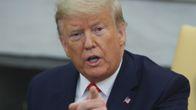
Trump retaliated. On May 29, he signed an executive decree calling for a reinterpretation of section 230 of the Communications Decency Act of 1996. The law, which guarantees freedom of expression on technological platforms, designates online companies such as Facebook and Twitter as "distributors" rather than "publishers" of content. This prevents them from being prosecuted for each negative review or comment posted on their sites. Many experts say that Trump's order is largely symbolic and unenforceable.
"When Section 230 was designed, no one thought of moderating the President of the United States," said Grygiel of Syracuse. "They're still struggling with this."
Typically, fact-checkers call on social media to take some action to combat misinformation. They suggest moderating content, as well as getting rid of retweet and share buttons, which would make it more difficult to quickly disseminate false information.
In the case of protests, these strategies are unlikely to work, says Webb of First Draft. While retweeting and sharing information can quickly spread false information, these tools are also essential for coordinating protesters. And there is too much information flowing during the protests for social media sites to moderate it without interfering with freedom of expression and potentially labeling accurate information as false. Establishing fair removal policies could be tricky, she said.
"We know that these types of policies target people who already do not have much opportunity to speak," said Webb.
If Twitter and Facebook can't control themselves, it may be up to their users to be more careful about the information they share and believe. That means doing things like reverse image searches and waiting before immediately retweeting something, she added. And ultimately, companies may face more government regulations.
While Twitter attempts to distinguish between allowing freedom of expression and combating disinformation, the name Underwood was still used to spread a false story. Meanwhile, friends and family try to remember the man who died on May 29.
The week after Underwood's death, the federal building where he worked was still taped. On the makeshift memorial at the guardhouse where he died, there was a piece of paper with his photo and a link to a GoFundMe site for donations for his family. Underwood's sister and cousin did not respond to requests for comment.
"Two of our federal contract agents were ambushed in an act of violent cowardice," wrote Jennifer Tong, the supervisor of Underwood and her colleague, at the fundraising site. "I worked side by side with the two men and I cannot describe the pain that their brothers in arms feel."
Alfred Ng, Andrew Morse and Queenie Wong of CNET contributed to this report. Two weeks after the story was published, the FBI arrested the case and charges were laid. The story has been updated to reflect this new information.





