
Adichie
Ifemelu didn’t know she was black – until, as a teenager, she came to America from Nigeria. She’s the focus of Nigerian/American Chimamanda Ngozi Adichie’s 2013 novel, Americanah. It’s garnered great reviews as penetrating social commentary about both countries.
Many novels are non-chronological, often starting with a dramatic scene and then going to the backstory. I get that. But Americanah cut back and forth so much that I had trouble keeping things straight.
Ifemelu’s teenaged Nigerian boyfriend was Obinze. It was no casual attachment, but portrayed as obviously quite deep. Yet soon after arriving in America, she stops reading or answering his e-mails and letters, cuts him off without a word. Why? No reason I could see. Near the end she gives a reason; but (to me) a lame one.




Ifemelu’s next live-in boyfriend is Blaine, a black Yale professor, another Prince Charming. So maybe it’s not an epic passion, but c’mon, a lot of folks would kill for such a nice mellow relationship. Yet after several years (and 13 in America) Ifemelu decides to chuck it all – Blaine, blog, Princeton – to return to Nigeria. Why? Beats me.
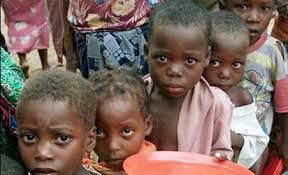

(Also unmentioned is Boko Haram, now in control of a large territory – showing that Nigeria’s government and army exist only for predation, and are useless to help or protect the populace. Yet, doing end-runs around their useless government, Nigeria’s creative and enterprising people are bubbling with entrepreneurship.)
Once back there, Ifemelu starts a new blog, about Nigeria (or at least that thin crust) – again a roaring success. She has an old friend, Ranyi, in fact a very good loyal friend who helps Ifemelu a lot. Ranyi is the kept woman of a married “big man,” a common Nigerian situation, which Ifemelu scathingly blogs about, the portrayal of Ranyi being unmistakeable. Ranyi complains. Ifemelu blows her off, saying she really had in mind her own Aunty Uju, whose being a general’s mistress “destroyed” her life.
Say what?
Destroyed? Aunty Uju, when her general suddenly croaked, got out of Nigeria with enough to reach America and became a doctor. And brought up the general’s child as her well beloved son.
I found Ifemelu unlikeable. If that was the author’s intent, she succeeded, but somehow I doubt it was. This novel had a very autobiographical feel.
Ifemelu finally contacts him before her return to Nigeria. And then, once there, fails to follow up. Would someone please smack this woman upside the head? But maybe it’s just my biased perspective. I worked so hard to get a good partner, and value her so much, that Ifemelu’s insouciance rankles.