


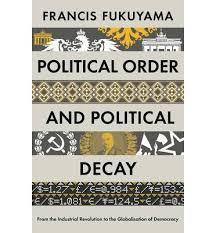
 A favorite book of mine is Francis Fukuyama’s The End of History (1992). He argued that centuries of ideological conflict had essentially ended with the triumph of liberal democracy and free markets — because they fulfill deeply felt needs for self-realization and dignity. A beautiful story.
Our political divide is between government lovers and haters – big government “progressives” versus small government conservatives. Yet the size and scope of government is not the whole story; quality matters. Big government wouldn’t be so bad if it were good government.

Why? Ironically, a big factor is the distrust of government built into America’s DNA, which actually makes it hard for government to function well (thus fueling more distrust). Born of revolt against an imperious king, we created a cat’s cradle of checks and balances. That was fine as long as government didn’t do very much. But as its remits proliferated in the modern era, so have the societal interests wanting a say and making demands. The result is what Fukuyama calls a “vetocracy” – a system with so many points where one force can block others that meaningful action becomes impossible.
A related problem is that, by way of example, the relatively few farmers who gain greatly from farm subsidies will fight hard for them, while the mass of consumers and taxpayers, each harmed only a little, do nothing. Bad programs become impervious to change because someone always benefits.

Distrust of government furthermore leads us to circumscribe the actions of bureaucrats by a welter of rules, curbing their discretion. This produces exactly what we hate – a bureaucratic bureaucracy so tangled in overly complex red tape that common sense is lost.


All these factors lead Fukuyama to deem America an outlier on the spectrum of difficulty of decision making. We have the most rigid, ineffectual, and reform-proof governmental model of any advanced democracy. This is why so many problems cry out for action – crumbling infrastructure, the immigration mess, and our glide path toward fiscal ruin, to name a few – but nothing can get done. (See my review of That Used to Be Us.)
Is there any hope of fixing this? No. (Sorry – I am an optimist, but a rational one.) Fukuyama pretty much agrees. Americans revere our constitution but frankly, while it worked great for most of our history, now it’s broken. But given that reverence, radical change (like switching to a parliamentary type system where government is much more able to accomplish things*) is inconceivable. (Yet a conceivable and important reform would be to eliminate the Senate filibuster rule and consequent need for 60 votes, not in the Constitution.)
For all I’ve written here, America’s saving grace is that government isn’t everything. Thank God for the private sector.

I can only sadly shake my head when people blithely talk of turning over yet more responsibilities, like health care, to government. “Progressives” never seem to learn from how often government tramples their professed values. There’s a wide gap between their lofty ideal of government and its reality.
* It does work well with a strong two-party system like Britain’s; but with fractured politics like Israel’s, not so much.
** I recently attended a talk about negotiating the bureaucratic gauntlet to move a patient from hospital to long term care. I asked, when and how did this stop being the exclusive province of family members? “I don’t know,” the speaker said, “but it isn’t right.”







