


Amazon's latest Echo speaker features a redesigned design and awesome new features. From cylinders to spheres, the latest Echo is bigger and rounder, completely abandoning the look of the last three generations. We're getting a second 0.8-inch tweeter (both front-fired), larger soundstage, smart Zigbee controls, Sidewalk Bridge certification, and more. Amazon has gone all out with the latest Echo iteration - but is it as good as the flagship Echo Studio?
If you have a Echo Studio, should you want to upgrade to a fourth generation Echo? If you're in the market for the latest Echo, should you ditch the extra $ 100 for the Studio? To help you decide, let's take a closer look at both.
Cut
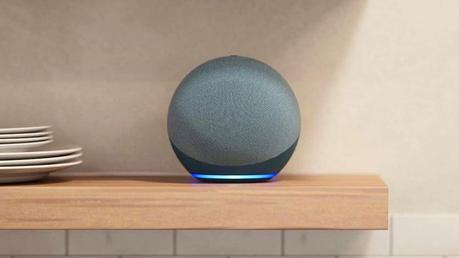
The fourth generation Echo takes on a new spherical shape. It is 5.2 inches tall and has a diameter of 5.7 inches. The Echo Studio retains the cylindrical shape of previous Echo generations and is much larger than the Echo 4 at 8.2 inches tall and 6.8 inches in diameter.
Aesthetic
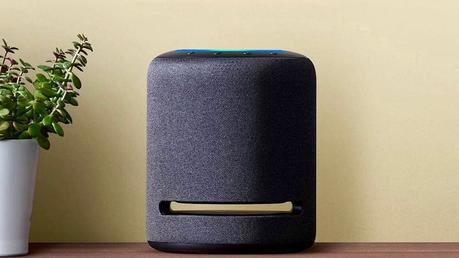
The two devices have a similar fabric design, but they have a very different overall aesthetic appeal.
The Echo 4 is available in three colors: Charcoal, Glacier White and Twilight Blue. It has an LED ring around the base of the speaker and a volume up button, volume down button, action button and stop button microphone on the top of the device.
The Echo Studio is available in charcoal gray and has a small cutout part on the bottom of the device to help it sound better. The LED status ring is not around the circumference, but rather sits around an inner ring. The four buttons (volume up, volume down, mic on and off) are just in a row outside of the status ring.
Sound
Sound quality is perhaps one of the most notable differences between Echo Studio and most other Echo devices. But this time around, the classic Echo comes as close as possible to the Studio's top-notch performance. On paper, at least. We haven't heard the last Echo in action yet, but we'll report back as soon as we do.
The Echo 4 has the same sound specifications as the Echo 3: a 0.8-inch woofer, a 3-inch tweeter, and Dolby processing. There is also a port for a 3.5mm jack so you can connect an external speaker. Where the Echo 4 takes a step forward from years past is the addition of sound optimization, a core feature of the Echo Studio. The new Echo will automatically calibrate the sound according to its surroundings, delivering the most powerful and best sound quality no matter where the speaker is placed.
But the Echo Studio has a ton of hardware to boast about and still several other sonic advantages over the traditional Echo.
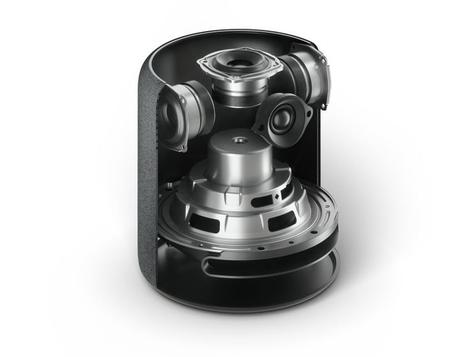
For starters, the Studio has five speakers: a 1-inch tweeter, three separate 2-inch midrange speakers, and a 5.25-inch woofer. The Studio also includes Dolby Atmos processing for multidimensional surround sound. Echo Studio can play music in 3D audio format, so customers with an Amazon Music 3D subscription can listen to music in HD audio. The Studio is designed to optimize the sound for the room (taken from the Echo 4), and the Studio has a port for a 3.5mm jack like the Echo, but it also has a digital optical port.
features
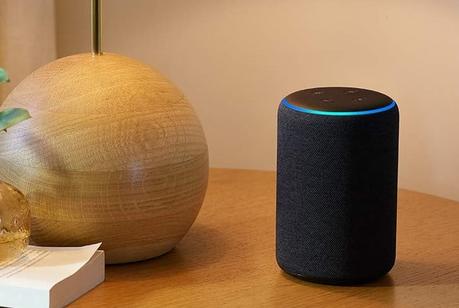
Both the Echo 4 and the Echo Studio are powered by Alexa. You can ask the virtual assistant questions, voice control your smart home devices, set routines, listen to music, receive news, play games, and more.
The Echo 4 and Echo Studio can also be used as Zigbee hubs (new to the standard Echo). This means you can control compatible devices without the need for a separate hub. And, while many smart home devices technically don't require a hub to operate, and you can use the Alexa app to set up routines, having a hub takes the strain off your network while making your devices work in harmony.
An Echo 4 exclusive is the Amazon Sidewalk bridging capabilities. Amazon Sidewalk (rolled out later this year) is Amazon's attempt to expand community Wi-Fi using Bluetooth frequencies and radio waves. When Sidewalk goes live, the Echo 4 will be able to broadcast a Sidewalk signal to your neighborhood - a feature shared with the new Echo Show 10, Ring Spotlight Cam, and Ring Floodlight Cam.
The Echo Studio and older Echo speakers will be able to leverage local Sidewalk connections (once Amazon releases a Sidewalk software update), but will not be able to stream Sidewalk.
Price and warranty
The new fourth-gen Echo hits stores on October 22, and you can pre-order it for $ 100. The Echo Studio costs double, at $ 200. The Echo and Echo Studio come with Amazon's one-year limited warranty with the option to add a one, two, or three-year protection plan.
Which Echo is the best?
Based on sound quality alone, we have to choose Echo Studio as the best device, although we admittedly haven't heard the latest Echo in action yet. Amazon designed the Studio from the bottom up for better sound staging, and you can't beat Dolby Atmos. If you're interested in the best sound, our bets are on Echo Studio.
The Echo 4 is by no means a substandard smart speaker. It has the same interactive technology as the Studio, as well as the Sidewalk broadcast, all for $ 100 less. If premium sound isn't your primary consideration, the Echo 4 is a superior option.
Editor's recommendations
https://www.digitaltrends.com/home/amazon-echo-vs-amazon-echo-studio/






