


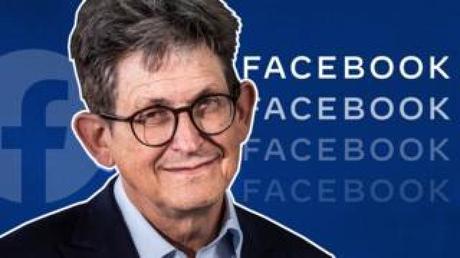
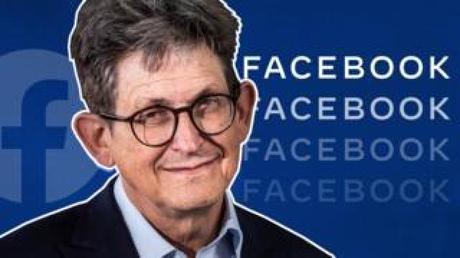
A member of the new Facebook surveillance commission warned that it should avoid launching too quickly.
Alan Rusbridger told BBC Click that it would be "nice to be up and running" in time for the November US election.
But in an exclusive interview, he said it would be harmful to "come out with half-cooked recommendations now before we're ready."
He still didn't know if he would be ready to make "key decisions on hot potatoes" in the presidential election.
Mr. Rusbridger also acknowledged requests from current board members to assess whether Facebook should follow Twitter in labeling and hiding some of President Donald Trump's posts.
But he said that without having studied the issue in a "sophisticated way", it would be "a bad way to proceed".
'Tremendous mistake'
Facebook said the panel should act as a sort of supreme court, with the power to override decisions made by moderators of social networks and influence politics.
Its possible 40 members will be paid by Facebook, but are destined to act as an independent body.
But not everyone is convinced of the regime.
"Mark (Zuckerberg) controls the organization," said Rashad Robinson of the Stop Hate for Profit campaign, which invited companies to place ads from the platform.
"I think it's a big mistake for these people because unless they change the infrastructure and the incentives change, you won't actually change the way things go.
"It's like saying you're a congressman but you don't actually have a vote on the floor."
Rusbridger, a former Guardian editor-in-chief, acknowledged that many people were skeptical of the initiative, but said "it's worth a try" to see if the board could help Facebook's engineers think through morale, the law , the drafting and ethical considerations with which they must struggle ".
"If after two or three years we find out that we're not having a big impact, I suppose some board members would think: is it really worth it?" He said.
But he acknowledged: "We will be criticized for whatever we do."
The following interview has been prepared for brevity and clarity.
Are you happy with the mix of people on the blackboard?I understand, they talked to about 2000 people - it certainly took a long time. And it's a very interesting mix, in terms of geographic location, diversity and ethnic diversity. That's how you have a kind of interesting group of lawyers, human rights activists, academics, journalists, troublemakers. If you wanted a quiet life, I don't think you would have chosen this table.
What made you accept the job?This problem of how the Internet is regulated, or regulates itself, is one of the most important problems imaginable. We are facing a crisis of confidence in knowing what is true and what is not true. And as someone who passionately believed in the dream, the opportunity that the Internet offered, it was very sad to see him get into some degree of difficulty. So if we can do that, it would be an incredibly valuable thing to do.
Getting paid by Facebook will be a challenge when it comes to convincing people about it.What Facebook has done is create something like trust. And although for the first few meetings there were Facebook people in the room, they are not there now. It appears that we are now an independent entity. So although real money was provided by Facebook, I don't think we will have much to do with them in the future.
How will it work in practice?Facebook will come to us and say: here is a particularly thorny problem. And I expect there will be a huge demand from users, saying: please grab X, Y and Z, or here is a case where I feel offended because I have been rejected and I want you to rethink it. And we can choose for ourselves to say that we want to examine a particular case.
Will you not be submerged?No, we absolutely cannot face the millions of disputed issues on Facebook. Then go back to trying to choose cases that seem typical of larger and larger problems.
Will you post your recommendations before Facebook has decided whether to listen to them or not?We will certainly publish them independently of Facebook. We have control over what we publish or not. Any suggestions that we weren't publishing our opinions because Facebook didn't like them would be deadly for the project.
Do you have an eye on other social media platforms? Twitter has taken a different approach to labeling Donald Trump posts, for example, on Facebook.We all noticed the difference between the Twitter response and the Facebook response. I don't know enough about the culture of the few companies to explain why they made different decisions. But I understand why a company would have been able to say the First Amendment [to freedom of speech] will be our guiding star. Whether it's a sustainable or fair position, I don't know. This is one of the jobs we will have to start thinking about. I can understand why you should start there, but maybe it's not a sustainable and desirable position to end up with.
Do you think you're putting your reputation to the limit here?It is an interesting and valuable thing to try. If Facebook ignores it, or if it doesn't seem to work, there is no incentive to stay.
BBC Click will broadcast the interview on Saturday July 18 on the News Channel or iPlayer in the UK and BBC World News internationally





