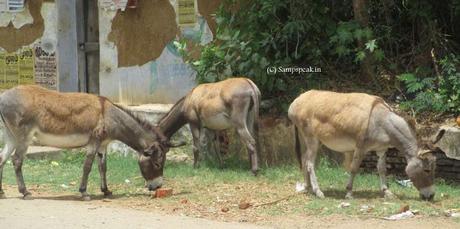
 Humans owe a lot to
the humble donkey. Domesticated for more than five millennia, they have been
used for everything from farming to warfare. In this advanced industrialised World too, the poorest communities still rely on donkeys for
their day-to-day needs and nowhere is this more apparent than in China: after
two decades of economic growth, the country’s donkey population has dropped by
almost half. This decline has had an unintended consequence for traditional
medicine. When boiled, donkey skin produces a rubbery, gelatine-like substance,
known as ejiao, which is included in many popular Chinese tonics and medicines
for its perceived ability to cure coughs, relieve insomnia and revitalise the
blood.
The scene shifts
away ~ in Africa, it has had its impact. In the small Burkina Faso village of
Balole, where farmers struggle to grow tomatoes, cabbages and aubergines, sickening stench from dozens of rotting donkey
carcasses hangs in the air. This is the flipside of Burkina's booming trade in
donkey meat and donkey hides. Not Burkina
Faso alone many African countries recently found booming trade in export of
donkeys to China.
Humans owe a lot to
the humble donkey. Domesticated for more than five millennia, they have been
used for everything from farming to warfare. In this advanced industrialised World too, the poorest communities still rely on donkeys for
their day-to-day needs and nowhere is this more apparent than in China: after
two decades of economic growth, the country’s donkey population has dropped by
almost half. This decline has had an unintended consequence for traditional
medicine. When boiled, donkey skin produces a rubbery, gelatine-like substance,
known as ejiao, which is included in many popular Chinese tonics and medicines
for its perceived ability to cure coughs, relieve insomnia and revitalise the
blood.
The scene shifts
away ~ in Africa, it has had its impact. In the small Burkina Faso village of
Balole, where farmers struggle to grow tomatoes, cabbages and aubergines, sickening stench from dozens of rotting donkey
carcasses hangs in the air. This is the flipside of Burkina's booming trade in
donkey meat and donkey hides. Not Burkina
Faso alone many African countries recently found booming trade in export of
donkeys to China.
For China to achieve its massive 5,000-tonne production goal, it needs an estimated 4 million donkeys annually. Currently, China can supply just around 1.8 million donkeys. According to a CNN report, the number of donkeys in China fell from 11 million to six million in the last 20 years. This decline is attributed to several factors such as increase in demand for donkey hide, low fertility and long gestation period of donkeys and increasing occupational shift from traditional agriculture towards advanced industry within China. China started to rely heavily on imports from African nations, which have a natural abundance of this animal. Mainly Niger and Burkina Faso export. Kenya and South Africa were the new entrants – but African countries are imposing ban.Niger, which exported 80,000 donkeys in 2016, has banned donkey exports to China since the exorbitantly high demand is allegedly causing a 'decimation' of the donkey population there. So has Burkina Faso. The countries feel that it is unfair to deplete a resource and deny their own populations its benefits, just to fulfill exports. Gelatin produced from donkey hide is a key ingredient of one of China's favorite traditional remedies, known as ejiao, which is used to treat a range of ailments from colds to insomnia. The ban on donkey exports by African countries, is reportedly China’s biggest threat to global economy, says Harvard professor. A Niger government official, justifying the ban said that “If the export continues the animals will be decimated.”
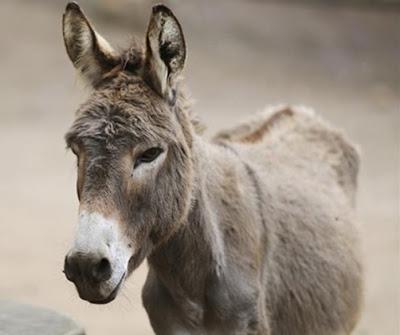 The average price
of a donkey increased by around three-fold, as many livestock sellers switched to donkey breeding as this trade became more
profitable. Now the Countries have
understood that they have started over-exploiting their natural resource. .. so comes the donkey ban.
With regards – S.
Sampathkumar
The average price
of a donkey increased by around three-fold, as many livestock sellers switched to donkey breeding as this trade became more
profitable. Now the Countries have
understood that they have started over-exploiting their natural resource. .. so comes the donkey ban.
With regards – S.
Sampathkumar
2nd Oct 2016.