 Fly swatters
bearing sports team logos coasted onto Kodiak island, Alaska, by the dozens - Beachcombers at first assumed they were debris
from the 2011 Japanese earthquake and tsunami, but authorities soon traced them
to a cargo ship that had lost a row of containers that came loose from a cable
during a Pacific crossing four months earlier. Rogue oddities riding the waves are no
surprise when you consider that the international liner shipping industry
carries approximately 100 million containers of cargo each year. Each container
is the size of a semi-truck trailer, and the ships' decks can be stacked seven
containers high. Careful distribution of weight is essential, to say the least.
Losing a few containers during big storms is nearly unstoppable.
Four months after a
storm off the California coast dumped 15 containers into the ocean in 2004,
scientists with the Monterey Bay Aquarium discovered one of the containers was
providing an unique artificial habitat for marine life—with 1,100 steel-belted
radial tires still trapped inside. "Cargo practices have since improved,
but in the 1990s as many as ten thousand containers may have gone overboard
each year,” Ebbesmeyer and Eric Scigliano report in their book, Flotsametrics
and the Floating World. Ebbesmeyer
earned credit in this flotsam arena when
he accurately modelled the arrival time and place of two separate shipments of
Nike shoes lost in the Pacific in the 1990s. In the first incident, which was
Ebbesmeyer’s inspiration to follow flotsam in the first place, eight containers
jumped ship in transit from Korea during a mid-Pacific storm in 1990, sending
adrift some 80,000 individual, unlaced shoes.
Fly swatters
bearing sports team logos coasted onto Kodiak island, Alaska, by the dozens - Beachcombers at first assumed they were debris
from the 2011 Japanese earthquake and tsunami, but authorities soon traced them
to a cargo ship that had lost a row of containers that came loose from a cable
during a Pacific crossing four months earlier. Rogue oddities riding the waves are no
surprise when you consider that the international liner shipping industry
carries approximately 100 million containers of cargo each year. Each container
is the size of a semi-truck trailer, and the ships' decks can be stacked seven
containers high. Careful distribution of weight is essential, to say the least.
Losing a few containers during big storms is nearly unstoppable.
Four months after a
storm off the California coast dumped 15 containers into the ocean in 2004,
scientists with the Monterey Bay Aquarium discovered one of the containers was
providing an unique artificial habitat for marine life—with 1,100 steel-belted
radial tires still trapped inside. "Cargo practices have since improved,
but in the 1990s as many as ten thousand containers may have gone overboard
each year,” Ebbesmeyer and Eric Scigliano report in their book, Flotsametrics
and the Floating World. Ebbesmeyer
earned credit in this flotsam arena when
he accurately modelled the arrival time and place of two separate shipments of
Nike shoes lost in the Pacific in the 1990s. In the first incident, which was
Ebbesmeyer’s inspiration to follow flotsam in the first place, eight containers
jumped ship in transit from Korea during a mid-Pacific storm in 1990, sending
adrift some 80,000 individual, unlaced shoes.
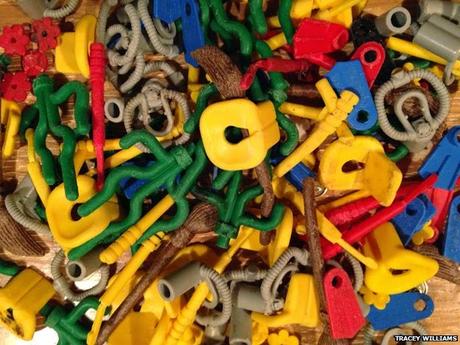
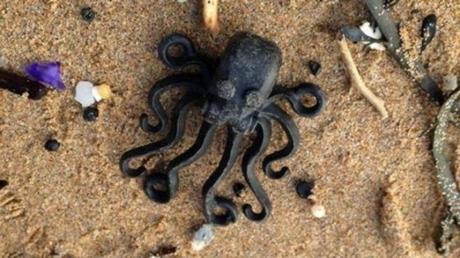 Though the plastic
daisies dropped into the sea in Feb 1997 from Tokio Express have been found on
Cornish shores; none knows exactly what happened next, or even what was in the
other 61 containers. A quirk of fate
meant many of the Lego items were nautical-themed, so locals and tourists alike
started finding miniature cutlasses, flippers, spear guns, seagrass, scuba gear
as well as the dragons and the daisies.
There is a Facebook page that documents the Lego discoveries, and its
keeper received an email from someone in Melbourne who found a flipper which
they think could be from the Tokio Express spillage. Experts say that it takes three years for sea debris to cross the
Atlantic ocean, from Land's End to Florida. Undoubtedly some Lego has crossed
and it's most likely some has gone around the world.
"The most
profound lesson I've learned from the Lego story is that things that go to the
bottom of the sea don't always stay there," Ebbesmeyer adds. The incident
is a perfect example of how even when inside a steel container, sunken items don't
stay sunken. They can be carried around the world, seemingly randomly, but
subject to the planet's currents and tides. But
there's also a dark side to the story, he says. If Lego is on land then it's
fun. If it's on the ocean it's deadly, a poison for birds. If you lose one
container with 5m pieces of Lego in it, that is a catastrophe for wildlife.
With regards – S.
Sampathkumar
9th Feb
2015
Though the plastic
daisies dropped into the sea in Feb 1997 from Tokio Express have been found on
Cornish shores; none knows exactly what happened next, or even what was in the
other 61 containers. A quirk of fate
meant many of the Lego items were nautical-themed, so locals and tourists alike
started finding miniature cutlasses, flippers, spear guns, seagrass, scuba gear
as well as the dragons and the daisies.
There is a Facebook page that documents the Lego discoveries, and its
keeper received an email from someone in Melbourne who found a flipper which
they think could be from the Tokio Express spillage. Experts say that it takes three years for sea debris to cross the
Atlantic ocean, from Land's End to Florida. Undoubtedly some Lego has crossed
and it's most likely some has gone around the world.
"The most
profound lesson I've learned from the Lego story is that things that go to the
bottom of the sea don't always stay there," Ebbesmeyer adds. The incident
is a perfect example of how even when inside a steel container, sunken items don't
stay sunken. They can be carried around the world, seemingly randomly, but
subject to the planet's currents and tides. But
there's also a dark side to the story, he says. If Lego is on land then it's
fun. If it's on the ocean it's deadly, a poison for birds. If you lose one
container with 5m pieces of Lego in it, that is a catastrophe for wildlife.
With regards – S.
Sampathkumar
9th Feb
2015
News collated from various sources including Daily Mail; BBC and SMH.