


As well as this gardener walking about in his shirt-sleeves and whistling, there are various other markers that spring has finally arrived:

from the scent of wild garlic by the riverbank;

to early purple orchids,

Camassia quamash flowering on the meadow,

the rock border overflowing with forget-me-nots
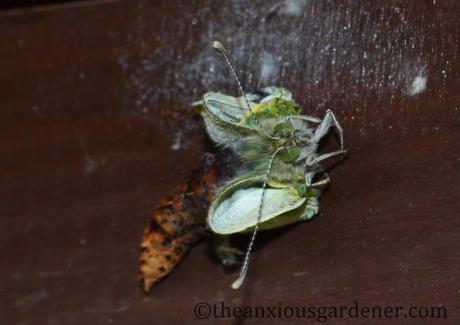
and butterflies emerging – albeit a cabbage white.
But the big landmark spring event for me is the turning out of Margaret’s cows from their winter quarters to grass.

It is a sight I try not to miss; from their deafening impatient lowing to their excitement and exuberance at being set free.

Having spent months in the sheds, they are a little hesitant at first; the calves especially so – having spent their whole lives indoors, they are blinded by the light. (Those sheep really ought to get out-of-the-way).
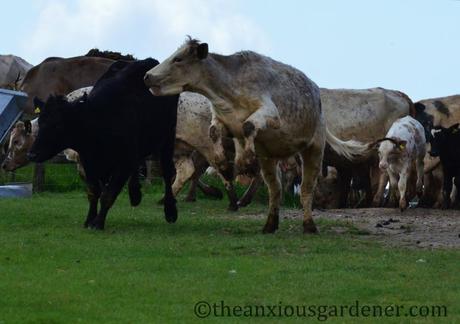
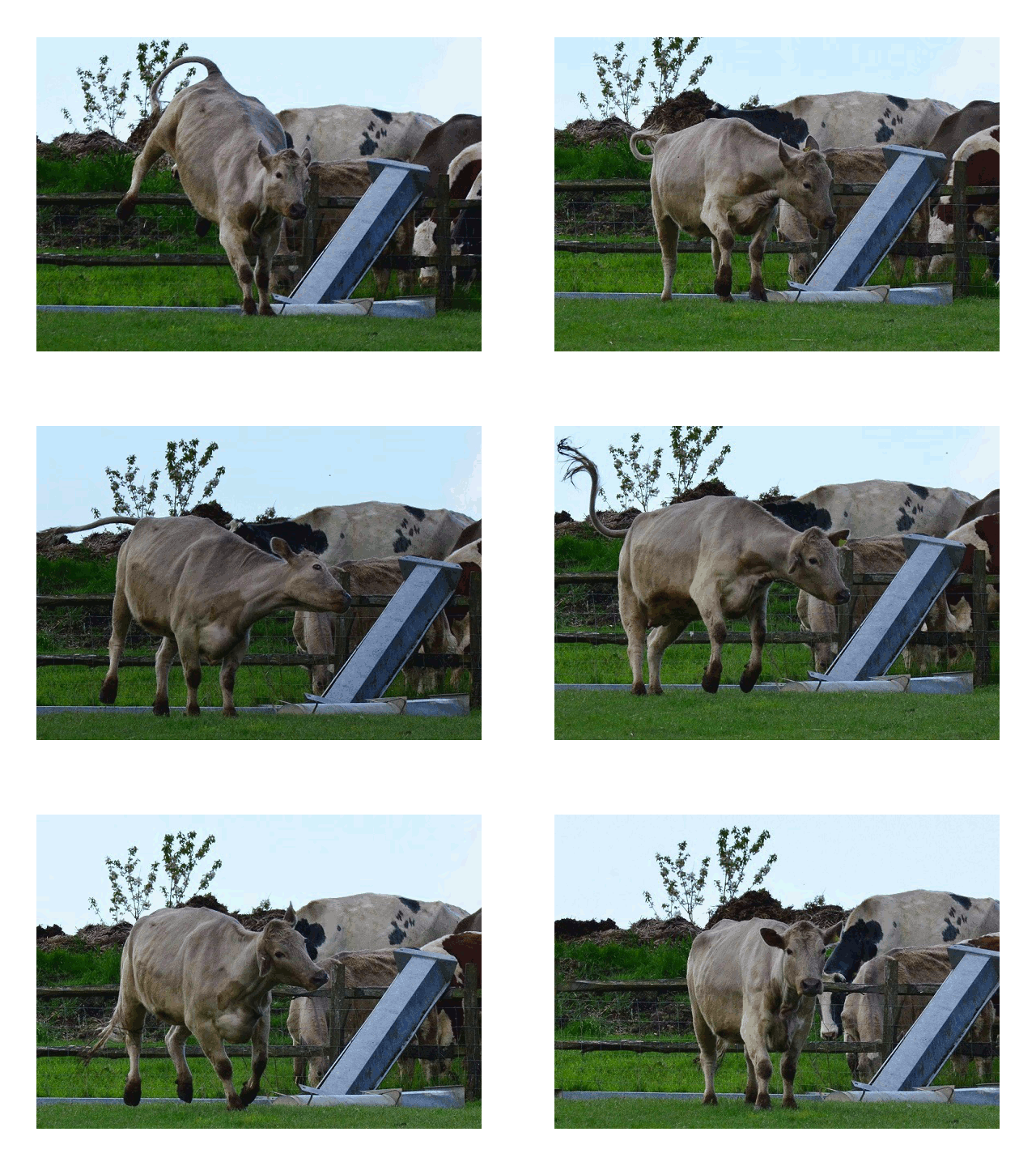
But suddenly, faced with all that space, these huge, matronly beasts (weighing in excess of 1000lbs)

hurl themselves about

with gay abandon.
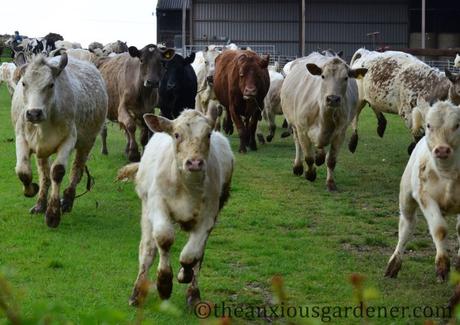
Last year, I perched on a rickety stile and felt a little vulnerable as they thundered past – just a couple of feet away.

So this year, I positioned myself behind a hawthorn hedge
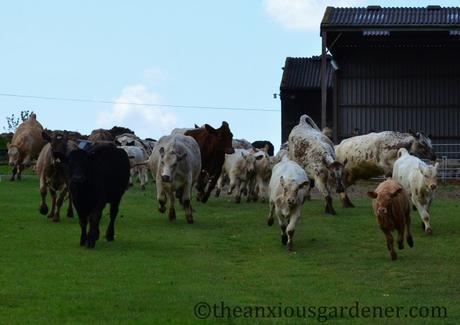
which, as the cows came nearer, seemed increasingly flimsy and worryingly inadequate.

Thankfully, the thudding of hooves drowned out my whimpering as they barreled on toward me – with no sign of slowing. Gulp.

An open gate was just to my right

but

it was only
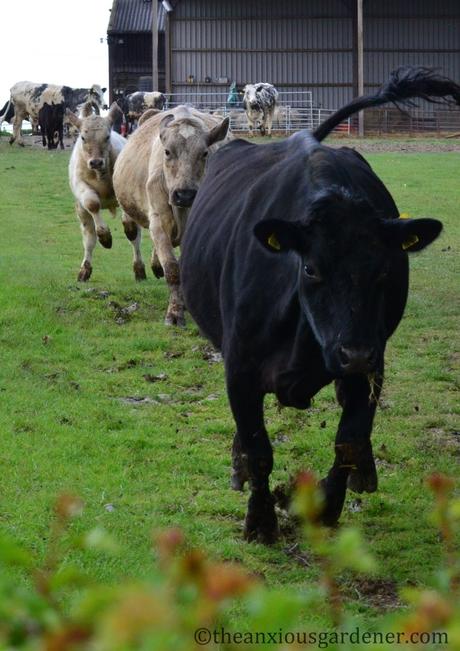
at the very last moment that they swerved away from me … and I could breath again.
According to the Office for National Statistics, cows kill more people in the UK than almost any other animal – accounting for about 5 deaths a year*. Mostly the victims are dog-walkers who pick up their dogs (or hold onto the leash) when cattle become agitated. Please don’t do either; your dog can outrun a cow better than you. And if it can’t, I would suggest that you don’t take it into a field of cows in the first place.
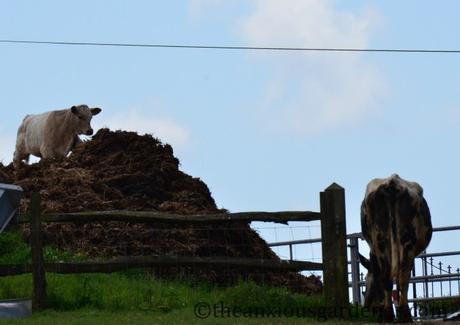
One calf, with a whole new world to explore, sought out only the pleasures of the manure pile. Margaret and I spent twenty minutes cajoling him into re-joining the herd.

And so, all’s well with the world. Job done and the cows back out to pasture, in the fields above the Priory greenhouses. It is fine to have them back – just so long as they don’t come into the gardens again. (See ‘Cows in the Asparagus’).
If your local farmer offers to show you her galloping heifers, go for it. You won’t be disappointed; just make sure you stand somewhere nice and safe.
* The animal which kills the most people in the UK is the horse, accounting for 10 deaths per year, 2nd cows, 3rd dogs – 4 per year, 4th bees and wasps – 3 per year.






