A Nativity diorama inside an antique steamer trunk (part 3, shaping Bethlehem) | #LRCrafts - DIY Passion: if you can think it, you can make it
Months have passed since I last shared an update on our multi-year Christmas project: the transformation of an antique steamer trunk into a detailed Nativity diorama.
If you’re new here, let me catch you up: the journey began with the discovery of an old family trunk tucked away in a long-forgotten attic. We restored it with care, and modified it a little for its new purpose. Later, we crafted the terrain, laying hills, building a Roman road, shaping a future oasis, and preparing the ground that would eventually become Bethlehem.
Now, in part three, you’ll se the city finally beginning to rise.
This latest phase has been all about building: designing and constructing miniature houses, building a main square, creating the holy manger… We took our time and effort into adding the tiny everyday details that breathe life into a scene: a clay jar here, a broom by the door there, townspeople mid-chore or mid-conversation… Rocks, tiles, sand, and scattered bushes slowly transformed our yellowish base into a bustling landscape.
And this is the part we were waiting for: the real multi-material and multi-skill project we wanted this to be. Follow along as we show you, step by step, all the materials and techniques involved.
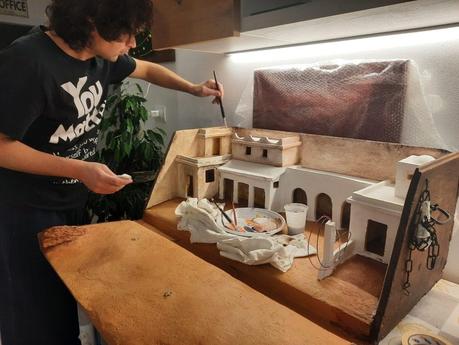
The buildings of our Bethlehem ready to receive details.
Table of contents
Shaping the main buildings
Making the basic structures
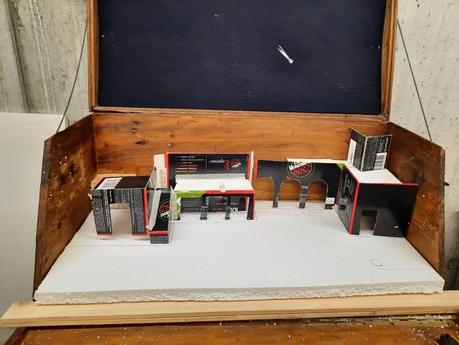

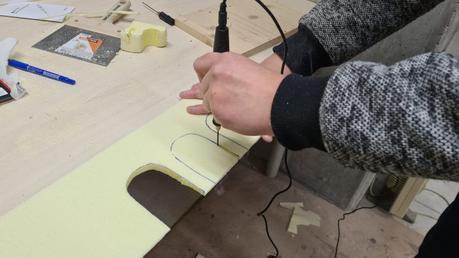
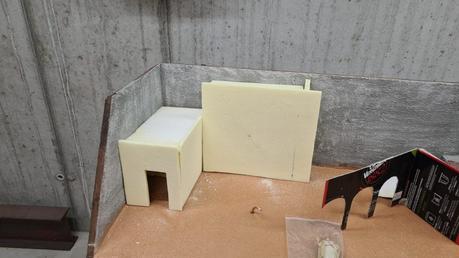
We began with making the main structures, turning the cardboard placeholders we’d used to plan the layout into real, tangible buildings. My husband took the lead here, carefully shaping foam sheets we got from a local builder. Bit by bit, he cut, carved and stacked them to form the skeleton of the Bethlehem inn.
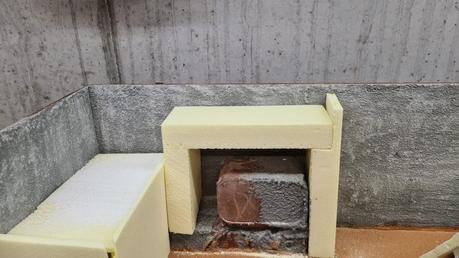
On the far right corner, he built a small storage room, designed with a flat roof, above which he added a tiny domed room, inspired by the semispherical rooftops you still find in parts of the Middle East. The front remained untouched for the moment: it would eventually serve as the porch for the stable, the humble shelter that would host the holy manger.
Going to the left, leaning to the back of the trunk, a covered arched walkway led to a two-storey structure: stables below, living quarters above. And on the far left, we placed another two-storey home, this one slightly narrower on the upper floor to make space for a terrace.
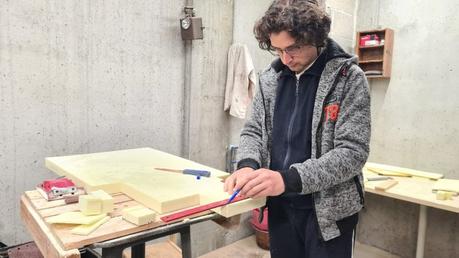
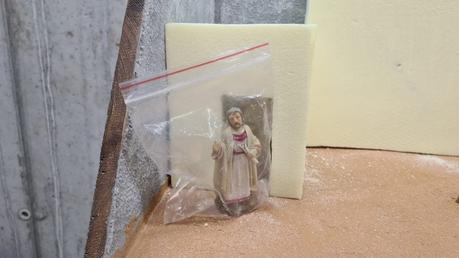
To keep everything in proportion, we worked directly with the statues we had already chosen, using them as our constant reference while shaping each structure. For cutting the foam, my husband mainly used a hot knife: much faster and cleaner than any saw. It made carving smoother edges and fine adjustments far easier, especially on the tighter, more delicate sections.
Some of the rooms, particularly those at the back and lower levels of the buildings, were designed with more than just looks in mind. They doubled as cleverly disguised spaces to hide the project’s hidden infrastructure. The two-storey building with the stable, for example, appears to have a second room tucked behind the visible stall, somehow connected to the covered walkway. But in reality, that unseen space conceals our main electric box and the wooden support structure that keeps the trunk stable and secure. There are no visible openings into that room, keeping the illusion intact while allowing the technical side of things to quietly do its work behind the scenes.
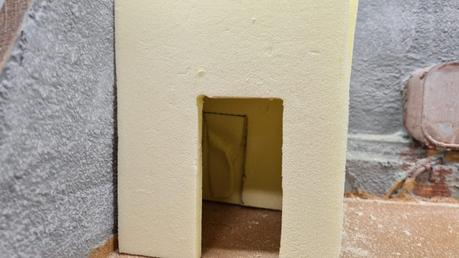

Adding character and light
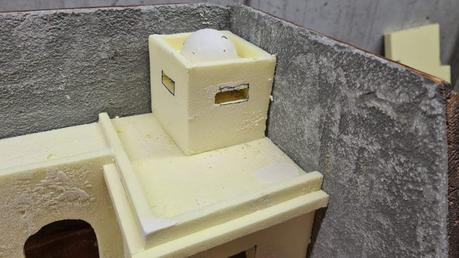
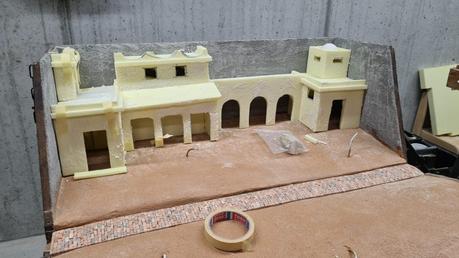
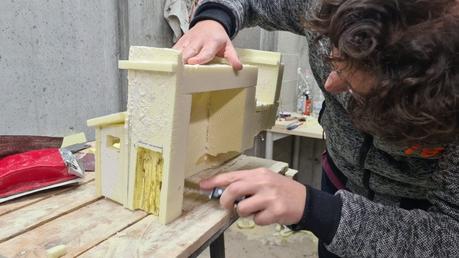
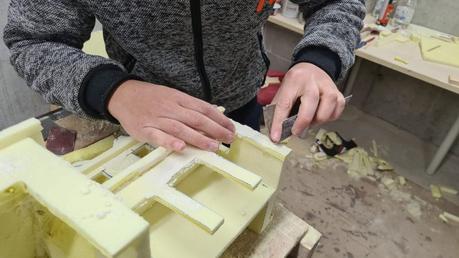

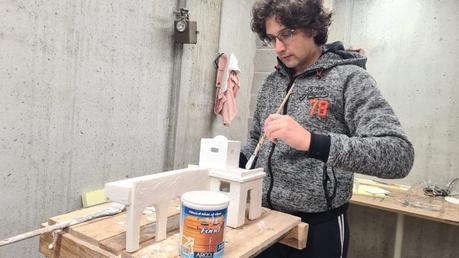
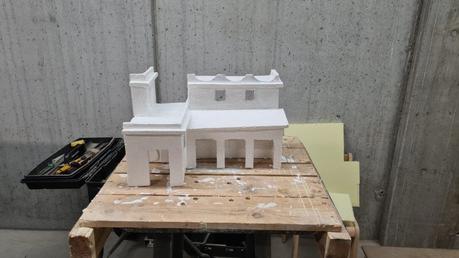
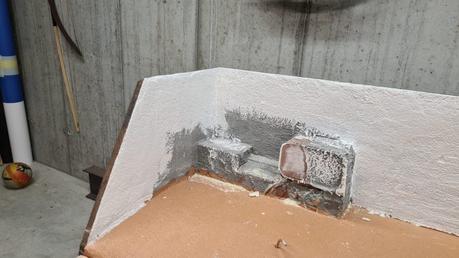

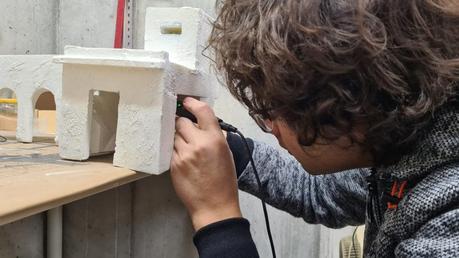
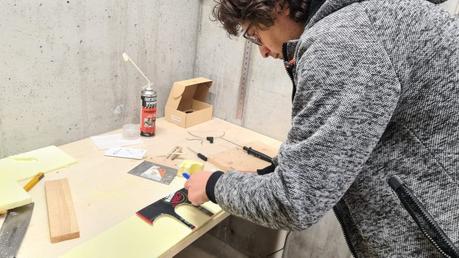
Once the main structures were all in place, it was time to turn these simple shapes into believable buildings. My husband began adding all the architectural details that give character and realism: string courses to mark floor divisions, windowsills and thresholds, decorative edges. What had started as plain foam cubes slowly transformed into something much more lifelike.
He carved out doors, refined rough edges with sandpaper, and carefully straightened each pillar and wall until everything felt intentional and solid. It was slow, careful work, but every step brought the buildings closer to feeling like a real city.
Once he was satisfied with the shapes and details, he coated the foam with a white primer to prepare the surface for color. He applied the same primer on the walls of the trunk. Of course, he also intervened inside the rooms, to cut holes for wires and prepare the inside of each building for LED lights.
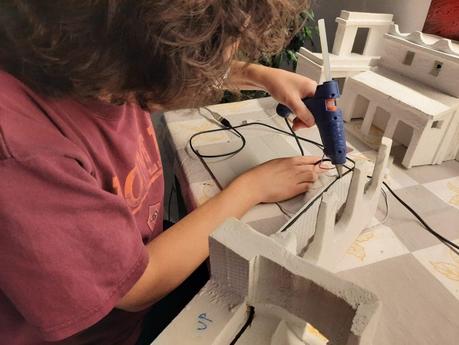
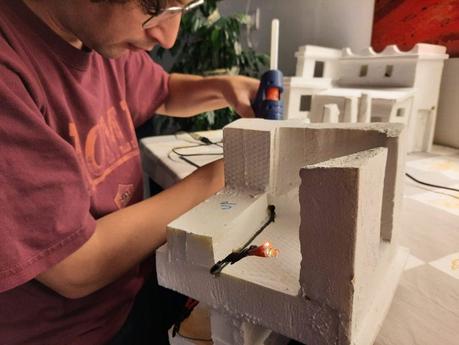
No miniature city would feel truly alive without light. We had already added LED stars and a glowing comet to the sky panel, now it was time to illuminate the buildings themselves and add small flickering fires to the oasis.
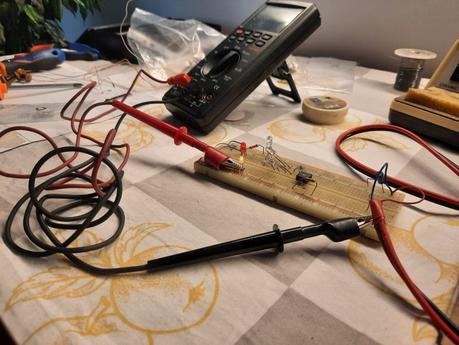
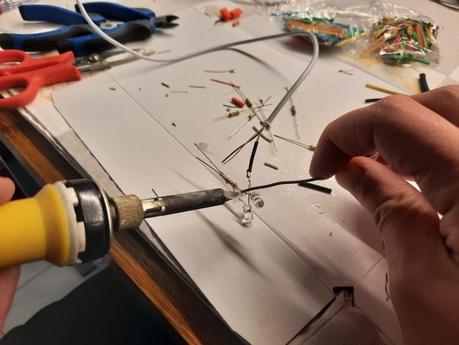
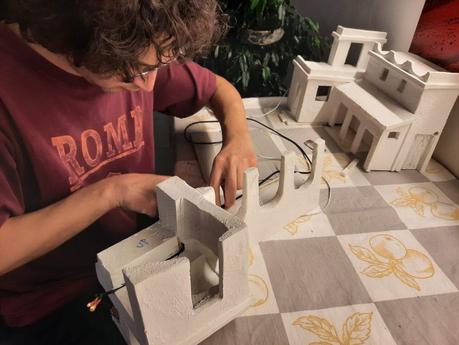
This was where my husband’s engineering skills came into full play. He carefully carved out recesses in the ceilings of each room, making space for tiny LEDs and the wiring that would bring them to life.
He also took time to select warm, glowing LEDs – nothing too modern-looking – so the light would feel as if it came from candles or small hearth fires.
The warm flickering glow inside would spill outward through each window and doorway, giving the impression of a lived-in, welcoming city. Even the future stable with the holy manger was ready to receive lighting, with plans for two hanging lanterns, ready to cast their gentle light over the holy scene.

First touch of color


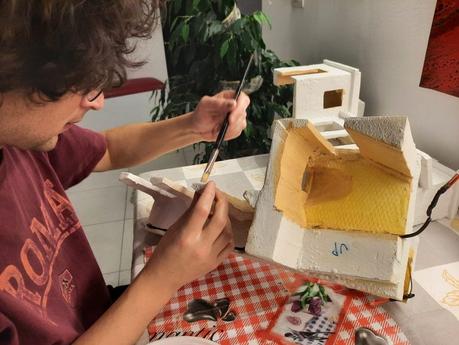
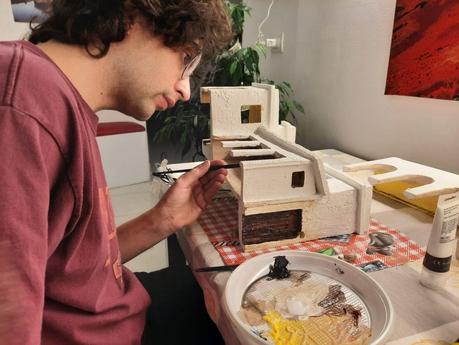
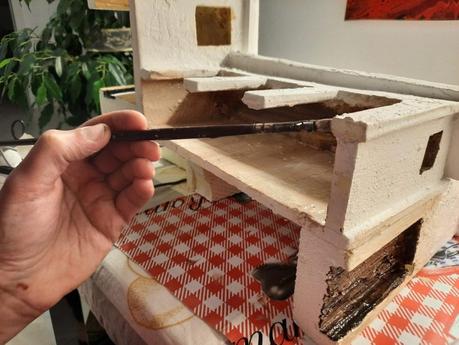
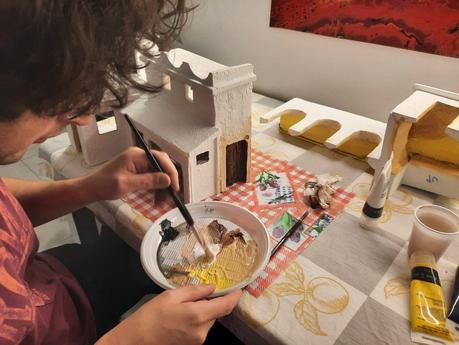
With the LEDs in place and their warm glow already hinting at life within the tiny rooms, it was time to bring in color. My husband began by painting the interiors of each house and the covered walkway: those hard-to-reach corners would soon be difficult to access, once the buildings were permanently fixed in place.
He chose sandy yellow tones for the inner walls, a color that would reflect the LED light beautifully and give the rooms a soft, warm atmosphere. Then, using the same shades, he painted the inside walls of the trunk itself, helping to create a unified background that would blend naturally into the overall scene.
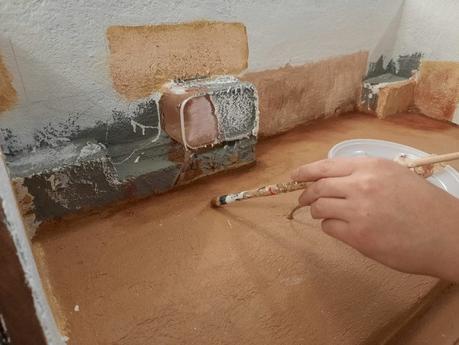
Once the buildings were set aside to dry, it was time to return to the terrain. We had previously left the hills and dunes with a sandy base coat, but now came the moment to bring out texture and depth. He added subtle shadows in corners, darker patches here, gentle highlights there. This added dimension helped turn the neutral-colored base into something much more realistic, a landscape ready to welcome its miniature inhabitants.
Even though the final plan was to cover the landscape with real sand and other natural materials, building a realistic painted base first would prove crucial. It gave depth from underneath and made blending the later details far easier and more natural-looking. It would also ensure that, even where the top layer thinned or shifted over time, the illusion of a natural, living landscape would remain.


Setting the scene


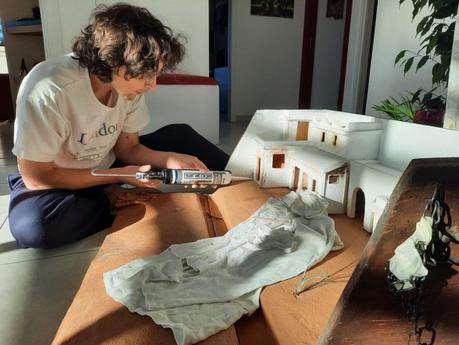
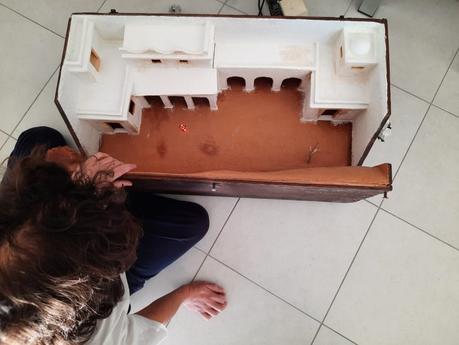
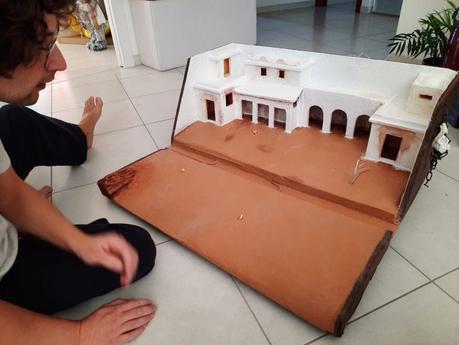
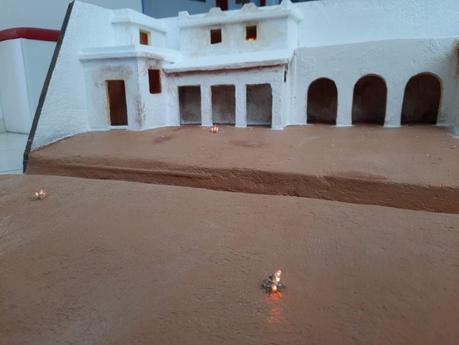
With the terrain painted and the buildings ready, it was finally time to fix them in place. One by one, we carefully glued the structures onto the trunk’s base. To make everything as seamless as possible, my husband also used silicone to close the tiny gaps between the buildings and the curved walls of the trunk. This not only improved the visual continuity but also added stability: every little detail counts when you want something to last.
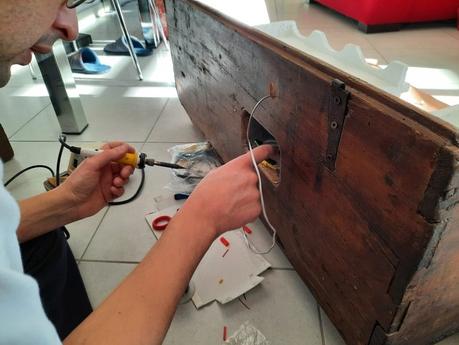
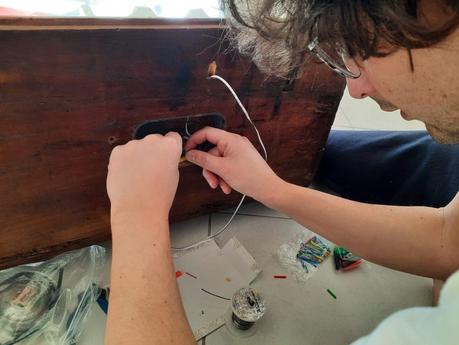
At the same time, he took care of the wiring. We’d already made space inside the buildings for LEDs and their cables, but now they needed to be properly connected. My husband opened up the hidden box at the back of the two-storey building, the one we cleverly disguised as part of the inn, and got to work.
For now, we hooked up all the lights to a battery pack, just for testing during construction. Eventually, the entire lighting system will be plug-in, so we can simply flip a switch and watch the scene glow to life.
Even the oasis, once just a bare patch of terrain, was upgraded with tiny red flickering LEDs for bonfires.
And this time, we had company: our daughter decided she wanted to be part of the project. It was heartwarming to see her tiny hands learning about cutting, glue, wires, under her dad’s careful guidance. This diorama was becoming more than just a decoration: it was a family memory in the making.
Testing everything was magical. After so much planning and crafting, the city finally looked alive, glowing softly like a winter’s night in Bethlehem.

Looking forward to the final touches
With the buildings now in place and the lights glowing warmly through every window and doorway, the city of Bethlehem is finally taking shape. This phase marked a huge leap forward in our journey, from a painted landscape to a lit, structured village that now feels truly alive.
But of course, we’re not done yet.
The next chapter will be all about details: doors and roofs, pots and brooms, wooden crates and market stalls, tiny people frozen mid-task or mid-step… the life of the town itself. That’s when this quiet little village will start to breathe.
We’ll share all of that in part four of this series.
Until then, we’d love to know from you: what do you think so far? Do you have any ideas or favorite miniature details you’d love to see included in our diorama? Let us know in the comments below. We can’t wait to hear your thoughts!
Follow our journey

A Nativity diorama inside an antique steamer trunk (part 3, shaping Bethlehem)

A Nativity diorama inside an antique steamer trunk (part 2, crafting the terrain)
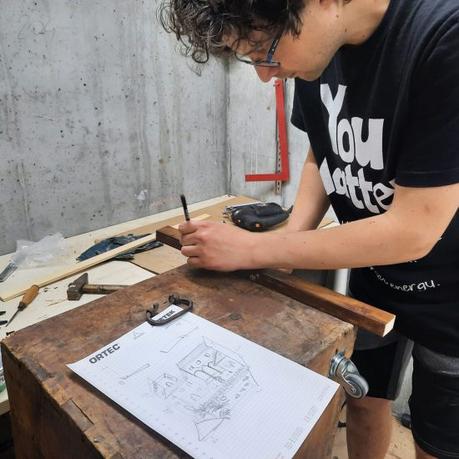
A Nativity diorama inside an antique steamer trunk (part 1, restoration)
See the result so far


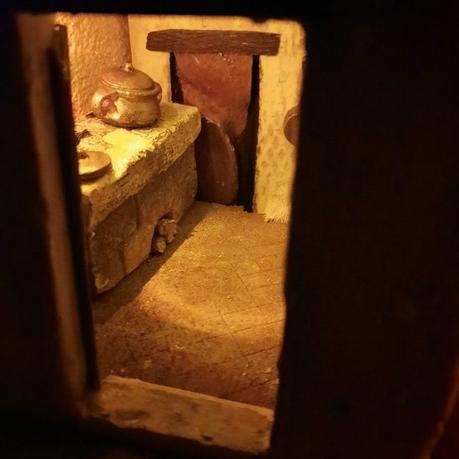
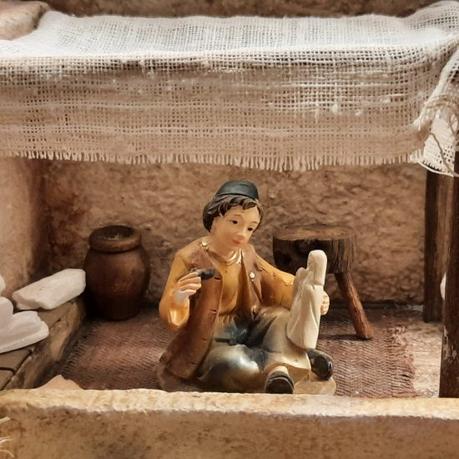


Restored steamer trunk with Nativity scene diorama
by Rici86.