


Whether you’re filling up at a faucet or pouring from a pitcher, the type of filter media the water passes through plays a leading role in its quality, taste, and safety. One of the most widely used and effective options is coconut shell activated carbon. Known for its high filtration efficiency, durability, and sustainability, this renewable filter material offers a simple yet powerful solution for cleaner, fresher-tasting water in your home.
In this guide, we’ll take a look at what coconut shell activated carbon is, how it’s made, how it works in water filters, and its main advantages and limitations.
What is Coconut Shell Activated Carbon?
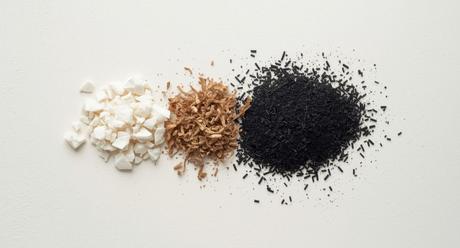
Coconut shell activated carbon is a highly porous material made from the hard, woody inner shells of coconuts. The finished product is a black, powdery or grainy substance composed of particles, granules, briquettes, or pellets of varying sizes, shapes, and textures.
How is Coconut Shell Activated Carbon Made?
Transforming coconut shells into activated carbon involves four critical stages, each directly influencing the quality and performance characteristics of the end product:
- Preparing the Raw Materials
Production begins with carefully selecting suitable coconut shells. Manufacturers typically source shells that have been thoroughly cleaned and sun-dried, with the stringy exterior fibers completely removed. The shells are then crushed into smaller, uniformly sized pieces to ensure they are carbonized evenly and consistently.
- Carbonization (Pyrolysis)
The prepared shells are heated at extremely high temperatures in a furnace with very little to no oxygen. The intense heat releases moisture and impurities from the coconut material, converting it into carbon-rich charcoal. This carbonization process establishes the carbon’s initial pore structure, which will be further enhanced in the next stage.
- Activating the Carbon
The carbonized coconut charcoal is “activated” so it can work as a filter medium. To do so, the carbon is exposed to scorching steam, usually in the presence of a gas. The steam opens more pores or “binding sites” in the carbon, thereby enlarging its surface area. As a result, the material can capture more molecules. The carbon can also be activated chemically by soaking it in an acid or base before heating.
- Post-Processing and Quality Control
Once activated, the carbon material is cleaned, dried, and crushed and screened to achieve specific mesh sizes for different applications: powdered activated carbon (PAC), granular activated carbon (GAC), extruded activated carbon, or carbon block. Before hitting the market, each batch undergoes strict testing to verify it meets recognized quality and safety standards.
How Does Coconut Shell Activated Carbon Work in Water Filters?
Coconut shell activated carbon filters water using a physical process called adsorption, not to be confused with absorption. As water flows through the filter, microscopic pores in the carbon attract and bind contaminant molecules to the outside its surface (ad-sorption), rather than soaking them within the material (ab-sorption). With the unwanted particles removed, the water that flows through to the other side of the filter is cleaner, safer, and better-tasting.
Generally, activated carbon with more pores can retain more particles. These pores can vary in size: micro-pores (smaller than 2 nanometers), meso-pores (2 to 50 nanometers), and macro-pores (larger than 50 nanometers). The smaller the pores, the finer the molecules they can capture.
What Contaminants Does Coconut Shell Activated Carbon Remove?
Due to its high density of micro-pores, coconut shell activated carbon is very effective at reducing various-sized particles and pollutants often found in drinking water. These elements include:
- Chlorine and disinfection byproducts like trihalomethanes (THMs)
- Volatile organic compounds (VOCs), including common industrial solvents and some fuel‑related chemicals
- Common pesticides and herbicides, such as glyphosate and atrazine
- Some heavy metals, including mercury, aluminum, and cadmium
- Petroleum and oil compounds (e.g., gasoline, diesel, benzene, MTBE)
Coconut-based carbon also removes undesirable tastes and odors from water by reducing certain chemicals and organic compounds. Some coconut carbon filters may be certified to remove other contaminants, such as lead, waterborne radon, and PFAS, also known as “forever chemicals.” This makes coconut activated carbon a strong choice for improving the quality and safety of municipal drinking water.
Read more about what activated carbon filters remove from water.
What Contaminants Does Coconut Shell Activated Carbon Not Remove?
While effective, coconut shell activated carbon doesn’t remove all types of contaminants from water. Common contaminants typically not removed include:
- Limescale or hardness (calcium and magnesium minerals)
- Most heavy metals
- Dissolved solids
- Radionuclides
- Microbes, including bacteria, viruses, parasites, and cysts
- Nitrates and fluoride (in most cases)
Because of this, coconut-based activated carbon filters are often combined with other treatment technologies, such as ultrafiltration or reverse osmosis, to address the “out of range” contaminants.
Benefits of Coconut Shell Activated Carbon for Water Filtration
Coconut shell activated carbon is a popular choice for good reason. It offers a range of benefits that make it a practical and effective water filter material.
Superior Filtration
A defining feature of coconut shell activated carbon is its abundance of micro-pores on 85 to 90 percent of its surface area. This incredibly fine pore structure enhances the carbon’s ability to trap small organic molecules and trace contaminants in drinking water.
Cleaner, Fresher Taste
Coconut shell activated carbon is often preferred for filtering drinking water because it usually gives the water a cleaner, fresher, and more balanced flavor. Plus, it produces very little ash that could otherwise create an ashy aftertaste that often accompanies other types of carbon.
Sustainable and Renewable
Coconut shells are natural byproducts of agriculture that can be harvested multiple times each year without harming the tree in the process. This makes them a practical, sustainable, and eco-friendly source of activated carbon. Furthermore, coconut shell collection uses agricultural waste that would otherwise be discarded or burned, creating value from a renewable byproduct. Some manufacturers even offer recycling programs for spent coconut shell carbon filters.
Durable and Longlasting
The higher density and greater adsorption capacity of coconut shell carbon often translate into a longer service life, fewer replacements, and lower overall operational costs than conventional activated carbons. Coconut-based activated carbon is also very hard and highly resistant to breakage and crumbling. As a result, it can be recycled much more effectively than other forms of carbon and typically lasts longer when used as a filtration method.
Environmentally-Friendly Production
The production of coconut shell carbon supports an eco-friendly cycle. Coconut palms absorb carbon dioxide from the environment and release oxygen, offsetting emissions from the carbonization and activation processes. Additionally, the shells contain fewer impurities than many other carbon materials, so they tend to burn cleaner during processing, resulting in a lower carbon footprint than other carbon alternatives.
Limitations of Coconut Shell Activated Carbon for Water Filtration
While coconut shell activated carbon is highly effective for water treatment, it has several limitations that users should be aware of.
- Because coconut-based carbon doesn’t remove all contaminants from water, it is usually best used in combination with other filtration technologies that can handle contaminants beyond its range.
- If water moves too quickly through the carbon, there may not be enough contact time for effective adsorption, especially with harder-to-remove contaminants.
- Coconut carbon is designed to treat cold or room-temperature water. Running hot water through it can reduce adsorption efficiency, damage components, and release trapped contaminants back into the water.
- Coconut-based carbon filters may reach their capacity more quickly when used to treat highly contaminated water, leading to more frequent replacements. Biofilm may also grow on the filter over time, especially if no anti-microbial media was added to the filter media.
Healthier, More Sustainable Filtration with SpringWell
At SpringWell, one of our key areas of focus is developing products that minimize environmental impact yet deliver maximum performance. That’s why we use specialized catalytic coconut shell activated carbon in our carbon water filters. This powerful filter media offers superior protection against a range of contaminants, including chlorine, chloramine, hydrogen sulfide, PFOA, PFOS, pesticides, herbicides, haloacetic acids, and more. It also enhances the taste and smell of water. Whether you choose a whole-home system, an under-sink reverse osmosis setup with a carbon stage, or another one of our carbon-based solutions, you and your family can enjoy cleaner, better-tasting water that’s filtered more sustainably.
Final Thoughts
Coconut shell activated carbon is one of the most effective filtration materials used in modern water filtration. Made from the shells of coconuts, it uses adsorption to remove harmful contaminants and strange tastes and odors from water to make every sip safer and more satisfying. It’s also a sustainable choice for families who want to reduce their carbon footprint.
If you want to learn more about the filtering capabilities of coconut shell activated carbon or need help finding the right solution for your home, contact us at 800-589-5592 or schedule a free water consultation call






