(This article is part of a series, The Thinking Planet, exploring the universal nature of cognition in the living world. Concepts and examples are drawn from “Silent Earth: Adaptations for Life in a Devastated Biosphere.”)
So far in the series, we’ve established that cognition is a universal feature of life. But does it matter for the planet as a whole? According to Silent Earth, the answer is a resounding yes. The cognitive abilities of organisms are not just interesting quirks; they are a vital force that contributes to the stability and resilience of the entire biosphere (Elmqvist et al. 2003).
This is the value of cognition, beyond the direct, utilitarian services we often measure (Costanza et al. 1997):
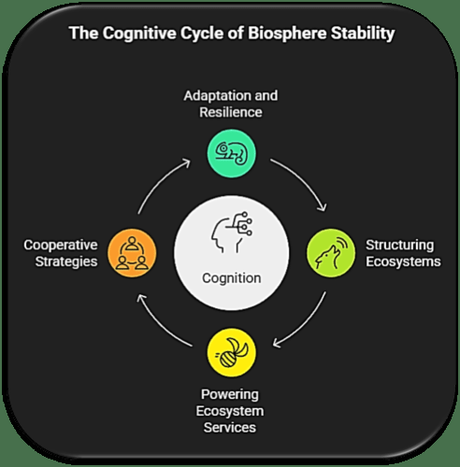
- Adaptation and Resilience: Cognition is a primary tool for adaptation. When species can learn and modify their behavior based on experience, they are better able to cope with environmental change. This cognitive flexibility enhances the resilience of entire ecosystems, as their inhabitants can adjust to new challenges (Folke et al. 2004).
- Structuring Ecosystems Through Emotion: The emotional responses of animals have a powerful effect on the landscape. The “ecology of fear” created by predators is a cognitive phenomenon (Estes et al. 2011). Prey animals that are afraid will alter their foraging patterns, which in turn allows vegetation to recover. The resulting trophic cascade, famously seen with the reintroduction of wolves in Yellowstone, stabilizes the entire ecosystem (Ripple and Beschta 2004).
- Powering Ecosystem Services: Many ecosystem services we depend on are underpinned by cognition. Crop pollination relies on the ability of bees to learn and remember which flowers provide the best food rewards, which enhances their foraging efficiency (Chittka et al. 1999) and supports global agricultural productivity (Klein et al. 2007).
- Cooperative Strategies: Collective cognition allows for cooperative strategies that enhance ecosystem health. The mycorrhizal networks connecting trees allow them to share resources and communicate about stress, improving the resilience of the entire forest, especially during environmental challenges like drought (Simard et al. 2012; Madouh and Quoreshi 2023).
A biosphere full of cognitive agents is fundamentally more robust and stable (Cardinale et al. 2012). Cognition allows for the adaptation, feedback, and cooperation that help maintain the delicate balance of our living planet.
But there’s one cognitive agent whose intelligence has had an outsized—and often destructive—impact. In my final post, I’ll explore the paradox of human cognition and its role in shaping the planet’s future.