


 It sounded like my kind of read, found at a used book sale — Benjamin Wiker’s 10 Books That Screwed Up The World. I’d say make it 11, though that would give Wiker’s book undeserved importance. (He actually covers 15; a subtitle refers to five more.)
Reading a few pages pegged the author as religious. So I looked at his bio. Yup — big time. He’s taught at various Christian-sounding venues and is “a senior fellow with Discovery Institute.” Which, Wikipedia’s article forthrightly states, “advocates the pseudoscientific concept of intelligent design.”
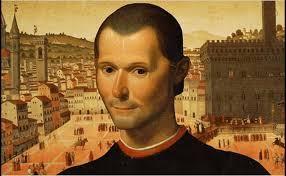 Wiker begins with Macchiavelli’s The Prince. A “target-rich environment” for easy moralizing. Of course no modern leader should follow Macchiavelli’s advice. But Wiker seems to forget he wrote in 1513, when there was no concept of rulers serving, or accountable to, citizens.
Eventually Wiker gets to his real beef: “Christianity, Macchiavelli contends, focuses our energies on an imaginary kingdom in the sky and thereby turns us away from making the real world a peaceful, comfortable, even pleasurable home.”
This Wiker denounces but doesn’t actually try to refute. Doesn’t defend the idea of Heaven, nor deny its detracting from efforts to make good lives on Earth. But he does say Macchiavelli there “initiates the great conflict between modern secularism and Christianity that largely defines the next five hundred years of Western history.”
Wrong. Macchiavelli’s disparagement of religious delusions was not (alas) even a blip on the intellectual horizon. Most of those five centuries were consumed not by battles between faith and secularism but among differing Christian theologies — with the slaughter of great parts of Europe’s population. Kind of validating Macchiavelli’s point. Only quite lately has secularism, thank God, finally arisen to curb such horrors.
 Next, Descartes. Responsible for “Cartesian dualism,” positing (contrary to science) something in mind or consciousness existing separately from our physical bodies. But even though some such dualism might seem necessary if our “souls” are to go to Heaven — which Wiker mocked Macchiavelli for rejecting — Wiker also mocks Descartes. For propounding “a ghostly soul banging around in a ghastly machine . . . A walking philosophical bipolar disorder.” Descartes’ idea was indeed crazy. But has Wiker got a better one to explain going to Heaven after our bodies rot?* Thus his attack on Cartesian dualism seems baffling.
Then Wiker derides Descartes’ “absolutely awful proof of the existence of God.” (Not that Wiker has a better one here either.) Basically, Descartes said that any idea in his head was presumably put there by God; so if he (Descartes) can conceptualize a being more perfect than himself, that being must exist. Though that was a glaringly poor excuse for an “argument,” Wiker goes to the trouble of explicating why. But what really irks him is Descartes’ implying God is what one conceives him to be. Wiker’s paraphrase: “we fashion God after our own hearts, rather than our own hearts and religion after God.” Causing “confusion of true wisdom about God.”
And where, pray tell, do we get that “true wisdom?” Wiker, typically, fails to say. But he presumes the conception of God that, by whatever means, got into in his own brain, was somehow the correct one — unlike the one in Descartes’ brain.
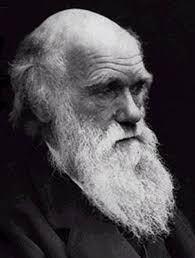 Reeling from so much foolishness, I skipped ahead to the Darwin chapter. Frankly expecting some good laughs, and I wasn’t disappointed. Wiker denies that Darwin actually originated the concept of biological evolution: “for some fifty years or more, it had been associated with political radicals . . . and gutter atheists;” it’s even traceable back to Epicurus. That’s flattering to Epicurus, a great thinker way ahead of his time. But as history these passages are bunk.** Before Darwin, some other people may have nibbled vaguely at the idea, but never had the Eureka moment, putting it together.*** Darwin’s doing so stands as one of humanity’s greatest intellectual triumphs.
But, creationist though he is, Wiker isn’t brave enough to frontally take on evolutionary biology, nor the Origin of Species. Instead he mounts a flank attack, on Darwin’s later book, The Descent of Man, trying to tar him with the “deep-down nastiness” of eugenics.Which, Wiker claims, Darwin was guilty of originating.
Eugenics is the idea of improving the species by keeping supposedly less fit members from reproducing. In early 20th century America this was sometimes done by sterilizing them. The Nazis simply killed them.
Wiker quotes Darwin suggesting that unrestrained reproduction could lead to “degeneration.” Had Wiker stopped there, it might have seemed damning. However, he goes on to quote further words from Darwin, ones that (strangely enough) he actually calls “inspiring.” There Darwin said the human being had progressed, so that their “sympathies became more tender and widely diffused, so as to extend to the men of all races, to the imbecile, the maimed . . . and finally to the lower animals, so would the standard of his morality rise higher and higher.”****
 So where’s the problem? Wiker latches onto the word “sympathies.” This, finally, is his chosen line of attack: “[T]here are few moral concepts as slippery as sympathy. At best it substitutes indiscriminate niceness for goodness in human affairs . . . At worst, it . . . erases all boundaries between human beings and every other living thing.” From this claptrap Wiker goes on to deride the idea of animal rights. But that’s not all. He says that pursuant to Darwin’s own schema, “sympathy” was a trait imparted to humans by evolution. Then: “Here comes the nasty part. Evolution [which Wiker rejects, remember] is driven by competition, and competition brings extinction.” From that he leaps to asserting Darwin’s invocation of sympathy does not “extricate him from blame for the harsh racial eugenics practiced by the harder-reasoning Nazis.”
Huh? That’s it? How stupid does he think readers are? And meantime, for all Wiker’s anti-eugenics ranting, it’s never even clear why he’s against it — given his own attack on “sympathy” and expressed indifference to animal suffering.
His final chapter is modestly titled “A Conclusive Outline of Sanity.” Wiker says the problem with all 15 authors he discussed is their all positing that people have to be saved from something. As if salvation were not a fundamental concept of his Christianity. And how it could apply to Darwin is a mystery, but never mind. Anyhow, Wiker gives this example: “To save the world from male oppression, Betty Friedan would have women kill their offspring.” (Somehow I missed that bit in reading The Feminine Mystique.) Thus, Wiker maintains, all those books (including ones by Thomas Hobbes and John Stuart Mill) are literally insane! And yet Wiker’s own final line says humanity does need saving— from that “madness of our own making.” And the savior is — guess who — the Man in the Sky.
 I drew a different conclusion. That nonsensical religious beliefs like Wiker’s mess up one’s capability for rational thought. It’s his book that’s literally insane. Is this disgraceful screed what passes for intellectual work at faith-oriented institutions of “higher learning?” And what’s really scary is the parade of reviews on Amazon gushing favorably about it.
* I recently saw one Christian protesting that most of his co-religionists’ ideas of Heaven contradict the Bible. We do not go there after death, he said. Instead, we get resurrected at Jesus’s second coming. Or something like that. (Don’t look for me to make sense of this.)
** Wiker repeatedly misstates scientific history. For example, saying the Italian astronomer Schiaparelli claimed to see canals on Mars. Actually, Schiaparelli merely reported channels— “canali” in Italian, which got mistranslated as “canals,” notably by the American Percival Lowell.
*** Wallace did, around the time of Darwin’s book, but Darwin had been working on it for decades.
**** Darwin’s “bulldog” T.H. Huxley similarly said that evolutionary biology does not oblige us to play out “survival of the fittest” in our society — our aim instead should be to fit more of us for survival.







